
About Howard Sims
Lived 1918 – 2003 (aged 85). Howard Sims was an American dancer, actor and tap dance.
Howard "Sandman" Sims (January 24, 1917 – May 20, 2003) was an African-American tap dancer who began his career in vaudeville. He was skilled in a style of dancing that he performed in a wooden sandbox of his own construction, and acquired his nickname from the sand he sprinkled to alter and amplify the sound of his dance steps. "They called the board my Stradivarius," Sims said of his sandbox. —at Harlem's noted Apollo Theater, comedically ushering failed acts offstage
Early life Sims was born in Fort Smith, Arkansas, on January 24, 1917, one of 12 He learned to dance from his father, and said he was dancing as soon as he could walk.
As a young man, despite his dance talent, Sims aspired to be not a professional dancer, but a professional boxer.
During this period, it was common for dancers to carry tap shoes with them and, when they encountered another dancer on the street, throw down their shoes by way of challenge. Despite performing at various vaudeville venues,
By the mid-1950s, he had been hired as the Apollo's stage manager, and soon began his role as the Apollo's famed "executioner", with a shepherd's crook (known since vaudeville times as "the hook") a broom, or other props, while dressed in a variety of wacky costumes, whether long underwear, a clown suit, or even a diaper. Backstage, however, he would console defeated contestants with the story of his having been booed off ten times before he finally got to finish his own act. although one obituary says he stayed on until shortly after Time Warner took over the Apollo in 1999.
Having found work dancing did not stop him from dancing on the street, however. "If I saw a dancer, I'd challenge him. I didn't care who it was. The way to get known in New York was to be the best. That's what I strived to be."
Though he frequently took opportunities to explain the difference between tap and hoofing to the press in later years,
Decline and revival of tap Tap dancing lost popularity with audiences beginning in the late 1940s. A number of causes factored into this decline, among them the going out of style of vaudeville-style variety shows; a new tax that forced many ballrooms to close and thus closed venues to the big bands with whom tap dancers had used to perform; trends in music that favored smaller, more intimate groups of performers; and concomitant increases in interest among audiences in watching formal modern dance and ballet performances. Sims was quoted as having said of the period that "ap didn't die ... It was just neglected."
With paying gigs harder to find and paying less, Sims turned to other sources of income. Despite not having had any formal instruction himself, he taught dance, including to such later stars as Gregory Hines and Ben Vereen. Tap Happening was popular enough to run for several years.
The crescendo of interest in tap dancing continued, and in 1972, Sims danced in the production Best of the Hoofers at the Orpheum Theatre. "Hoofing is not a dying art form," he asserted in 1977, Later that year, Sims was one of the instructor-performers of the By Word of Foot "teach-in" series, spending a week demonstrating his hoofing techniques for a new generation of tap enthusiasts. A few weeks later, Sims was on stage at the American Dance Festival, dancing both with and without his sandbox.
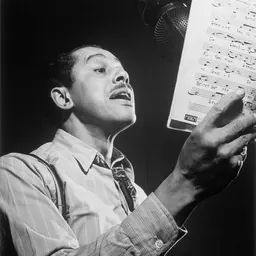
By 1982, Sims was part of a promotional tour reviving interest in No Maps on My Taps with co-stars Bunny Briggs and Chuck Green, their pre-screening performances backed by Cab Calloway. Even as booked performances were coming more regularly, Sims never stopped participating in street-corner challenges, encouraging younger generations of dancers and inviting them to learn his moves. "I thought I was making noise all these years," Sims said of the award. "Now they're calling it culture." Sims loved to teach; his son recounted how Sandman would "stop every kid he saw and show them a step and get them to copy a step. He enjoyed that more than performing in front of an audience."
The Apollo reopens Meanwhile, Harlem's Apollo Theater, where Sims had served for years as Amateur Night's "executioner", had been closed for most of a decade. Then, following an extensive renovation, the venue reopened in 1985, When The New York Times interviewed him about his "executioner" role, he said of the acts that got booed off, "I tell them to work on their act and come back," encouraging them to try again. He also made a brief appearance in a play based on his life, The Sand Dancer, It's Showtime at the Apollo, a TV broadcast of the Apollo Theater's Amateur Night performances, began broadcasting in September 1987 on NBC stations, bringing awareness of Sims's "executioner" role to a wider audience.
A particularly busy year, 1988 saw Sims tour the world as a cultural ambassador on behalf of the U.S. State Department, traveling to over 50 countries in a span of 11 months.
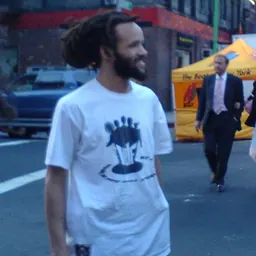
Playing a thinly-fictionalized version of himself named "Mr. Sims", Sims made a 1990 appearance on The Cosby Show, "Mr. Sims" was the dance instructor the Huxtables signed their young daughter Rudy up with in order to help her prepare for a class assignment about the Harlem Renaissance. During the episode, Cliff Huxtable (Bill Cosby) challenged "Mr. Sims" to a dance-off, part tribute to and part parody of Sims's real-life tap challenges, which Sims won handily. Later that same year, the Apollo Theater played host to Rat-a-Tat-Tap, another tap-dance festival, and the Sandman, "always a deserved audience favorite at tap festivals," was a featured performer there alongside his Tap co-stars Savion Glover and Gregory Hines.
Sims was a featured performer at the third annual celebration of National Tap Dance Day on May 30, 1993.
In 1998, the New York Committee to Celebrate National Tap Dance Day and the Young People's Tap Conference honored Sandman Sims for his contributions to the art of hoofing.
In popular culture Sandman Sims, particularly in his role as Apollo Theater executioner, has been referenced frequently in African-American culture. A recurring Saturday Night Live sketch featured Chris Rock as "Nat X", a satire on militant black activists. Whenever he was frustrated with a guest, he would call out "Sandman, get him out of here!" Sandman (played by Chris Farley) would enter and "sweep" the offending guest off-stage with his broom. On April 5, 2000, he was invoked by Huey Freeman in the long-running comic strip The Boondocks, who responded to an ineptly-told joke by saying, "Where is Sandman Sims when you need him ..." Performance artist Holly Bass, along with other dancers, put on another play about Sims's life at the Smithsonian Institution's American History Museum (which was then hosting an exhibit on the Apollo Theater) on July 10, 2010. President Barack Obama, referring to his own performance singing on the Apollo Theater stage (albeit not on Amateur Night) the evening before his 2012 State of the Union address, said, "Sandman did not come out!" They had a son together, Howard Sims Jr., Uptown: A Tribute to the Apollo Theatre (1980) – Himself The Cotton Club (1984) – Hoofer The Kennedy Center Honors: A Celebration of the Performing Arts (1987) — Himself It's Showtime at the Apollo (1987–2000) – Himself / the "executioner" Tap Dance in America (1989) – Himself The Cosby Show (1990) – season 6, episode 19, "Mr. Sandman" – Mr. Sims
Don’t just read it —
keep it.
Full-length biographies made to live with: read them, listen on the way to work, watch them tonight.
- E-book
- Audio
- Video
Instant download · yours to keep · every purchase keeps this site free
Important facts
People in Howard Sims's life
Named in this biography and alive at the same time





Related people
Same field, nearest in time


Contemporaries
People whose lives overlapped Howard Sims's


Frequently asked questions
Who was Howard Sims?
American entertainer (1917–2003)
When was Howard Sims born?
Howard Sims was born on 24 January 1918 in Fort Smith.
When did Howard Sims die?
Howard Sims died on 20 May 2003 in The Bronx.
What was Howard Sims's occupation?
Howard Sims was a dancer, actor and tap dance.
What nationality was Howard Sims?
Howard Sims was American.
Sources & further reading
Cite this page
APA: Biography.guide. (2026). Howard Sims. https://biography.guide/howard-sims-dancer/
MLA: "Howard Sims." Biography.guide, https://biography.guide/howard-sims-dancer/.
Chicago: "Howard Sims." Biography.guide. https://biography.guide/howard-sims-dancer/.
Data last updated: 2026-09-22 · Spot an error? Report a correction.
Page generated 2026-09-27 05:19 UTC