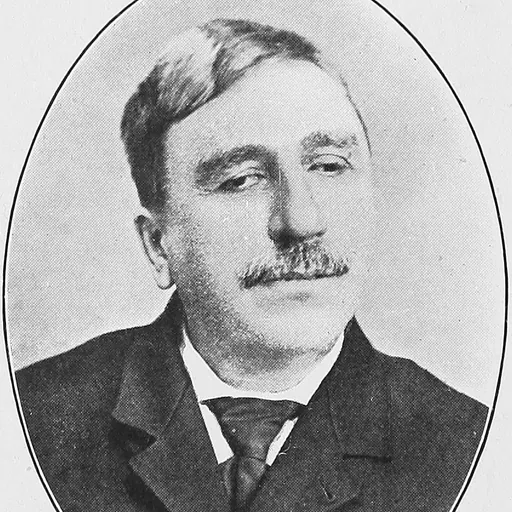
About Howard Hille Johnson
Lived 1846 – 1913 (aged 66). Howard Hille Johnson was an American lobbyist, teacher and poet, known for West Virginia Schools for the Deaf and Blind.
Howard Hille Johnson (February 19, 1846 – February 8, 1913) was a blind American educator and writer in the states of Virginia and West Virginia. Johnson was instrumental in the establishment of the West Virginia Schools for the Deaf and Blind in 1870, after which he taught blind students at the institution's School for the Blind for 43 years.
Johnson was born in 1846 near Franklin in Pendleton County, Virginia (now West Virginia) to the affluent and prominent Johnson family. His father, Colonel Jacob F. Johnson, represented Pendleton County in the West Virginia Legislature and his grandfather, James Johnson, represented the county in the Virginia General Assembly. Like his elder brother James, Johnson was born with severe visual impairment which became total blindness a few years after his birth. He and his brother received their early education at home from a governess. Johnson furthered his education at the Virginia School for the Deaf and the Blind, a common school in Franklin during the American Civil War, and at a classical school in New Market. During his studies at New Market, Johnson made considerable progress in mathematics, literature, science and foreign languages.
In 1865 he returned to Franklin, where he and his brother conducted a private classical school. Johnson undertook advanced studies at the Virginia School for the Deaf and the Blind for his profession as a teacher from 1866 to 1867. He returned to Franklin, establishing a public school under the free education system, and in 1868 accepted a teaching position at a Moorefield public school.
In early 1869, Johnson identified the need for a school for the blind in the new state of West Virginia; with statehood, deaf and blind West Virginia children attended schools for the deaf and blind in neighboring states (with West Virginia paying their tuition). Johnson began corresponding with West Virginia Governor William E. Stevenson, canvassing across the state to arouse public sentiment in support of a school for the blind. Despite rebukes from prominent West Virginian politicians, Johnson became the leading advocate for a state institution for the blind. He and other educated blind people staged an exhibition in the legislative chamber of the West Virginia House of Delegates, which was praised by the legislators.
The bill establishing the school was presented to the West Virginia House of Delegates for a vote, and before it became state law the words "deaf and dumb" were inserted before "blind" throughout its text. The final version of the bill establishing the West Virginia Institution for the Deaf, Dumb and Blind became state law on March 3, 1870. At the time of the institution's establishment Johnson was only 24 years old, and is credited by West Virginia historians as the founder of the West Virginia Schools for the Deaf and Blind. Serving on the school's inaugural Board of Regents, he was later selected as its principal teacher. The school began its first academic session on September 29, 1870. Johnson taught in its blind department continuously for 43 years, until his death in 1913. In addition to his educational work, Johnson wrote prose and poetry and was a member of the Romney Literary Society.
Early life and family Johnson was born on February 19, 1846, at his family's home on Friend's Run, near Franklin in Pendleton County, Virginia (now West Virginia). His father, Colonel Jacob F. Johnson, was a prominent citizen of the county and served in the West Virginia Legislature from 1872 to 1873. Johnson's grandfather, James Johnson, represented Pendleton County in the Virginia General Assembly and was a member of the 1829 Virginia Constitutional Convention. His studies were otherwise uninterrupted during the war; he attended a common school in Franklin, and was taught by James with sighted children. Johnson could not read text, and his lessons were read to him by his classmates.
After Johnson's departure the New Market school became known as the New Market Polytechnic Institute, with Salyards remaining on its faculty. The institute, through Salyards' efforts, conferred on him a "most gratefully appreciated" Master of Arts degree in 1877.
After Johnson finished his term at the Virginia School for the Deaf and the Blind, he returned to Franklin and founded a public school in September 1867 operating under the free education system recently authorized in Pendleton County. Before West Virginia statehood, deaf and blind youth in western Virginia attended the Virginia School for the Deaf and the Blind in Staunton (as Johnson had). After statehood, deaf and blind West Virginia children attended schools for the deaf and blind in neighboring states; West Virginia paid their tuition. Hoping to expedite the foundation of a state school for the blind, Johnson began a correspondence with newly-inaugurated Governor William E. Stevenson (who assured Johnson of his "sympathy and support" for the school). After drafting the bill, Johnson traveled to Wheeling; en route, at Fairmont, he met former Union Governor of Virginia Francis Harrison Pierpont. Although Johnson tried to enlist Pierpont's support in formally presenting the proposed legislation to the legislature, Pierpont said that he "could not afford to connect his name with an enterprise so sure to fail". Johnson's exhibition attracted a large audience, and after the performance he delivered an impassioned plea to West Virginia lawmakers to establish a state school for West Virginia's blind youth. West Virginia Schools for the Deaf and Blind administration building in an 1880 engraving; the administration building (1846) and its grounds were the campus for the Romney Classical Institute before the American Civil War. The bill for the school was presented to the House of Delegates by John James Davis, representing Harrison County. When it was introduced it outlined the establishment of a school only for the blind, not the deaf.
Institution site selection After the bill's passage Johnson was appointed by Governor Stevenson to the institution's inaugural Board of Regents, which convened in Wheeling on April 20, 1870. Johnson and his fellow board members began a competition among West Virginia municipalities for the location of the new institution for the deaf and blind; the three finalists were Wheeling, Parkersburg and Romney. The board selected Wheeling, which offered its Female College campus. However, after the board's adjournment Female College supporters, unwilling to see the school closed, pressured city authorities to rescind their offer. When the institution's site was finalized, the board reconvened on July 20, 1870, in Romney at the old Romney Classical Institute campus and selected its academic faculty and personnel. H. H. Hollister of the Ohio Institution for the Deaf and Blind was chosen as the school's first principal, and Johnson was appointed principal teacher of its School for the Blind. Johnson represented the new school in 1871 at the inaugural convention of the American Association for Instructors of the Blind, and in 1876 he provided large maps used to teach his blind students as part of West Virginia's exhibit at the Centennial Exposition in Philadelphia. The exposition was the first world's fair hosted in the United States, and the first since West Virginia became a state in 1863. It read in part: "Be it enacted, That the West Virginia schools for the deaf and the blind, located at Romney, in the county of Hampshire, shall, after the expiration of the present term, that is to say after the 15th day June, 1897, cease to be a school for the education of deaf and blind youth, and shall thereafter be a school for the education of deaf youth only", In 1892 he wrote an article which was published in the Perkins Institute for the Blind publication The Mentor, "Keep the Schools Out of Politics", decrying the appointment of school administrators, educators and trustees on the institute's Board of Regents based on affiliation with the West Virginia Democratic Party instead of qualifications.
Johnson taught in the school's blind department continuously for 43 years, until his death in 1913.
halign = left The wisdom and thoroughness of Mr. Johnson's home training are credited by him with whatever he has been able to accomplish, either for himself or his fellows under the like cloud of blindness, to the amelioration of whose condition he has devoted himself with singleness of heart. — Hu Maxwell and Howard Llewellyn Swisher, History of Hampshire County, West Virginia: From Its Earliest Settlement to the Present (1897)
His poems include: "A Question"
Personal life In 1868 Johnson married Ms. Barbee of Virginia,
Don’t just read it —
keep it.
Full-length biographies made to live with: read them, listen on the way to work, watch them tonight.
- E-book
- Audio
- Video
Instant download · yours to keep · every purchase keeps this site free
Important facts
People in Howard Hille Johnson's life
Named in this biography and alive at the same time



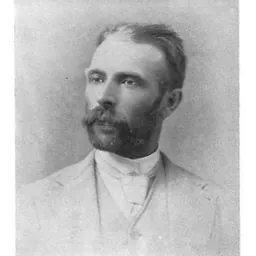
Related people
Same field, nearest in time

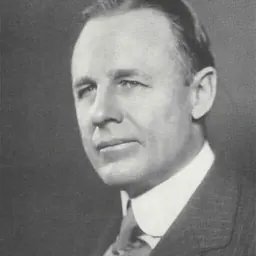
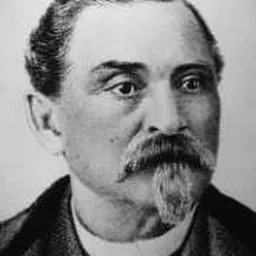

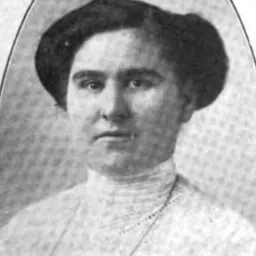
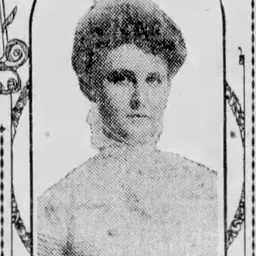
Contemporaries
People whose lives overlapped Howard Hille Johnson's
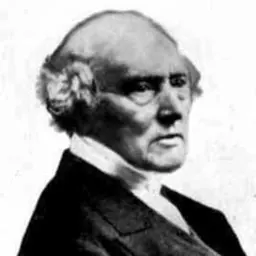

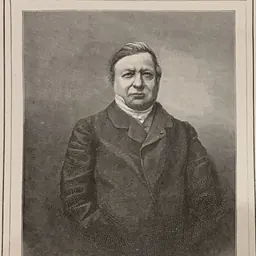
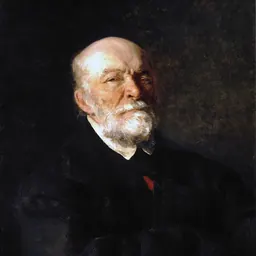

Frequently asked questions
Who was Howard Hille Johnson?
American educator and school founder
When was Howard Hille Johnson born?
Howard Hille Johnson was born on 19 February 1846 in Franklin.
When did Howard Hille Johnson die?
Howard Hille Johnson died on 8 February 1913 in Romney.
What was Howard Hille Johnson's occupation?
Howard Hille Johnson was a lobbyist, teacher and poet.
What was Howard Hille Johnson known for?
Howard Hille Johnson was known for West Virginia Schools for the Deaf and Blind.
What nationality was Howard Hille Johnson?
Howard Hille Johnson was American.
Sources & further reading
· Wikipedia: Howard Hille Johnson
· DBpedia: Howard Hille Johnson
Cite this page
APA: Biography.guide. (2026). Howard Hille Johnson. https://biography.guide/howard-hille-johnson/
MLA: "Howard Hille Johnson." Biography.guide, https://biography.guide/howard-hille-johnson/.
Chicago: "Howard Hille Johnson." Biography.guide. https://biography.guide/howard-hille-johnson/.
Data last updated: 2026-09-22 · Spot an error? Report a correction.
Portrait: Wikimedia Commons · author & licence
Page generated 2026-09-27 05:02 UTC