
About Howard Ehmke
Lived 1894 – 1959 (aged 64). Howard Ehmke was an American baseball player.
Howard John Ehmke (April 24, 1894 – March 17, 1959) was an American professional baseball pitcher. He played 16 years from 1914 to 1930, including 15 seasons in Major League Baseball for the Buffalo Blues, Detroit Tigers (1916–1917, 1919–1922), Boston Red Sox (1923–1926), and Philadelphia Athletics (1926–1930).
Ehmke compiled a career win–loss record of 166–166 with a 3.75 earned run average (ERA). His greatest success was with the Red Sox, including a no-hitter and his only 20-win season in 1923. Ehmke still holds the American League record for fewest hits allowed (one) in two consecutive starts. Ehmke also ranks sixteenth all-time in hitting batters. He hit 137 batters in his career and led the American League in the category seven times, including a career-high 23 in 1922. Ehmke is best known for being the surprise starter who won Game 1 of the 1929 World Series for the Athletics at the age of 35.
Before retiring from baseball, he started his own company that began making tarpaulins to cover baseball diamonds during rain.
Early years
Ehmke was born in Silver Creek, New York, in 1894. He was the ninth of eleven children born to a German immigrant father and a Swedish-American mother. He pitched for his high school baseball team in Silver Creek when they won the Chautauqua County championship in 1912. He moved to Southern California in 1913 and attended Glendale High School for a year. He appeared in a total of 40 games for the Angels and compiled a 12–11 record with a 2.79 earned run average (ERA).
A bidding war developed among major league teams seeking Ehmke's services. The Pittsburgh Pirates offered the Angels $5,000 in June 1914. In July 1914, the Kansas City Packers of the Federal League entered the bidding process. The Washington Senators purchased Ehmke from the Angels, but Ehmke refused to sign the contract presented to him by the Senators. On February 13, 1915, he finally signed a contract with the Buffalo Blues of the Federal League. He made his major league debut on April 12, 1915, and appeared in 18 games, only two as a starter, for Buffalo. He compiled an 0–2 record with a 5.53 ERA in innings pitched. Ehmke appeared in 38 games for Syracuse in 1916 and compiled a 31–7 record with a 1.55 ERA. He did not appear in his first game for the Tigers until September 1916. He appeared in a total of five games for the 1916 Tigers in a short tryout and compiled a 3–1 record with a 3.13 ERA. However, Purman noted that Ehmke weakened after seven innings, compiling a 1.60 ERA in the first seven innings and 9.00 in the eighth and ninth innings. He was stationed at a submarine base on the West Coast of the United States.
Ehmke's best season for the Tigers was 1919 when he finished with a 17–10 record. Ehmke did not have a winning season in Detroit after 1919 and was twice among the American League leaders in losses for the Tigers (18 in 1920 and 17 in 1922). In 1921, Ehmke had a record of 13–14 and an ERA of 4.54 pitching for a team that had the highest team batting average (.316) in American League history.
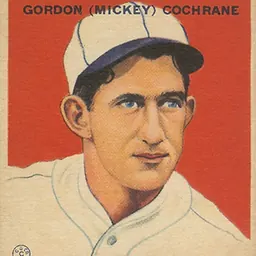
On August 8, 1920, Ehmke struck out eight batters and shut out the Yankees, 1–0, in just one hour, thirteen minutes‚ one of the shortest games in American League history. With no outs and two on in the fifth inning‚ Yankee Ping Bodie fell for the hidden ball trick applied by Tigers' second baseman Ralph Young. Ehmke did have problems with control during his tenure with the Tigers, leading the American League in batters hit by a pitch five times (1921–1923, 1925 and 1927) and was among the top three in bases on balls four times (1919, 1920, 1922, 1923). Ehmke flourished in Boston, winning 20 games in . On September 7 of that year, he no-hit his future team, the Philadelphia Athletics, 4–0, at Shibe Park; not until Mel Parnell in would another Red Sox pitch a no-hitter. In that game, Slim Harriss hit a ball to the wall for a double, but was called out for missing first base, preserving the no-hitter. He followed the performance up with a one-hitter against the Yankees four days later, with the only hit in that game a ground ball that bounced off the third baseman's chest. He still holds the American League record for fewest hits allowed (one) in two consecutive games (Johnny Vander Meer's consecutive no-hitters in is the Major League record). His 1923 season was the best of his career. That year, he was 11th in the American League Most Valuable Player voting and led the league's pitchers with a 6.3 wins above replacement (WAR) rating. He also ranked among the league leaders with 20 wins (fourth), 121 strikeouts (fourth), innings pitched (second), 39 games started (second), and 28 complete games (second). The change of scene did wonders for Ehmke. After going 3–10 with a 5.46 ERA in the first half of 1926 with the last place Red Sox, Ehmke went 12–4 with a 2.81 ERA in the second half of the season with Hall of Famer Mickey Cochrane catching and A's slugger, Al Simmons, hitting .341 behind him. Though the frequency of his starts diminished after 1927, Ehmke had a winning record for the Athletics in four consecutive seasons from 1926 to 1929.
Although it was widely thought to be a sentimental move, Mack believed that Ehmke's sidearm style and his mix of control and slow pitches would keep the predominantly right-handed Cubs off balance. He also believed that, with a month's rest, Ehmke's arm would hold up well. In Game 1, Ehmke pitched a complete game and struck out a then-World Series record 13 batters in a 3–1 win over Chicago. For this reason, Bill James called Mack's decision to start Ehmke "the most brilliant managerial stratagem in the history of baseball."
Tarpaulin business By 1925, Ehmke had developed a large canvas tarpaulin product that could cover baseball and football fields when it rained. he formed a company called Howard Ehmke Company to manufacture them, making his first sale in 1925 to the Pittsburgh Pirates for use at Forbes Field. later expanding his business to tents, flags, and banners in the 1930s, Ehmke Manufacturing Company is still in business today with its operations based in Philadelphia.
Personal life Ehmke married Marguerite Poindexter in approximately 1920. They had no children and lived in Philadelphia after retiring from baseball. Ehmke died at age 65 in a Philadelphia hospital in 1959. In February 1944, a month shy of turning 50 and during a time when hundreds of Major League Baseball players were serving in the military, Ehmke claimed he and other old-time players would return to the game rather than see it fold up for the duration of the war.
Don’t just read it —
keep it.
Full-length biographies made to live with: read them, listen on the way to work, watch them tonight.
- E-book
- Audio
- Video
Instant download · yours to keep · every purchase keeps this site free
Important facts
People in Howard Ehmke's life
Named in this biography and alive at the same time




Related people
Same field, nearest in time


Contemporaries
People whose lives overlapped Howard Ehmke's


Frequently asked questions
Who was Howard Ehmke?
American baseball player (1894–1959)
When was Howard Ehmke born?
Howard Ehmke was born on 24 April 1894 in Silver Creek.
When did Howard Ehmke die?
Howard Ehmke died on 17 March 1959 in Philadelphia.
What was Howard Ehmke's occupation?
Howard Ehmke was a baseball player.
What nationality was Howard Ehmke?
Howard Ehmke was American.
Sources & further reading
Cite this page
APA: Biography.guide. (2026). Howard Ehmke. https://biography.guide/howard-ehmke/
MLA: "Howard Ehmke." Biography.guide, https://biography.guide/howard-ehmke/.
Chicago: "Howard Ehmke." Biography.guide. https://biography.guide/howard-ehmke/.
Data last updated: 2026-09-20 · Spot an error? Report a correction.
Page generated 2026-09-27 05:32 UTC