
About Howard Carmichael
Born 1950. Howard Carmichael is a New Zealand theoretical physicist.
Howard John Carmichael (born 17 January 1950) is a British-born New Zealand theoretical physicist specialising in quantum optics and the theory of open quantum systems. He was the Dan Walls Professor of Physics at the University of Auckland and a principal investigator of the Dodd-Walls Centre. He is now Emeritus Professor. Carmichael has played a role in the development of the field of quantum optics and is particularly known for his Quantum Trajectory Theory (QTT) which offers a more detailed view of quantum behaviour by making predictions of single events happening to individual quantum systems. Having just returned from PhD and postdoctoral studies with Roy Glauber at Harvard University and Hermann Haken at the University of Stuttgart, Walls brought the rapidly growing field of Quantum Optics to New Zealand, established a major research centre with an active strategy of collaborating with quantum optics groups around the world. to join the University of Auckland, becoming the inaugural Dan Walls Professor of Physics. He is known particularly for his development of quantum trajectory theory, which offers a way to describe the evolution of a quantum system as it interacts with its environment. In 1993 he developed (at the same time as a separate formulation by Crispin Gardiner) the theory and application of cascaded quantum systems, in which the optical output of one quantum system becomes the optical input for another quantum system. He has also contributed to advances in the theory of nonclassical light and quantum correlation, quantum optical measurements, quantum fluctuations and noise in radiative processes, nonlinear physics and multi-photon processes, cavity quantum electrodynamics, quantum statistical methods and quantum entanglement.
Antibunched light In 1976, while Carmichael was still a graduate student, he and his doctoral supervisor Dan Walls published a seminal paper that predicted photon antibunching, which led to the experimental demonstration of the quantum nature of light. They went on to calculate the second-order correlation function to explore the statistics of resonance fluorescence. They were able to use the correlation function to explain how jumps of an emitting atom imprint on the emitted photon stream. They predicted that the correlation function should drop to zero at zero time delay and suggested a Quantum Electrodynamics (QED) experiment to test their predictions. These experiments were performed shortly afterwards providing evidence of the quantum character of the light emitted in resonance fluorescence. QTT also works with open quantum systems that interact with their environment unlike the Schrödinger equation which only describes a quantum system in isolation. This experiment, inspired and guided by QTT, represents a new level of control over quantum systems and has potential applications in correcting errors in quantum computing in the future.
Books Howard Carmichael (1999, 2002) An Open Systems Approach to Quantum Optics 1; Springer, Berlin Heidelberg H J Carmichael (1999, 2002) Statistical Methods in Quantum Optics 1: Master Equations and Fokker‐Planck Equations; Springer, Berlin Heidelberg H J Carmichael (2008) Statistical Methods in Quantum Optics 2: Non-Classical Fields; Springer, Berlin Heidelberg H J Carmichael, R J Glauber and M O Scully (Eds) (2001) Directions in Quantum Optics; Springer, Berlin Heidelberg
Honours and awards
Dan Walls Medal of the New Zealand Institute of Physics (2017) Fellow of the Royal Society of New Zealand (2006) The Max Born Award of the Optical Society of America (2003) Humboldt Research award for Senior United States Scientists, Alexander Humboldt Foundation (1997) Fellow of the American Physical Society (1995) Fellow of the Optical Society of America (1990)
Don’t just read it —
keep it.
Full-length biographies made to live with: read them, listen on the way to work, watch them tonight.
- E-book
- Audio
- Video
Instant download · yours to keep · every purchase keeps this site free
Important facts
People in Howard Carmichael's life
Named in this biography and alive at the same time
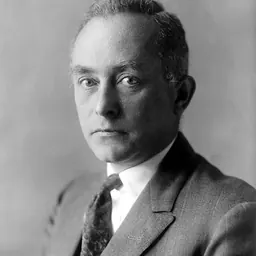
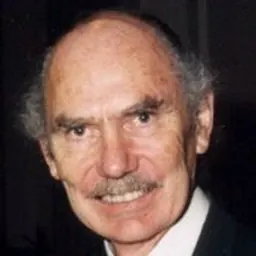


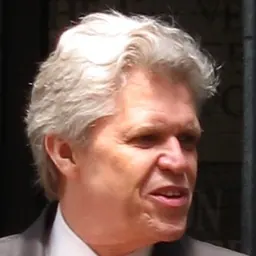
Related people
Same field, nearest in time
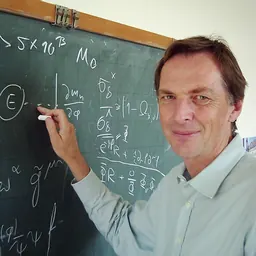


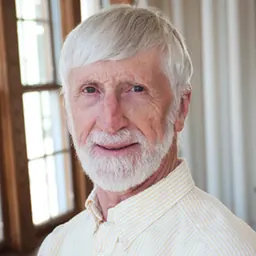


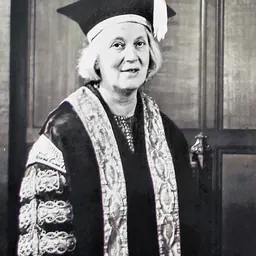
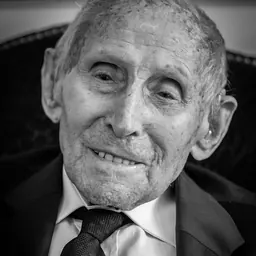
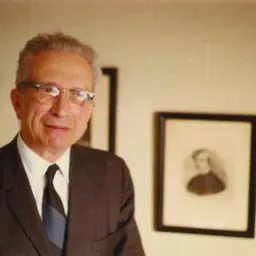
Contemporaries
People whose lives overlapped Howard Carmichael's


Frequently asked questions
Who is Howard Carmichael?
New Zealand physicist
When was Howard Carmichael born?
Howard Carmichael was born on 17 January 1950 in Manchester.
What is Howard Carmichael's occupation?
Howard Carmichael is a theoretical physicist.
What nationality is Howard Carmichael?
Howard Carmichael is New Zealand.
Sources & further reading
· Wikipedia: Howard Carmichael
Cite this page
APA: Biography.guide. (2026). Howard Carmichael. https://biography.guide/howard-carmichael/
MLA: "Howard Carmichael." Biography.guide, https://biography.guide/howard-carmichael/.
Chicago: "Howard Carmichael." Biography.guide. https://biography.guide/howard-carmichael/.
Data last updated: 2026-09-24 · Spot an error? Report a correction.
Page generated 2026-09-27 05:05 UTC