
About Hosea Ballou II
Lived 1796 – 1861 (aged 64). Hosea Ballou II was an American academic, christian minister, educator and writer.
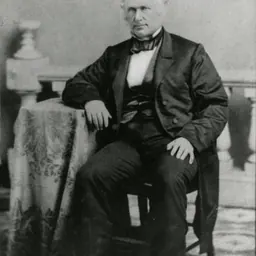
Hosea Ballou II (October 18, 1796 – May 27, 1861) was an American Universalist minister and the first president of Tufts University from 1853 to 1861. Ballou was named after his uncle and went by the name "Hosea Ballou 2d." Publishers, friends, editors, Tufts College staff, and others generally followed this example. The title of this article reflects the more recent generational suffix usage of the Roman numeral II for those named for an uncle. Ballou used the ordinal number suffix "2d" rather than "2nd."
Life and career Ballou was born in Guilford, Vermont, the son of Asahel Ballou and Martha Starr, a descendant of Comfort Starr, one of the original incorporators of Harvard College. Hosea Ballou II was also the grand-nephew of Hosea Ballou, and was associated with him in editing The Universalist Quarterly Review.
Ballou promoted the establishment of seminaries for religious training, something which was at that time opposed by a number of influential Universalists, including his uncle Hosea. He edited or wrote for a number of Universalist publications. In 1843, he replaced Ellery Channing as a member of the Harvard Board of Overseers, and retained this position until 1858.
Privately educated, Ballou was awarded two honorary degrees from Harvard University - the Master of Arts (AM) in 1844, then the Doctor of Divinity (DD) in 1845.
Beliefs Unlike his great-uncle who believed in ultra-universalism, the viewpoint that all souls would obtain immediate salvation upon death without any postmortem punishment, Ballou believed in universal restorationism, positing the existence of temporary punishment in the afterlife.
Ballou also supported fellowship between ultra-universalists and universal restorationists as shown in the Restorationist Controversy. Jacob Wood had prepared two articles known as Appeal and Declaration in the Vermont universalist paper Christian Repository in December 1822, declaring ultra-universalism and universal restorationism to be "incapable of being reconciled together" and only universal restorationism to be just. Ballou in response published an editorial against Wood's articles in the Universalist Magazine, accusing Christian universal restorationists Edward Turner and Paul Dean of creating this controversy out of jealousy of his great-uncle Hosea Ballou's work.
Writings The Ancient History of Universalism, from the Time of the Apostles to the Fifth General Council (1829) A Collection of Psalms and Hymns for the Use of Universalist Societies and Families (1837) "Review of the Denomination of Universalists in the United States," Universalist Expositor (1839) Counsel and Encouragement: Discourses on the Conduct of Life (1866)
Don’t just read it —
keep it.
Full-length biographies made to live with: read them, listen on the way to work, watch them tonight.
- E-book
- Audio
- Video
Instant download · yours to keep · every purchase keeps this site free
Important facts
People in Hosea Ballou II's life
Named in this biography and alive at the same time
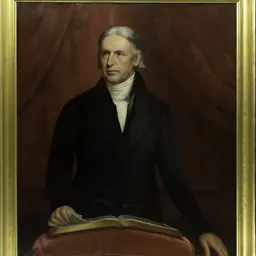


Related people
Same field, nearest in time

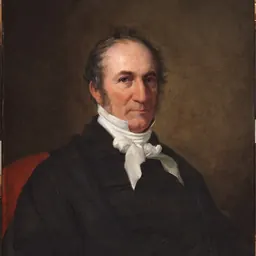
Contemporaries
People whose lives overlapped Hosea Ballou II's






Frequently asked questions
Who was Hosea Ballou II?
American Universalist minister (1796–1861)
When was Hosea Ballou II born?
Hosea Ballou II was born on 18 October 1796 in Guilford.
When did Hosea Ballou II die?
Hosea Ballou II died on 27 May 1861 in Somerville.
What was Hosea Ballou II's occupation?
Hosea Ballou II was an academic, christian minister, educator and writer.
What nationality was Hosea Ballou II?
Hosea Ballou II was American.
Sources & further reading
Cite this page
APA: Biography.guide. (2026). Hosea Ballou II. https://biography.guide/hosea-ballou-ii/
MLA: "Hosea Ballou II." Biography.guide, https://biography.guide/hosea-ballou-ii/.
Chicago: "Hosea Ballou II." Biography.guide. https://biography.guide/hosea-ballou-ii/.
Data last updated: 2026-09-20 · Spot an error? Report a correction.
Page generated 2026-09-27 05:33 UTC