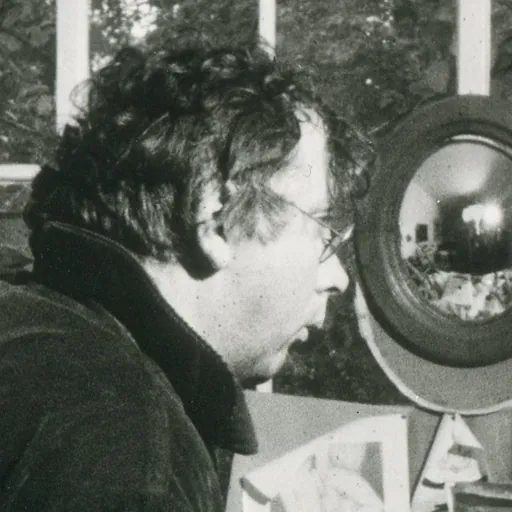
About Horst Janssen
Lived 1929 – 1995 (aged 65). Horst Janssen was a German painter, graphic designer, draftsperson, graphic artist, illustrator and lithographer.
Horst Janssen (14 November 192931 August 1995) was a German draftsman, printmaker, poster artist and illustrator. He had a prolific output of drawings, etchings, woodcuts, lithographs and wood engravings.
Janssen was a student of Alfred Mahlau at the . He first published in the newsweekly in 1947. In the early 1950s, he started working in lithography, on an initiative of paper manufacturer Guido Dessauer, using the technical facilities of a coloured paper factory. The first retrospective of Janssen's drawings and graphic works was shown in 1965, first in the Hanover, then in other German cities and in Basel. In 1966, he was awarded Hamburg's Edwin Scharff Prize. International exhibitions followed. In 1968, he received the Grand Prize in graphic art at the Venice Biennale; in 1977, his works were shown at the documenta VI in Kassel.
The Horst Janssen Museum in his hometown of Oldenburg is dedicated to his legacy. His work is shown internationally in major museums.
His life was marked by numerous marriages, outspoken opinions, alcoholism, and selfless dedication to the art of printmaking.
Early life and education
Janssen was born in Hamburg. His mother, Martha Janssen, was a dressmaker from Oldenburg; he never knew his father. Janssen was brought up by his mother and grandparents at Lerchenstraße 14, Oldenburg. He was adopted by his grandfather, and following his death, he was adopted by the Guardianship Court in 1939.
In 1942, he became a student at the National Political Institute of Education ( or napola) in Haselünne, Emsland, where an art teacher, Hans Wienhausen, encouraged his artistic talent. His mother died in 1943. In 1944, he was adopted by his mother's younger sister, Anna Janssen, and he moved to Hamburg, where she lived. He lived with his Aunt Anna on for the remainder of the war and the postwar period. They later moved to (Harvestehude). In 1946, at the age of sixteen, Janssen enrolled at the (regional art school) in Hamburg, where he studied with Alfred Mahlau, proving to be an outstanding pupil from the outset.
First publications
Janssen's first publication was a drawing in the weekly newspaper in 1947. The following year he published his first book, the children's book (Are you all there?), with Rolf Italiaander. In 1950 his first child, son Clemens, was born and he wrote and illustrated his second book, (The race between the hare and the hedgehog on the Buxtehude Heath), for the birthday of a little girl named Friederike Gutsche. It was published in a facsimile edition in 1973.
Janssen produced his first woodcuts, influenced by Edvard Munch. Dominant themes were animals along with man and woman. In 1952, he received a Lichtwark scholarship in Hamburg. Around the same time, he was forced to leave the . The following year, he was arrested after a drunken brawl and tried for murder. He was found innocent of the charge, but received a suspended sentence for drunkenness.
Lithography In the early 1950s, he received a commission from the paper manufacturer Guido Dessauer for a portrait of his father-in-law, the diplomat Friedrich von Keller, followed by other portraits of family members. Janssen was able to create his first lithographs using the technical equipment of the Aschaffenburger Buntpapierfabrik. His early lithographs were shown in 2000 by the Hamburger Kunsthalle. They included "" (Tree Mound; 1957); his first self-portraits, such as "Selbst-innig" (Intimate with Self; 1966) and poster designs, influenced by Ben Shan, for his own exhibitions.
In 1955, he married Marie Knauer and in 1956, had a second child, a daughter, Katrin (nicknamed Lamme). During this period, he worked on a series of large-scale color woodcuts that were displayed in his apartment in 1957. Janssen gained recognition and had an exhibition in Hanover in the Hans Brockstedt Gallery in 1957. After this successful show, he suddenly switched to etching, becoming a pupil of Paul Wunderlich, whom he later considered a rival. His marriage to Marie ended in divorce in 1959. His art was now influenced by art brut and Jean Dubuffet. A new marriage, to Birgit Sandner, was followed by a separation a few weeks later. The following year, 1960, he married Verena von Bethmann Hollweg who, in 1961, gave birth to his third child, a son named Philip.
The city of Oldenburg made him an honorary citizen in 1992.
Horst Janssen died in Hamburg on 31 August 1995 and was buried in Oldenburg in Gertruden Cemetery.
Awards
Legacy During Janssen's lifetime, his work was shown internationally, for example, in Basel (1966), London (1970), Zürich, Oslo, Göteborg (all in 1971), New York (1974), Turin (1975), Cambridge, Barcelona, Lugano (all 1976), Chicago (1980), travelling exhibition in Japan (1982), travelling exhibition in the U.S. (1983–1985) and Nowosibirsk (1985). More recently, his work has been shown at major museums, such as the Rembrandt House Museum in Amsterdam (2008). An exhibition at the Leopold Museum in Vienna in 2004, "Egon Schiele / Horst Janssen", explored his work in relation to the art of Egon Schiele.
In 2000, the Horst Janssen Museum, an art museum, was opened in Oldenburg. Special exhibitions there have explored his work in relation to other artists, such as Goya. He is represented in the (Collection of contemporary art of the Federal Republic of Germany) in Bonn.
A biography, (1984), was written by Stefan Blessin, who in 1992, added ("Horst Janssen – From Darkness into Light"). In 2001, Janssen's friend Joachim Fest published ("Horst Janssen. Self-Portrait in a Foreign Hand") and in 2006, ("The Horrible Pleasure of the Eye. Memories of Horst Janssen"). Janssen's own memoirs were published in 2006 by Gesche Tietjens, titled ("Summary of Summaries, a Book of Life Reader").
Catalogues Wieland Schmied, Carl Vogel: Horst Janssen (with a catalogue of graphic art to 1965 by Carl Vogel), kestnergesellschaft 1965 , 1995, , , 1995, , Drawings and etchings, Claude Bernard Gallery, New York, St. Gertrude, Hamburg, 1991, , 1999, , , 1999, Janssen Kabinett , Uwe Schneede: , St. Gertrude, Hamburg, 1995, , 1997, , , 1998, , , 2000, Horst Janssen Museum, , 2001, Horst Janssen Museum, , 2002, Horst Janssen Museum, , 2002, Horst Janssen Museum, , 2003, , , 2003 Horst Janssen Museum, Egon Schiele – Horst Janssen, 2004, Horst Janssen Museum, , 2005, Horst Janssen Museum, , "", 2008, Horst Janssen Museum, , Horst Janssen Sammlung Meyer-Schomann, 2008, Horst Janssen Museum. , 2011, ISSN 2192-8401 , Verlag St. Gertrude, 1995,
Don’t just read it —
keep it.
Full-length biographies made to live with: read them, listen on the way to work, watch them tonight.
- E-book
- Audio
- Video
Instant download · yours to keep · every purchase keeps this site free
Important facts
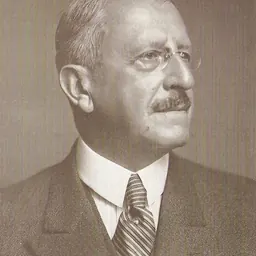
People in Horst Janssen's life
Named in this biography and alive at the same time




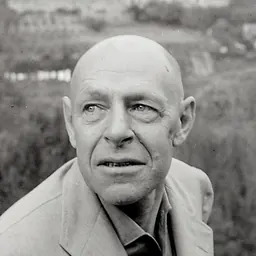

Related people
Same field, nearest in time
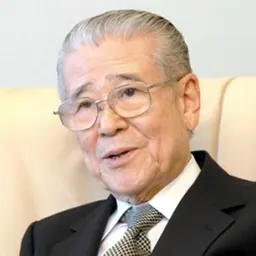

Contemporaries
People whose lives overlapped Horst Janssen's


Frequently asked questions
Who was Horst Janssen?
German printmaker and draftsman (1929-1995)
When was Horst Janssen born?
Horst Janssen was born on 14 November 1929 in Hamburg.
When did Horst Janssen die?
Horst Janssen died on 31 August 1995 in Hamburg.
What was Horst Janssen's occupation?
Horst Janssen was a painter, graphic designer, draftsperson, graphic artist, illustrator and lithographer.
What nationality was Horst Janssen?
Horst Janssen was German.
Sources & further reading
Cite this page
APA: Biography.guide. (2026). Horst Janssen. https://biography.guide/horst-janssen/
MLA: "Horst Janssen." Biography.guide, https://biography.guide/horst-janssen/.
Chicago: "Horst Janssen." Biography.guide. https://biography.guide/horst-janssen/.
Data last updated: 2026-09-21 · Spot an error? Report a correction.
Portrait: Wikimedia Commons · author & licence
Page generated 2026-09-27 04:59 UTC