
Horst Bartel
German historian of modern age
About Horst Bartel
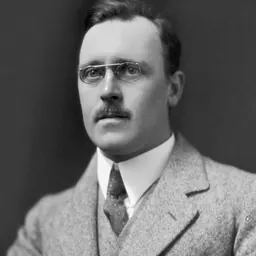
Lived 1928 – 1984 (aged 56). Horst Bartel was a German historian of Modern Age, university teacher, historian and textbook writer.
Horst Bartel (16 January 1928 – 22 June 1984) was a German historian and university professor. He was involved in most of the core historiography projects undertaken in the German Democratic Republic (1949–1989). His work on the nineteenth-century German Labour movement places him firmly in the mainstream tradition of Marxist–Leninist historical interpretation.
Life Horst Bartel was born in Cottbus. His father worked in street construction. By the time Bartel left school, in 1942, war had broken out. He started a teacher training course at Orlau in Upper Silesia, but he left the course in 1944 without completing it. In the meantime, in 1943 he joined the Hitler Youth organisation, and during the same year was conscripted for National Labour Service. As Germany's eastern frontier moved west to the accompaniment of industrial scale ethnic cleansing, he appears to have moved west; in 1945 he was captured by the Americans who held him as a prisoner of war between May and September 1945, initially at Heilbronn and subsequently at Linz. The course included work as a teacher at a primary school at Peitz, a small town a short distance to the north of Cottbus. In Bartel's case, however, teaching was quickly superseded, still in 1946, by a period of university level study at Berlin's Humboldt University, focusing on history, German studies and pedagogy. His student studies continued until 1949. in the "Autorenkollektiv": August Bebel. Eine Biographie. 1st edition Dietz, Berlin 1963. August Bebel - ein Leben für den Kampf um den Sozialismus. In: Einheit. Dietz Verlag, Berlin, 1963, p. 105 ff. Die Durchsetzung des Marxismus in der deutschen Arbeiterbewegung im letzten Drittel des 19. Jahrhunderts. Probleme der zweiten Hauptperiode der Geschichte der deutschen Arbeiterbewegung. In: Zeitschrift für Geschichtswissenschaft. Vol. 14, Berlin 1966, pp. 1334–1371 Der interne Juni-Entwurf zum Erfurter Programm. In: International review of social history. Produced by Internationaal Instituut voor Sociale Geschiedenis. Vol. 12, Amsterdam 1967, P. 292-302 Arbeiterbewegung und Reichsgründung. Akademie-Verl, Berlin 1971. Karl Kautsky. Sein Anteil an der Entstehung und Propagierung des Erfurter Programms. In: Gustav Seeber: Gestalten der Bismarckzeit. Vol. 1. Akademie-Verlag, Berlin 1978, p. 426-453. with Wolfgang Schröder and : Das Sozialistengesetz 1878 - 1890. Illustrierte Geschichte des Kampfes der Arbeiterklasse gegen das Ausnahmegesetz. Dietz, Berlin 1980. with Dieter Fricke and Peter Bachmann: Wörterbuch der Geschichte. Dietz, Berlin 1983.
As editor / compiler Deutsche Geschichte in Daten.. Deutscher Verlag der Wissenschaften, Berlin 1967. Sachwörterbuch der Geschichte Deutschlands und der deutschen Arbeiterbewegung. 2 volumes. Dietz Verlag, Berlin 1969–1970. Geschichte. Lehrbuch der Oberschule. 1969 edition. Volk und Wissen, Berlin 1969. Marxismus und deutsche Arbeiterbewegung. Studien zur sozialistischen Bewegung im letzten Drittel des 19. Jahrhunderts. Dietz Verlag, Berlin 1970. Arbeiterbewegung und Reichsgründung. Akademie-Verlag, Berlin 1971. with Ernst Engelberg: Die großpreußisch-militaristische Reichsgründung 1871. Voraussetzungen und Folgen. 2 volumes, Akademie-Verlag, Berlin 1971.
In 1949 Bartel became a teacher, and then a school head, in Wandlitz, just outside Berlin on its north side. From 1966 Bartel also served as associate professor with a teaching post and a professorial chair covering the History of the German Labour Movement at the important Party Central Committee's Social Sciences Institute / Academy (IfG/AfG).
From 1956 till 1959 Bartel was a member of the editorial collective on the Journal for Historical Science (Zeitschrift für Geschichtswissenschaft). He then joined the editorial collective of the academic journal Contributions to the History of the German Labour Movement (Beiträge zur Geschichte der deutschen Arbeiterbewegung), remaining with the journal until his death. Between 1967 and 1973 he was the editor of the History Yearbook (Jahrbuch für Geschichte). A further academic followed in 1969 when he received his habilitation for a work entitled "A Study of Contributions to the History of the Implementation of Marxism in the German Labour Movement during the final third of the Nineteenth Century" ("Studie Beiträge zur Geschichte der Durchsetzung des Marxismus in der deutschen Arbeiterbewegung im letzten Drittel des 19. Jahrhunderts"). It was also in 1969 (again in the teeth of opposition from Kuczynski and others) that he was appointed to succeed Ernst Engelberg as director of the Historical Institute at the German Academy of Sciences, a position he retained until his death in 1984. At the same time he served as deputy chairman of the National History Council. He became a corresponding fellow of the German Academy of Sciences in 1969, progressing to a full fellowship in 1972. From 1975 he chaired the German Democratic Republic section of the German-Soviet Historical Commission. It was in this capacity that in 1977 he undertook an extended study visit to Moscow, and in 1982 he became a foreign member of the Soviet Academy of Sciences (as it was then known). Also in 1982 he became an associate professor of the Humboldt University in Berlin.
Awards and honours 1966 National Prize of East Germany 1st class for science and technology 1979 Patriotic Order of Merit in silver
Don’t just read it —
keep it.
Full-length biographies made to live with: read them, listen on the way to work, watch them tonight.
- E-book
- Audio
- Video
Instant download · yours to keep · every purchase keeps this site free
Important facts
People in Horst Bartel's life
Named in this biography and alive at the same time


Related people
Same field, nearest in time





Contemporaries
People whose lives overlapped Horst Bartel's


Frequently asked questions
Who was Horst Bartel?
German historian of modern age (1928–1984)
When was Horst Bartel born?
Horst Bartel was born on 16 January 1928 in Cottbus.
When did Horst Bartel die?
Horst Bartel died on 22 June 1984 in East Berlin.
What was Horst Bartel's occupation?
Horst Bartel was a historian of Modern Age, university teacher, historian and textbook writer.
What nationality was Horst Bartel?
Horst Bartel was German.
Sources & further reading
Cite this page
APA: Biography.guide. (2026). Horst Bartel. https://biography.guide/horst-bartel/
MLA: "Horst Bartel." Biography.guide, https://biography.guide/horst-bartel/.
Chicago: "Horst Bartel." Biography.guide. https://biography.guide/horst-bartel/.
Data last updated: 2026-09-22 · Spot an error? Report a correction.
Page generated 2026-09-27 05:24 UTC