
About Horatio Potter
Lived 1802 – 1887 (aged 84). Horatio Potter was an American anglican priest.
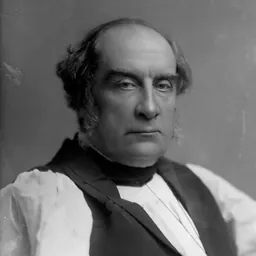
Horatio Potter (February 9, 1802 – January 2, 1887), was an educator and the sixth bishop of the Episcopal Diocese of New York.
After graduation, Horatio Potter followed his older brother Alonzo into the Episcopal Church. He was confirmed by Bishop John Henry Hobart at St. Thomas' Church in New York and began studying for holy orders. Thus, Potter had no seminary training.
Professor at Washington College: 1828–1833
Potter was ordained deacon on July 15, 1827, and priest on December 14, 1828. He served his several months diaconate at Trinity Church, Saco, Maine. In 1828, Potter was elected professor of mathematics and natural philosophy at Washington College (now Trinity College), Hartford, Connecticut). While there, Potter "took an active part in plans for the enlargement of the college and the erection of its new buildings."
Marriages and children Potter was twice married. His first marriage was to Mary Jane Tomlinson on September 22, 1827, with whom he had six children. On June 8, 1847, Mrs. Potter, "who had been the loved helpmeet of her husband in every good work," died. She left six children, five of them under twelve. In his loss, Potter perceived "the loving purposes of God." He believed that his loss would add "earnestness and tenderness" to his "efforts to edify and console" his parishioners. Charles Henry [born July 6, 1828; died January 30, 1830]
In 1852, Potter took a holiday in Scotland, during which he met Mary Atchison Pollock, a forty-two-year-old Scottish lady. They corresponded after his return to Albany, during which Potter proposed marriage. Pollock accepted his proposal in 1853. When she arrived in New York, Potter met her at the dock and escorted her to Trinity Church for their wedding. There were no children by this marriage.
Potter soon "gained the respect and regard of all his parishioners," and "a high position" among the men of Albany. In all the "charitable and philanthropic" enterprises, he served not only as a "judicious adviser," but also as a financial contributor. His ability was also recognized by other clergy. Potter remained as rector of St. Peter's for twenty-one years until his election as provisional bishop of New York in 1854. During his tenure there, "he modernized the church both spiritually and physically." This was followed in 1835 by renovating the church building: repairing the floors and pews, painting the interior, a new pulpit, addition of a vestry room, and new lamps. In 1847, a new Rectory was built.
On June 1, 1835, the parish, having noticed Potter's impaired heath, the Vestry requested Potter to do whatever he thought best to restore his health. Following the Vestry's request, Potter spent the summer of 1835 abroad, principally in England. "He returned much refreshed."
In 1837, Potter declined his election as president of Washington College (now Trinity College), Hartford, Connecticut.
On April 25, 1841, Potter was invited to deliver a Discourse on the Death of William Henry Harrison to the New York State Legislature in St. Peter's Church, after the death of President William Henry Harrison. His theme was "Uprightness and Religious Character in Rulers." Rather than a conventional eulogy, Potter's address included "a probing analysis of the evils of political life" and an "eloquent characterization" of Harrison.
On July 23, 1843, Potter preached a sermon on The Stability of the Church, as Seen in Her History and in Her Principles. In the sermon, he said that "our Church occupies, let it ever be remembered, a middle ground, in regard to its doctrines, discipline and worship, between Romanism on the one side and ultra Protestantism on the other." In this statement, Potter articulated the via media position.
On January 3, 1845, Potter's bishop, Benjamin T. Onderdonk was sentenced to suspension from "the exercise of his ministry and of his office as bishop." This gave Potter the additional task of overseeing the missions in upstate New York.
Potter was characterized by Joseph Hooper, who wrote A History of Saint Peter's Church in the City of Albany, as one of "the most honored and distinguished of the rectors of St. Peter's." While at St. Peter's, Potter was often asked whether he would accept election as a bishop, but he "discouraged every movement toward his election" until his election as bishop of the Diocese of New York of which St. Peter's was a part.
Ministry as Bishop: New York 1854–1887 In 1854, Bishop Wainwright, the provisional bishop of the Episcopal Diocese of New York died after two years of strenuous work repairing "the neglect caused by the seven years' vacancy in the episcopate." At the September 1854 Diocesan Convention, Potter was elected provisional bishop. He accepted the election. In his acceptance speech, Potter pleaded with his fellow Churchmen to "try to love each other, try to banish hard words, and satirical speeches, and uncharitable judgments from the Church of God." He became bishop of a diocese in "a state of great depression and disquiet, owing to the controversies that resulted from the trial and suspension of the Bishop Onderdonk." Potter's episcopate spanned "years of national division, ecclesiastical tensions between high and low church factions, and momentous economic and social changes in New York."
Bard College's "Stone Row" (now used as a dormitory) was built as part of the original St. Stephen's College campus. It consists of four adjacent buildings: North Hoffman, South Hoffman, Potter, and McVickar. The Potter building was named after Bishop Horatio Potter.
Bishop Onderdonk died on April 30, 1861. With this, Potter's position changed from "provisional bishop" to Bishop of the Diocese of New York. He "discharged the duties" of this office until three years and eight months before he died.
Cathedral of St. John the Divine The Cathedral of St. John the Divine in New York City was founded by Potter. About 1828, the general idea of the cathedral had been formulated. However, nothing was done about it until 1872, when Potter's Diocesan Convention gave the idea unanimous support. The next year, Potter obtained from the New York state legislature a charter for the cathedral. Potter was the first president of the board of trustees. However, nothing more was done until the episcopate of his nephew Henry C. Potter.
Community of Saint Mary Potter instituted the Community of St. Mary on February 2, 1865. The Institution was held in St. Michael's Church, Bloomingdale. The five candidates stood in front of Potter. He addressed and questioned the candidates about "their willingness to live in obedience and persevere in the work of the Lord." After the questions had been answered satisfactorily, the candidates knelt. Potter and the priests encircled and prayed for them. Then, Potter took each candidate by the right hand, received her into the Community of Saint Mary, gave her his episcopal blessing. This was the first time since the Dissolution of the Monasteries in England in the sixteenth century that an Anglican Bishop constituted a religious community.
In 1873, after Bishop George David Cummins had left the Protestant Episcopal Church to establish the Reformed Episcopal Church, a New York Herald reporter "cajoled" a "flustered and reluctant" Potter out of his sickroom. The reporter asked how much the "Reformed Episcopal" movement would affect the Protestant Episcopal Church. Potter answered, "No more, Sir, than a mosquito bite would affect the stonewall of the reservoir on Fifth Avenue."
In 1874, he strongly opposed the proposal for a Church Congress that would discuss pressing social issues, writing that "With regard to the Church in this country, I entirely concur in the opinion expressed by one of our most venerable, learned and thoughtful Bishops, that what we need pre-eminently is not talk, but work."
On November 29, 1879, the twenty-fifth anniversary of Potter's consecration was celebrated at New York's Academy of Music. He was given a testimonial in the form of a casket of gold, silver, and steel, modeled after the ancient Ark of the Covenant."
Failing health In September 1883, his "failing health" forced Potter to ask for an assistant so that he could "be relieved of the administration of the diocese." The Diocesan Convention elected his brother Bishop Alonzo Potter's son Henry C. Potter, who was at the time rector of Grace Church, New York. Horatio Potter remained "bishop in name" until he died.
Evaluation of Potter's ministry Potter's ministry both "as rector and as bishop was marked by energy and success." During Potter's episcopate, the Diocese of New York grew so much that in 1868 the new dioceses of Albany, Central New York, and Long Island were removed from his diocese. In 1856, he received the degree of Doctor of Laws (LL.D.) from Hobart College
An 1884 book described Potter in this way:
Works by or relating to Potter MC: Potter was marked by developed scholarship and literary skill. His addresses, sermons, and contributions to Church periodicals "exerted a strong and wholesome influence."
Discourses and writings by Potter
Truth to Be Maintained by Reason, Not by Physical Power: A Discourse Preached in St. Peter's Church, Albany on the 26th of November, 1827. An Introductory Sermon, preached in St. Peter's Church, Albany, on Sunday Morning, May 12, 1833 Being the Day After His Institution As rector of Said Church. (Packard and Van Benthuysen, 1833). Importance of Liberal Tastes and Good Intellectual Habits as a Provision for Pure and Permanent Enjoyment: Being an Introductory Lecture, delivered on the 5th December, 1837, before the Young Men's Association of Troy. (Tuttle, Belcher & Burton, 1837.) Intellectual Liberty; Or, Truth to be Maintained by Reason, Not by Physical Power: A Discourse Preached in St. Peter's Church, Albany, on the 26th of November, 1837 (Packard and Benthuysen, 1837). Discourse on the Death of William Henry Harrison, Late President of the United States: Delivered before the Two Houses of the Legislature of the State of New-York, in St. Peter's Church, Albany, on the 25th day of April, 1841 (Hoffman, White and Visscher, 1841). The Stability of the Church, as Seen in Her History and in Her Principles: A Sermon, preached in St. Peter's Church, Albany, on Sunday, the Twenty-third Day of July (Erastus H. Pease, 1843). http://anglicanhistory.org/usa/hpotter/rightly_dividing1844.html Rightly Dividing the Word of Truth: A Sermon, on the Religious Tendencies of the Age, and the Consequent Duty of the Christian Minister. Preached in St. Peter's Church, Albany, on Sunday, Nov. 23, 1844 (Erastus H. Pease, 1844).] Remarks in Favor of Free Churches: Being Part of an Address delivered on the Occasion of Laying the Corner Stone of a Free Church at Fort Edward, Washington County, N.Y. (Erastus H. Pease, 1845). Submission to Government: The Christian's Duty: A Sermon for the Third Sunday after Easter (Stanford and Swords, 1848). Christian Suffering, Its Dignity and Its Efficacy: A Sermon Occasioned by the Death of the Hon. Ambrose Spencer and Preached in St. Peter's Church, Albany, on Sunday, March 19, 1848 (Joel Munsell, 1849). A Tribute to the Memory of a Faithful Public Servant: A Sermon on Occasion of the Death of President Taylor (Aaron Hill, 1850). The Duties of Justice as They Affect the Individual and the State: A Sermon (Weed, Parsons and Co., 1850). Free Will Offerings with An Holy Worship: A Sermon Preached at the Consecration of St. James' Church, Syracuse, November 15, 1853. (No place: no publisher, 1853). The Minister of Christ Not of the World. A Discourse Delivered in the Chapel of the General Theological Seminary, N.Y., Dec. 16, 1855, Being the Third Sunday in Advent, on Occasion of the Annual Matriculation (Pudney and Russell, 1856. A Pastoral Letter to the Laity of the Diocese of New-York, on the Duty of Making a More Just and Adequate Provision for the Support of the Parochial Clergy (Pudney and Russell, 1857). Remarks on Confirmation, or Duties of Pastors and People in Reference to the Use of the Means of Grace (Thomas C. Butler, 1857). To the Clergy and Laity of the Diocese of New York (New York, no publisher, 1860). Bishop Potter of New-York to Strangers Arriving from Foreign Parts, and to the Dispersed Members of the Episcopal Church in the Diocese of New-York (New York, no publisher, c. 1860). To the Clergy and Laity of the Diocese of New York: Prayers Appointed to Be Used in the Diocese of New York (New York, no publisher, 1861). A Sermon Commemorative of the Life and Services of the Rev. Samuel H. Turner, D.D., Late Professor of Biblical Literature in the General Theological Seminary. Preached in St. Peter's Church, New York, October 8, 1862, by the Rev. Samuel R. Johnson, D.D., to which is Prefixed the Address Delivered at the Funeral, December 24, 1861, by the Rt. Rev. Horatio Potter (Edward O. Jenkins, 1863). A Form of Prayer to Be Used in the Diocese of New-York, on Thursday, the Thirtieth of April, A.D. 1863, set apart by the President of the United States, as a day of National Humiliation, Fasting and Prayer. (New York: no publisher, 1863). A Pastoral Letter to the Clergy of the Diocese of New York from the Bishop (New York: no publisher, 1865). The Light of the World: A Sermon Preached at the Consecration of the Right Rev. Henry A. Neely, D.D., as Bishop of Maine (F. J. Huntington and Company, 1867). Annual Address of the Bishop of New York Delivered in S. Paul's Chapel, New York, on Thursday, Oct 1st 1868 (No place: no publisher, 1868). Sermon Delivered at the Opening of the Primary Convention in the Church of the Holy Trinity, Brooklyn, N.Y. November 18th 1868 (American Church Press Company, 1869). Sermon Preached at St. Peter's Church, Albany, at the Opening of the Primary Convention of the Diocese of Albany, Wednesday, December 2, 1868 (Charles van Benthuysen and Sons, 1869). A Pastoral Letter to the Clergy and Laity of the Diocese of New York (Pott & Amery, 1869). Considerations for a Candid Mind Inquiring after Divine Truth (Pott, Young & Co., 1871). Faith in the Seen and in the Unseen. A Sermon Preached at the Consecration of St. Thomas' Chapel, New York, on the Feast of St. Thomas the Apostle, Saturday, December 21, 1872 (St Thomas Association for Parish Work, 1873). Some Observations on Science and Revelation: From the Episcopal Address to the Convention of the Diocese of New York, 1873 (Pott, Young & Co., 1873). A Letter from the Bishop of New-York, on the Proposed "Church Congress," Appointed to be Held in the Week of the Opening of the General Convention (J. W. Amerman, 1874). Address Delivered at the Annual Commencement of Union College, June 23, 1875, by Horatio Potter, D.D., LL.D., D.C. L. (Oxon.), Bishop of new York, An Alumnus and Honourary Chancellor of Union University (William H. Young, 1875). A Few Plain Truths and Serious Counsels for Young Men Preparing for the Sacred Ministry of the Church: An Address by the Bishop of New York to the Students of the General Theological Seminary, Delivered in the Chapel, on occasion of the Annual Matriculation, All Saints Day, Nov. 1st A.D., 1879 (Styles and Cash, 1879).
Works relating to Potter
The Sermon at the Consecration of Horatio Potter, D.D., to the Episcopate, Preached by Appointment, in Trinity Church, New-York, on Wednesday, November 22, 1854 by Francis Fulford, Lord Bishop of Montreal (Church Depository, 1854.] The Pastoral Letter of the Rt. Rev. Horatio Potter, D.D., LL.D., D.C.L. and Its Assailants. Reprinted from the American Quarterly Church Review for October, 1865. (New York: no publisher, 1865). Review of "A Pastoral Letter to the Clergy of the Diocese of New York from the Bishop" by a Presbyter (New York: no publisher, 1865). The Pastoral Letter of the Rt. Rev. H. Potter with the Replies of the Rev. S. H. Tyng, the Rev. E. H. Canfield, the Rev. John Cotton Smith, the Rev. W. A. Muhlenberg (John A. Gray & Green, 1865). A Letter to the Right Rev'd Horatio Potter, D.D., LL.D., Bishop of the Protestant Episcopal Church in the Diocese of New York, Relating to the Proceedings Pending against the Rev. Stephen H. Tyng, Jr. by Effingham H. Nichols (Gibson Brothers, 1868).] Publications of the American Church Union, No. 1. The Tyng Case. A Narrative together with the Judgment of the Court and the Admonition by the Bishop of New York (Pott & Amery, 1868). Publications of the American Church Union, No. 2. Speech of Stephen P. Nash, Esq., For the Prosecution, in the Trial of the Rev. S. H. Tyng, Jr. (Pott & Amery, 1868).] Report of the Committee of Investigation in the Case of Rev. Edward Cowley. June 6, 1881 made to Potter (A. Livingston, 1881).
Don’t just read it —
keep it.
Full-length biographies made to live with: read them, listen on the way to work, watch them tonight.
- E-book
- Audio
- Video
Instant download · yours to keep · every purchase keeps this site free
Important facts
People in Horatio Potter's life
Named in this biography and alive at the same time




Related people
Same field, nearest in time

Contemporaries
People whose lives overlapped Horatio Potter's





Frequently asked questions
Who was Horatio Potter?
Bishop of New York; American Episcopalian bishop (1802-1887)
When was Horatio Potter born?
Horatio Potter was born on 9 February 1802 in Beekman.
When did Horatio Potter die?
Horatio Potter died on 2 January 1887 in New York City.
What was Horatio Potter's occupation?
Horatio Potter was an anglican priest.
What nationality was Horatio Potter?
Horatio Potter was American.
Sources & further reading
Cite this page
APA: Biography.guide. (2026). Horatio Potter. https://biography.guide/horatio-potter/
MLA: "Horatio Potter." Biography.guide, https://biography.guide/horatio-potter/.
Chicago: "Horatio Potter." Biography.guide. https://biography.guide/horatio-potter/.
Data last updated: 2026-09-20 · Spot an error? Report a correction.
Page generated 2026-09-27 05:23 UTC