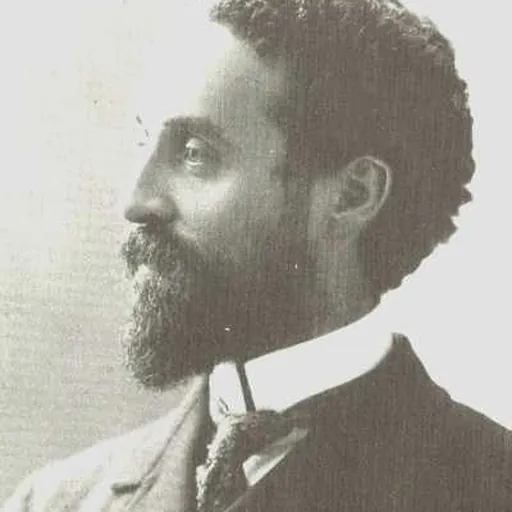
About Horatio Dresser
Lived 1866 – 1954 (aged 88). Horatio Dresser was an American writer, author and minister (Christianity), known for New Thought.
Horatio Willis Dresser (January 15, 1866 – March 30, 1954) was a New Thought religious leader and author in the United States. In 1919 he became a minister of General Convention of the Church of the New Jerusalem, and served briefly at a Swedenborgian church in Portland, Maine.
In addition to his writings on New Thought, Dresser is known for having edited two books of selected papers by Phineas Parkhurst Quimby. Both of Dresser's parents had studied with the mesmerist, who influenced the New Thought movement.
Early life Dresser was born January 15, 1866, in Yarmouth, Maine, to Julius and Annetta Seabury Dresser. His parents were involved in the early New Thought movement through their being treated by and then studying with Phineas Parkhurst Quimby. They became his early followers, along with Mary Baker Eddy.
After Horatio was born, the Dressers moved out west, with Julius Dresser working as a newspaper editor first in Colorado and then California. Horatio left school at 13 to work, and in 1882, the family moved back to Boston.
After attending local schools, Horatio Dresser was admitted to Harvard in 1891. He dropped out in 1893 upon the death of his father. Ten years later he returned to Harvard, completing his Ph.D. in 1907. That same year, Dresser published his first book, The Power of Silence. In 1896, Dresser founded the Journal of Practical Metaphysics. Two years later, this journal was merged into The Arena, for which Dresser was subsequently an associate editor. The following year, 1899, Dresser founded another New Thought magazine, The Higher Law.
Dresser taught at Ursinus College in Philadelphia, Pennsylvania, from 1911 to 1913. In 1919, he became a minister of the General Convention of the Church of the New Jerusalem, a denomination built around the teachings of Emanuel Swedenborg, briefly serving as a pastor of a Swedenborgian church in Portland, Maine. In 1921, after the Library of Congress made Quimby's papers publicly available, Dresser compiled and edited a selection of Quimby's works into The Quimby Manuscripts (1921). In this work, Dresser re-opened the controversy concerning Quimby and Mary Baker Eddy, and her sources for developing Christian Science. He attacked Eddy in a chapter as well as in the appendix of the book. The work was heavily edited and highly selective, and Dresser chose to publish only what supported his and his parents' claims.
According to Ann Taves, "Dresser used the psychology of the subconscious to reinterpret the writings of Phineas Quimby and provide a unified theoretical foundation for the dissenting mind-cure groups under the banner of New Thought." He saw Christian Science and New Thought as linked together in what he called the "mind cure" movement, but disliked the public emphasis on Christian Science as opposed to what he saw as the "more rational" New Thought; so he wanted to link the origins of "mind cure" to Quimby. The complete writings of Quimby were later made available through Boston University, and Gillian Gill writes that they revealed "only general similarities" between Quimby's writings and Eddy's.
A History of the New Thought Movement In 1919, Dresser wrote A History of the New Thought Movement, which aimed to present a history of the movement as an idealistic, spiritual faith system. Although highly influential, the work was "intensely partisan and repetitive", and Dresser's position in New England and his preoccupation with the Quimby controversy led to a distortion of the movement's history, in which he mostly ignored the importance of the Chicago based Emma Curtis Hopkins in favor of Quimby.
Personal life Dresser married Alice Mae Reed in 1898.
Don’t just read it —
keep it.
Full-length biographies made to live with: read them, listen on the way to work, watch them tonight.
- E-book
- Audio
- Video
Instant download · yours to keep · every purchase keeps this site free
Important facts
Family & relationships
People in Horatio Dresser's life
Named in this biography and alive at the same time



Related people
Same field, nearest in time


Contemporaries
People whose lives overlapped Horatio Dresser's



Frequently asked questions
Who was Horatio Dresser?
American author and New Thought proponent (1866–1954)
When was Horatio Dresser born?
Horatio Dresser was born on 15 January 1866 in Yarmouth.
When did Horatio Dresser die?
Horatio Dresser died on 30 March 1954 in Boston.
What was Horatio Dresser's occupation?
Horatio Dresser was a writer, author and minister (Christianity).
What was Horatio Dresser known for?
Horatio Dresser was known for New Thought.
What nationality was Horatio Dresser?
Horatio Dresser was American.
Sources & further reading
Cite this page
APA: Biography.guide. (2026). Horatio Dresser. https://biography.guide/horatio-dresser/
MLA: "Horatio Dresser." Biography.guide, https://biography.guide/horatio-dresser/.
Chicago: "Horatio Dresser." Biography.guide. https://biography.guide/horatio-dresser/.
Data last updated: 2026-09-22 · Spot an error? Report a correction.
Portrait: Wikimedia Commons · author & licence
Page generated 2026-09-27 05:04 UTC