
About Horatio Brown
Lived 1854 – 1926 (aged 72). Horatio Brown was a British historian and poet.
Horatio Robert Forbes Brown (16 February 1854 – 19 August 1926) was a Scottish historian who specialized in the history of Venice and Italy.
Born in Nice, he grew up in Midlothian, Scotland, was educated in England at Clifton College and Oxford, and spent most of his life in Venice, publishing several books about the city. He also wrote for the Cambridge Modern History, was the biographer of John Addington Symonds, and was a poet and alpinist.
Early life Born at Nice (then part of the kingdom of Sardinia) on 16 February 1854, Brown was the son of Hugh Horatio Brown, an advocate, of New Hall House, Carlops, who was a Deputy Lieutenant for Midlothian, and of Gulielmina Forbes, the sixth daughter of Colonel Ranaldson MacDonnell of Glengarry and Clanranald (1773–1828). The marriage was in 1853, and his mother was a good deal younger than his father, who died on 17 October 1866, at the age of 66.
Brown's maternal grandfather, Ranaldson MacDonnell, of Invergarry Castle on Loch Oich in Inverness, Chief of Clan MacDonell of Glengarry, had been one of Walter Scott's closest friends.
His other grandfather was Robert Brown, Esq. (died 1834), of New Hall, Carlops, who later wrote a play called Mary's Bower and a book of Comic Poems in Scots. He was a lover of art, commissioning new work by Henry Raeburn, Andrew Geddes and John Watson Gordon.
Hugh and Gulielmina Brown had three sons, Horatio, Allan, and Chadwick, who were sent to Clifton College in 1864. After their father's death, Mrs. Brown moved to Bristol to be near her sons. At Clifton, Horatio was befriended by a young schoolmaster, John Addington Symonds, who lectured on the Greek poets and became an important influence on his life. From there, he went up to New College, Oxford, in 1873, in 1877 gaining second class honours in Greats, although he did not take his degree.
Brown spoke Italian, French, and German well and was also strong in classical Greek, while a contemporary later described him as "a fair-haired, breezy out-of-doors person with a crisp Highland-Scottish speech". Brown became a leading figure in the English-speaking community, churchwarden of St George's Church in campo San Vio, president of the city's Cosmopolitan Hospital, and honorary treasurer of the Sailors' Institute. He also befriended local gondoliers and fishermen, helping them in their battles, gaining the material for a book of local colour, Life on the Lagoons, which appeared in 1884. read it and wrote the poem "To H. F. Brown" to celebrate "your spirited and happy book".
Symonds joined his friend Brown for holidays in Venice, when they liked to drift through the lagoons in Brown's sandolo, called Fisole, which had orange sails decorated with a fleur-de-lis, or to play tre sette or bocce.
In 1885, the Browns bought a tall, narrow, tenement building on the Zattere looking down the Giudecca Canal and reconstructed it as a house called Cà Torresella. Brown's close friend Antonio Salin, a gondolier, also lived in the house with his wife and family.
An alpinist, Brown climbed peaks in Switzerland, the Carnic Alps and the Tyrol, and was a member of the Alpine Club of Venice. In 1899, his portrait was painted by Henry Scott Tuke.
In 1901, Brown's brother Allan died in Australia. while after his death The Cornhill Magazine called him a "Scotch laird, with his ruddy countenance, muscular limbs, and sturdy frame".
Works Life on the Lagoons (London: 1884; 5th edition by Rivingtons, 1909 Venetian studies (London: Kegan Paul, Trench & co., 1887) Calendar of State Papers (Venetian): 1581–1591, 1895
Honours Cavaliere of the Kingdom of Italy Member of the Ateneo Veneto Gold medal of the British Academy Taylorian Lecturer, 1895
Don’t just read it —
keep it.
Full-length biographies made to live with: read them, listen on the way to work, watch them tonight.
- E-book
- Audio
- Video
Instant download · yours to keep · every purchase keeps this site free
Important facts
People in Horatio Brown's life
Named in this biography and alive at the same time



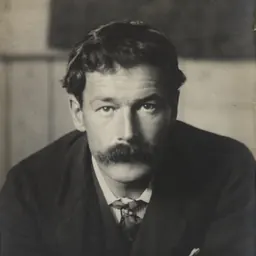
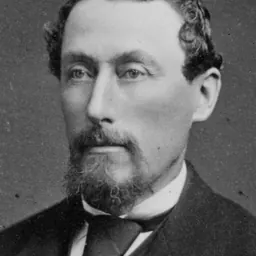
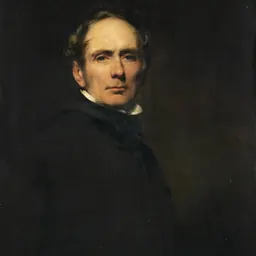
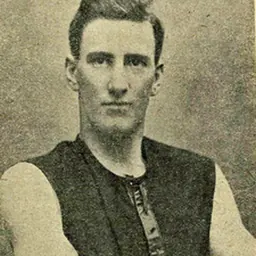
Related people
Same field, nearest in time
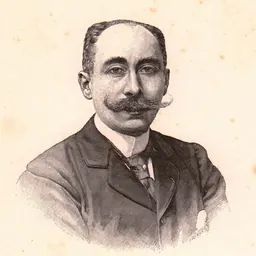

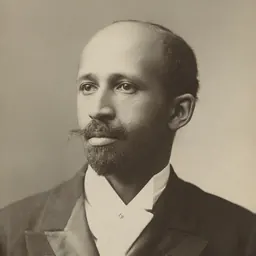
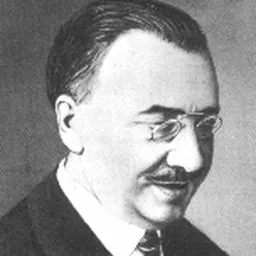
Contemporaries
People whose lives overlapped Horatio Brown's





Frequently asked questions
Who was Horatio Brown?
British historian (1854–1926)
When was Horatio Brown born?
Horatio Brown was born on 16 February 1854 in Nice.
When did Horatio Brown die?
Horatio Brown died on 19 August 1926 in Belluno.
What was Horatio Brown's occupation?
Horatio Brown was a historian and poet.
What nationality was Horatio Brown?
Horatio Brown was British.
Sources & further reading
Cite this page
APA: Biography.guide. (2026). Horatio Brown. https://biography.guide/horatio-brown/
MLA: "Horatio Brown." Biography.guide, https://biography.guide/horatio-brown/.
Chicago: "Horatio Brown." Biography.guide. https://biography.guide/horatio-brown/.
Data last updated: 2026-09-20 · Spot an error? Report a correction.
Page generated 2026-09-27 05:28 UTC