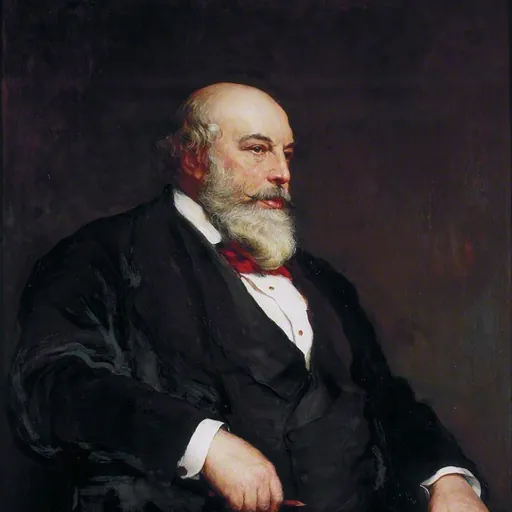
About Horace Jones
Lived 1819 – 1887 (aged 68). Horace Jones was a British architect.
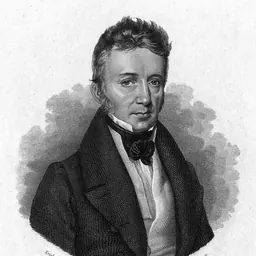
Sir Horace Jones (20 May 1819 – 21 May 1887) was an English architect particularly noted for his work for the City of London from 1864 until his death. He served as president of the Royal Institute of British Architects from 1882 until 1884, and was knighted in 1886. His most recognised work, Tower Bridge, was completed posthumously. Although his work is widely recognised, Jones himself is relatively little known, and is often disparaged by the architectural profession because of a perceived lack of artistry.
Biography The son of David Jones, a lawyer, and Sarah Lydia Shephard, Jones was born at 15 Size Lane, Bucklersbury, London. He was articled to John Wallen, an architect and surveyor, of 16 Aldermanbury, and subsequently in 1841–42 travelled to Italy and Greece studying ancient architecture.
In 1843 he commenced practice as an architect at 16 Furnival's Inn, Holborn. Beginning with Cardiff Town Hall (c. 1850–53) and Caversham Park (from c. 1850), he designed and carried out many important buildings, soon coming to concentrate on work in London. He was surveyor for the Duke of Buckingham's Tufnell Park estate, for the Barnard estate, and the Bethnal Green estate.
Jones' final legacy is one of the most recognised buildings in the world, Tower Bridge. It was designed in collaboration with the civil engineer John Wolfe Barry, who was brought in as an expert to devise the mechanism for the bascule bridge. Following Jones' death during the initial stages of construction, the execution lay in the hands of Barry.
Jones became an associate of the Royal Institute of British Architects in 1842, a fellow in 1855. Despite his prominence in the profession, he was voted down for the Presidency in 1881 on the grounds that his work did not show sufficient artistry, and that he was a local authority employee rather than an independent practitioner. Jones protested strongly and was elected President at the next election in 1882. He was knighted on 30 July 1886. Jones was also a freemason, and from 1882 until his death was Grand Superintendent of Works Marshall & Snelgrove's department store, Oxford Street, 1850s. Surrey Music Hall, Newington, 1856. Sovereign Life Assurance offices, Piccadilly, 1857. British and Irish Magnetic Telegraph Company's office, Threadneedle Street, 1859. A contemporary account refers to the building's "rather fanciful, and very ornate French Renaissance facade, crowned by a lofty clock-tower." Council Chamber, Guildhall, 1884. Bishopsgate Police Station, 1866, demolished 1930s
Extant Caversham Park, Oxfordshire, c. 1850 (now within the borough of Reading, Berkshire). The Hurd Estate: five remaining "gentlemen's houses" of a development in Kentish Town, North London, c.1855. Smithfield Market. Built in three stages: Central Meat Market, 1866–67; Poultry and Provision Market, 1873–75 (burnt 1958); Fruit and Vegetable Market, 1879–83. Foreign Cattle Market, 1871. Conversion of Convoys Wharf, Deptford. Library and Museum, Guildhall, 1872 (now fulfilling different functions). Billingsgate Market, 1874-78 (1985-89 converted into offices by Richard Rogers). Temple Bar Memorial, 1880. The elaborate pedestal in a Neo-Renaissance style, decorated with some reliefs as well as statues of Queen Victoria and The Prince of Wales, serves as the base for Charles Bell Birch's Griffin (but really a dragon), the symbol of the City of London. Leadenhall Market, 1880–81. former Guildhall School of Music and Drama, John Carpenter Street, completed in 1886. Tower Bridge, approved design 1884, construction by John Wolfe Barry 1886–94. Jones' stonework in the Baronial Style, supposed to be in harmony with the nearby Tower of London, is pure facade which disguises the metal structure underneath.
Gallery
Notes and references
Don’t just read it —
keep it.
Full-length biographies made to live with: read them, listen on the way to work, watch them tonight.
- E-book
- Audio
- Video
Instant download · yours to keep · every purchase keeps this site free
Important facts
People in Horace Jones's life
Named in this biography and alive at the same time





Related people
Same field, nearest in time

Contemporaries
People whose lives overlapped Horace Jones's


Frequently asked questions
Who was Horace Jones?
British architect (1819–1887)
When was Horace Jones born?
Horace Jones was born on 20 May 1819 in London.
When did Horace Jones die?
Horace Jones died on 21 May 1887 in London, Devonshire Place.
What was Horace Jones's occupation?
Horace Jones was an architect.
What nationality was Horace Jones?
Horace Jones was British.
Sources & further reading
· DBpedia: Horace Jones (architect)
Cite this page
APA: Biography.guide. (2026). Horace Jones. https://biography.guide/horace-jones/
MLA: "Horace Jones." Biography.guide, https://biography.guide/horace-jones/.
Chicago: "Horace Jones." Biography.guide. https://biography.guide/horace-jones/.
Data last updated: 2026-09-20 · Spot an error? Report a correction.
Portrait: Wikimedia Commons · author & licence
Page generated 2026-09-27 04:57 UTC