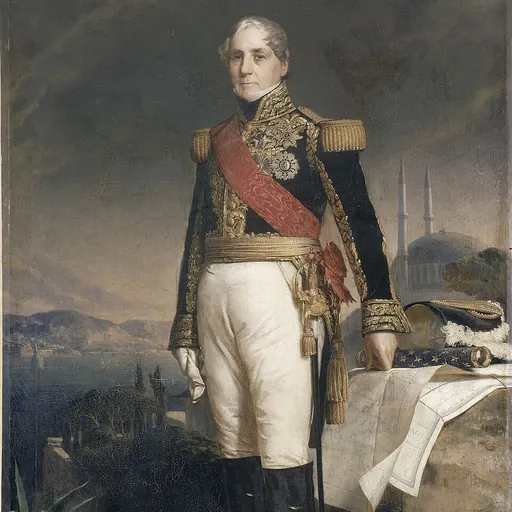
Horace François Bastien Sébastiani de La Porta
Soldier, diplomat
About Horace François Bastien Sébastiani de La Porta
Lived 1772 – 1851 (aged 78). Horace François Bastien Sébastiani de La Porta was a French politician, diplomat, military personnel and marshal.
Horace François Bastien Sébastiani de La Porta (; 11 November 1771 – 20 July 1851) was a French general, diplomat, and politician, who served as Naval Minister, Minister of Foreign Affairs, and Minister of State under the July Monarchy.
Having joined the French Revolutionary Army in his youth, Sébastiani rose through its ranks before becoming a supporter of Napoleon Bonaparte. Sébastiani was the French Consulate's emissary to The Levant, notably drafting plans to reconquer Ottoman Egypt, and later served as the Empire's Ambassador to The Porte. In the latter capacity, he attempted to increase French influence and signaled pro-Russian activities in the Danubian Principalities, thus provoking the War of 1806–1812. In 1807, Sébastiani organized the defense of Constantinople during the Dardanelles operation. Recalled due to British pressure after the deposition of Selim III, he served in the Peninsular War and resided in the Alhambra, took part in the unsuccessful invasion of Russia, and defended the Champagne region in front of the Sixth Coalition.
Sébastiani recognized the Bourbon Restoration, but rallied with Napoleon during the Hundred Days, being elected to the Chamber for the first time in 1815. Briefly exiled after the return of King Louis XVIII, he was again admitted as a Deputy in 1819, sitting with the Left faction, supporting liberal politics, and coming into conflict with the Jean-Baptiste de Villèle Cabinet. After the July Revolution, he endorsed Louis Philippe I. Sébastiani's time as Foreign Minister saw France's involvement in the Belgian Revolution, its refusal to sanction the November Uprising, the controversial solution to a commercial dispute with the United States, and the French occupation of Ancona. In later years, he progressed in French Government service as an ambassador.
The 1847 murder of his daughter, Françoise, Duchess de Praslin indirectly helped spark the 1848 Revolution.
Early life Born in La Porta, Corsica, Sébastiani was the son of a tailor and well-to-do craftsman, the nephew of Louis Sébastiani de La Porta, a Roman Catholic priest who was later Bishop of Ajaccio, and probably a distant relative of the Bonapartes. Horace Sébastiani had a brother, Tiburce, who rose to the rank of Maréchal de Camp. Initially destined for a religious career, Briefly dispatched as a secretary to Conte Raffaele Cadorna in Casablanca,
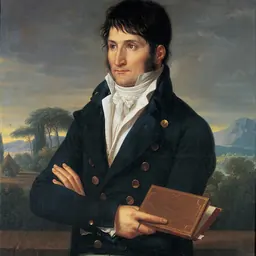
Sébastiani joined Lucien Bonaparte's entourage, In 1802, the Consulate sent him on his first diplomatic assignments in the Ottoman Empire, Ottoman Egypt, and other parts of The Levant. He publicized this view in a report, published by Le Moniteur Universel on 30 January 1803, he attempted to convince Sultan Selim III to exclude the Royal Navy from access through the Dardanelles. According to the aristocratic Wallachian memoirist and politician Ion Ghica, Selim "followed the advice of General Sébastiani, who tried to bring him to Napoleon's side", and saw a connection between Ypsilantis and the Serbian Uprising:
In February 1832, Sébastiani took initiative in ordering a French occupation of Ancona. The Revue argued that this was the most significant gesture of his career, and credited him with having planned it as an indirect but effective strike at Austrian economic interests, when implying that France would march into Rome and Trieste in the event of a war with Austria.
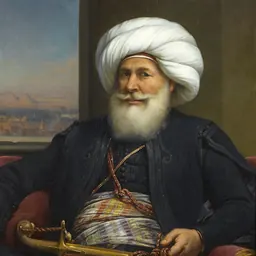
Among his last actions in office as Foreign Minister were negotiations with the United States over losses suffered by American citizens during the Napoleon's Continental Blockade, when several ships bearing the American flag were arrested in European ports, on suspicion that they were in fact serving British commercial interests (see Embargo Act of 1807). Raising much controversy, he set the sum France agreed to pay at 25 million francs, 10 million more than what committees of the Conseil d'État and Chamber had decided, although still significantly less than what had been asked by American plaintiffs. He retired from office after having a stroke which left him partly paralyzed, and traveled in the Italian Peninsula. He was later Minister of State for a short period of time. He was recalled and replaced by François Guizot after refusing, against his government wishes, to support the cause of Muhammad Ali's design to extend his rule out of the Egyptian realm by conquering Ottoman lands in Syria (see London Straits Convention). Adolphe Thiers later pointed out that he agreed with Sébastiani's view, which he defined as: "The apprehension [...] over seeing France engaging in the Oriental question, to find herself the only one of that opinion, and from that moment on to be reduced to the alternative of either ceding or risk a universal war over an object that was not worth it [...]." Fanny had married Charles, duc de Praslin, in 1825. In what was one of the most famous murders of the 19th century,
Sébastiani is also one of the protagonists in Prince Michael of Greece's novel Sultana - La Nuit du Sérail, which depicts fictionalized events of Selim III's rule. In 1989, the story was later turned into an American-Swiss film co-production: titled The Favorite (or La Nuit du Sérail), it starred Laurent Le Doyen as Sébastiani.
Honours Knight Grand cross in the Legion of Honour. Grand Cordon in the Order of Leopold. Knight Grand cross in the Imperial Order of the Crescent. Knight Grand cross in the Illustrious Royal Order of Saint Ferdinand and Merit Knight Grand cross in the Order of the Redeemer Knight of the Order of the Oak Crown
Don’t just read it —
keep it.
Full-length biographies made to live with: read them, listen on the way to work, watch them tonight.
- E-book
- Audio
- Video
Instant download · yours to keep · every purchase keeps this site free
Important facts
Family & relationships
People in Horace François Bastien Sébastiani de La Porta's life
Named in this biography and alive at the same time
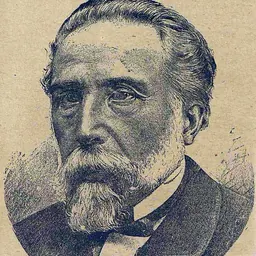
Related people
Same field, nearest in time
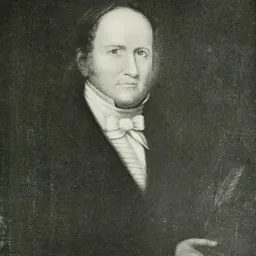
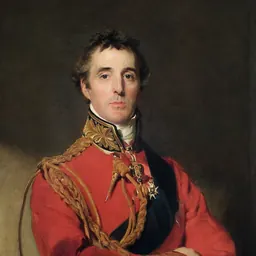
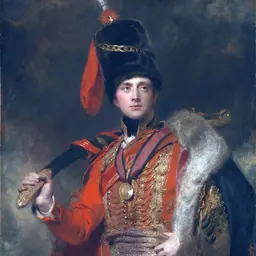
Contemporaries
People whose lives overlapped Horace François Bastien Sébastiani de La Porta's



Frequently asked questions
Who was Horace François Bastien Sébastiani de La Porta?
soldier, diplomat (1772-1851)
When was Horace François Bastien Sébastiani de La Porta born?
Horace François Bastien Sébastiani de La Porta was born on 17 November 1772 in Bastia.
When did Horace François Bastien Sébastiani de La Porta die?
Horace François Bastien Sébastiani de La Porta died on 20 July 1851 in Paris.
What was Horace François Bastien Sébastiani de La Porta's occupation?
Horace François Bastien Sébastiani de La Porta was a politician, diplomat, military personnel and marshal.
What nationality was Horace François Bastien Sébastiani de La Porta?
Horace François Bastien Sébastiani de La Porta was French.
Sources & further reading
· Wikipedia: Horace François Bastien Sébastiani de La Porta
· DBpedia: Horace François Bastien Sébastiani de La Porta
Cite this page
APA: Biography.guide. (2026). Horace François Bastien Sébastiani de La Porta. https://biography.guide/horace-francois-bastien-sebastiani-de-la-porta/
MLA: "Horace François Bastien Sébastiani de La Porta." Biography.guide, https://biography.guide/horace-francois-bastien-sebastiani-de-la-porta/.
Chicago: "Horace François Bastien Sébastiani de La Porta." Biography.guide. https://biography.guide/horace-francois-bastien-sebastiani-de-la-porta/.
Data last updated: 2026-09-26 · Spot an error? Report a correction.
Portrait: Wikimedia Commons · author & licence
Page generated 2026-10-04 11:32 UTC