
About Hong Kyung-pyo
Born 1962. Hong Kyung-pyo is a South Korean cinematographer.
Early life Hong Kyung-pyo was born on August 11, 1962, the third of four brothers. Hong was raised in Waegwan, Chilgok County, North Gyeongsang Province, located near a U.S. military base. Hong was a high-achieving student through middle school, but his academic performance declined during his high school years in Daegu. This period of instability led to his expulsion during his second year. After transferring to Yangmok High School in his hometown, Hong briefly ran away to Seoul with a friend. Upon returning a month later, he refocused on his studies with the goal of eventually establishing himself in Seoul. Following his graduation from Yangmok High School in 1981, Hong enrolled in the economics department of a college near Seoul. He remained there for one year before withdrawing from the program.
Career
Career beginnings After dropping out of college, Hong remained uncertain about his future. In 1987, the improving quality of television commercials sparked his interest in a film career. The purchase of a camcorder by his elder brother marked the beginning of his filmmaking endeavors. The following year, he bought a video production textbook at Kyobo Bookstore in Gwanghwamun, and the author's contact information led him to the Korean Society of Cinematographers.
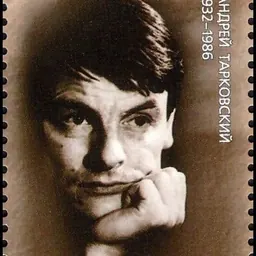
In 1989, Hong started as a cinematographer's assistant on the film All That Falls Has Wings. At 27, he was older than most assistants, who were usually 21 or 22. Hong's early experiences in Chungmuro motivated him to pursue further study, particularly after being profoundly affected by Andrei Tarkovsky's Mirror. He grew frustrated with the Chungmuro apprenticeship system, which mandated at least five years of work as an assistant before one could become a cinematographer. Both films were the only Korean entries selected for the 'New Currents' section, the main competition category of the Busan International Film Festival.
That year, Hong’s work on Min Byung-chun's Phantom: The Submarine was groundbreaking. He pioneered Korea’s "dry for wet" technique, achieving realistic underwater visuals without actual water, similar to methods used in Hollywood films like Crimson Tide. For a 25-minute submarine combat sequence, Hong maintained dense smog on a 400-square-meter set for 36 days. The process required approximately 200 liters of oil-based smog at a cost of over 5 million won. To achieve a convincing underwater visual, Hong continuously adjusted the smog concentration, filters, and lighting. He described the period as "practically living with smog," as the set had to be sealed throughout the winter to maintain constant density. Although the smog was considered harmless, the conditions necessitated gas masks. Despite these efforts, the crew initially expressed concern that the footage resembled "toys" floating in a "blurry fog" rather than the deep sea. Lee Hyun-seung's Il Mare, and E J-yong's film Asako in Ruby Shoes.
The 2002 film Champion marked a turning point for Hong, as it was his first project where he exercised complete control over filming, including the lighting department. Previously, he had deferred to lighting directors, often regretting tonal inconsistencies. With Champion, he significantly reduced such instances, aligning the visual tone more closely with his vision. The boxing sequence set in Las Vegas was a major achievement in Korean computer graphics at that time, particularly for its seamless camera movement through the ring ropes. Despite the sophisticated integration of these CG effects, which often went unnoticed by viewers, their innovative nature remains largely unacknowledged due to the film's modest box office performance.
To capture explosion effects, Hong commissioned engineer Song Seon-dae to build a custom, remote-controlled vibrating device, opting for in-house production due to the limited three-week rental period for international equipment. Song created this device within a month, using a motor sourced from Cheonggyecheon. The device caused the camera to shake, mimicking the impact of explosions. Unlike still cameras, which simply open and close a shutter to capture an image, movie cameras use a spinning mirror, typically set at 180 degrees, to create smooth video. Reducing this mirror's angle to 90, 45, or 25 degrees results in choppier, jarring motion. Given the camera's approximate 25-kilogram weight, inducing natural shaking was challenging; thus, the vibrating device was crucial.
In 2007, Hong served as the cinematographer for Lee Myung-se's film M. For his work on this film, Hong received the Best Cinematography Award at the 2007 Korean Association of Film Critics Awards and the Technical Award at the 2008 Busan Film Critics Awards.
While Hong Kyung-pyo was in Los Angeles for four months, commuting between Mexico and the Dominican Republic for the film Fire Bay, its production was suddenly postponed a week before his scheduled start. During this period, he spoke with Bong Joon-ho, who was visiting the U.S. They met for a meal, and Bong inquired about Hong's availability. Bong expressed his desire for Hong to work on Mother, citing an appreciation for Hong's ability to convey subtle messages through color, which he felt suited the film's delicate yet powerful, "slightly feminine" aesthetic.
International recognition and recent works Na Hong-jin chose Hong to be the cinematographer for The Wailing based on a recommendation from actor Kim Yun-seok, who had worked with Hong on Sea Fog. Kim believed their personalities would complement each other, saying to Na, "I think you both have similar energies," and Na then offered Hong the script.
Hong reunited with Bong Joon Ho for the critically acclaimed film Parasite. Principal photography for the movie spanned from May 18 to September 19, 2018, with filming locations in Seoul and Jeonju. For the filming, Hong utilized the Arri Alexa 65 and used Angénieux zoom lens. In term of practical lighting, he specifically requested sophisticated indirect illumination and the warmth provided by tungsten light sources. Prior to set construction, Hong and art director Lee Ha-jun conducted multiple site visits to observe the sun's movement, collaboratively determining the optimal set placement.
Zack Sharf praised him as one of 30 cinematographers to watch, praising his "dynamic camerawork".
At the 61st Baeksang Arts Awards, Hong received the Grand Prize in the film category for his work on Harbin. This marked a historic first in the 61-year history of the awards, as the Grand Prize was bestowed upon a staff member rather than a film, director, or actor. In his acceptance speech, Hong shared the honor with his colleagues, stating, "Harbin was filmed in Mongolia, Latvia, and Korea in the cold midwinter under strong winds and harsh cold. I would like to share this honor and joy with all my comrades on the set of the film who have put their passion and dedication into achieving artistic perfection."
Filming style Hong Kyung-pyo employs a Hollywood-style Director of Photography system, granting the cinematographer comprehensive control over both filming and lighting. This approach was shaped by his four years in Los Angeles, particularly his first professional role there overseeing local filming for Kim Soo-hee's Harmonica of Sorrow. During this time, he observed that American crews combined filming and lighting responsibilities, a notable departure from the separate teams prevalent in Chungmuro. This experience significantly influenced his later work.
Filmography
Series YearTitleDirectorEnglishKorean 2026 Portraits of Delusion 현혹 Han Jae-rim
Awards and nominations
Listicles + Name of publisher, year listed, name of listicle, and placement Publisher Year Listicle Placement Cultura 2019 [Korean Cinema 100th Anniversary Series 9] 10 Cinematographers Top 10 IndieWire Critics Poll2019 Best Cinematography for Parasite 5th Place
Don’t just read it —
keep it.
Full-length biographies made to live with: read them, listen on the way to work, watch them tonight.
- E-book
- Audio
- Video
Instant download · yours to keep · every purchase keeps this site free
Important facts
People in Hong Kyung-pyo's life
Named in this biography and alive at the same time






Related people
Same field, nearest in time




Contemporaries
People whose lives overlapped Hong Kyung-pyo's



Frequently asked questions
Who is Hong Kyung-pyo?
South Korean cinematographer
When was Hong Kyung-pyo born?
Hong Kyung-pyo was born on 11 August 1962.
What is Hong Kyung-pyo's occupation?
Hong Kyung-pyo is a cinematographer.
What nationality is Hong Kyung-pyo?
Hong Kyung-pyo is South Korean.
Sources & further reading
Cite this page
APA: Biography.guide. (2026). Hong Kyung-pyo. https://biography.guide/hong-kyung-pyo/
MLA: "Hong Kyung-pyo." Biography.guide, https://biography.guide/hong-kyung-pyo/.
Chicago: "Hong Kyung-pyo." Biography.guide. https://biography.guide/hong-kyung-pyo/.
Data last updated: 2026-09-23 · Spot an error? Report a correction.
Portrait: Wikimedia Commons · author & licence
Page generated 2026-09-27 05:08 UTC