
About Homer Bigart
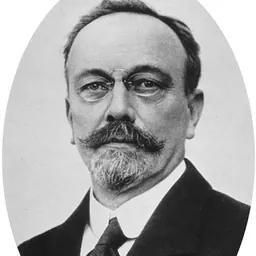
Lived 1907 – 1991 (aged 83). Homer Bigart was an American war correspondent and journalist.
Homer William Bigart (October 25, 1907 – April 16, 1991) was an American reporter who worked for the New York Herald Tribune from 1929 to 1955 and for The New York Times from 1955 to his retirement in 1972. He was considered a "reporter's reporter" and an "enduring role model." He won two Pulitzer Prizes as a war correspondent, as well as most of the other major journalism awards.
He transferred to the New York University School of Journalism in 1929.
Journalism career
He got a part-time job as a night copy boy at the Herald Tribune, then dropped out of school to work full-time at the newspaper. and a painfully slow typing speed which did not stop him from being promoted to general assignment reporter after four years. He also covered the fighting in North Africa, Italy, and southern France. When Germany surrendered, he went to the Pacific and was one of the first reporters to enter Hiroshima after the atomic bombing.
Secretary of War Robert P. Patterson honored war correspondents, including Bigart, at an event in Washington, on November 23, 1946. Once again, he was in the thick of things; a July 10, 1950, dispatch described being caught between North Korean tanks and an American artillery barrage. He covered the demonstrations in St. Augustine, Florida, that led directly to the passage of the landmark Civil Rights Act of 1964. His dispatch's blunt description of civil rights opponents in Philadelphia, Mississippi, as "peckerwoods' and "rednecks," following the disappearance of civil rights activists Mickey Schwerner, James Cheney, and Andrew Goodman, set Bigart apart from other Times reporters.
Personal life He divorced his first wife, Alice Veit.
Alice Weel, his second wife, died of cancer in 1969. Alice Weel Bigart was the first woman to write full-time for a US network news program, when she joined CBS's Douglas Edwards and the News in 1948 and later became a producer of 60 Minutes. Hélène Montgomery-Moore, the widow of Major Cecil Montgomery-Moore, DFC, funded the Mrs. Cecil Montgomery-Moore Scholarship for journalism, in memory of Alice Weel Bigart.
Bigart retired in 1973 and died in 1991 in Portsmouth, New Hampshire, of cancer.
Don’t just read it —
keep it.
Full-length biographies made to live with: read them, listen on the way to work, watch them tonight.
- E-book
- Audio
- Video
Instant download · yours to keep · every purchase keeps this site free
Important facts
People in Homer Bigart's life
Named in this biography and alive at the same time


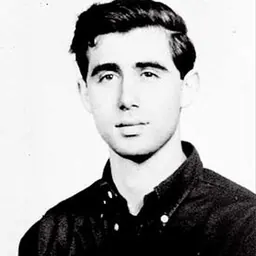


Related people
Same field, nearest in time

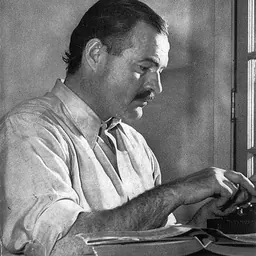
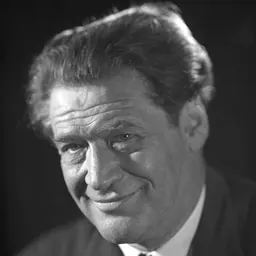
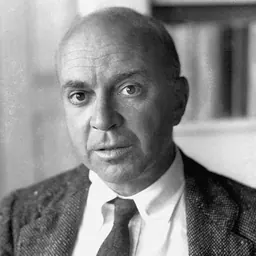
Contemporaries
People whose lives overlapped Homer Bigart's


Frequently asked questions
Who was Homer Bigart?
American journalist
When was Homer Bigart born?
Homer Bigart was born on 25 October 1907 in Hawley.
When did Homer Bigart die?
Homer Bigart died on 16 April 1991 in Portsmouth, New Hampshire.
What was Homer Bigart's occupation?
Homer Bigart was a war correspondent and journalist.
What nationality was Homer Bigart?
Homer Bigart was American.
Sources & further reading
Cite this page
APA: Biography.guide. (2026). Homer Bigart. https://biography.guide/homer-bigart/
MLA: "Homer Bigart." Biography.guide, https://biography.guide/homer-bigart/.
Chicago: "Homer Bigart." Biography.guide. https://biography.guide/homer-bigart/.
Data last updated: 2026-09-20 · Spot an error? Report a correction.
Page generated 2026-09-27 04:57 UTC