
About Holworthy Hall
Lived 1887 – 1936 (aged 48–49). Holworthy Hall was an American novelist and playwright.
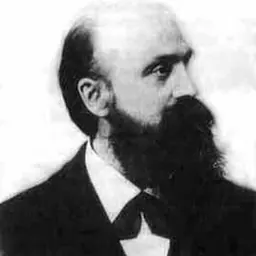
Harold Everett Porter (19 September 1887 – 21 June 1936) was an American writer. Under the pen name of Holworthy Hall he published plays, verse, novels and short stories. He took his pseudonym from the dormitory for first-year students where he stayed at Harvard University.
Biography Porter was born in Boston, Massachusetts. He was the son of Albert de Lance (D.) Porter, who was first a printer in Boston, and then a publisher in New York City as owner of the A. D. Porter Co. His mother, Louella née Root, was born in Ohio and raised in Massachusetts.
He attended Harvard College winning a scholarship in the year 1906–1907. He was on the lacrosse team in 1906–1907.
Porter was the editor of the Harvard Lampoon from 1906 to 1909 and an editor of the Harvard Advocate, the campus literary magazine, from 1907 to 1909.
He shared Room 13 in Holworthy Hall, the freshman's dormitory, with John Mansfield Groton, next door to Robert Middlemass (with whom he collaborated on The Valiant) and the artist Julian Ellsworth Garnsey in Room 14.
After graduating in 1909 he worked at the Boston publisher Little, Brown & Co., and then with his father's firm at the A.D. Porter Company. The firm published a monthly magazine, The Housewife, which he edited. His first short story under the pseudonym Holworthy Hall was printed in The Saturday Evening Post, and he continued to write short stories for the rest of his life.
In 1916, he was named the president of the A. D. Porter Company.
His short story "The Same Old Christmas Story" appeared in the 1,000th edition (or so) of the Harvard Advocate in May 1916. He was characterised in a review in the rival Harvard Crimson as a "noble graduate of 1907, with a bank account, a tender heart and too much leisure."
During World War I he served in the office of the Secretary of War in Washington, D.C., working in the Military Intelligence Division, as a first lieutenant and then captain. He continued to publish stories, and was demobilized as a major in the Officer Reserve Corps. His two non-fiction books date from this period.
He joined the Skaneateles Country Club in 1920. He moved to France to escape the US, living in Paris and Cannes, in a house overlooking the Mediterranean. Playing golf was a particular passion, and he wrote less and less. His marriage ended in divorce, and he returned to the US alone to live in Connecticut. He continued to write stories and died in Torrington of pneumonia, aged 48.
Personal life In 1911 he married Marian 'Marnie' Heffron of Syracuse, New York. She was the daughter of Dr. John Lorenzo Heffron, the dean of the School of Medicine at Syracuse University. Heffron retired in June 1922 after 40 years' connection with the teaching staff of the medical school, 15 of them as dean.
After their separation/divorce she went back to the States with their three children, and became involved (as Mrs. Harold Everett Porter) with luncheons and dinners for the Boston Symphony Orchestra at the Copley-Plaza Hotel.
Selected bibliography
Poems "Epithalamium" (1913, Life magazine) "Opera Porteri" (1913, Life magazine)
Short stories "The Rôle of Vision" (1910, The Scrap Book) "My next imitation" (1913) (1=Includes "The Same Old Christmas Story", reprinted in the Harvard Advocate, May 1916.) "It reads like that story of Bunner's, where the brave little boy sells the gold brick to a kind old gentleman, and thus provides a Christmas for the family of the unsuccessful bunco steerer." The Man Nobody Knew (1919) The Six Best Cellars (1919) (with Hugh McNair Kahler). A satire of prohibition. Filmed in 1920 as The Six Best Cellars by Famous Players Lasky. Egan (1920) Rope (1922) Colossus (1930), with a dedication to his friend and literary agent, Harold Ober (still in copyright in 2016, searchable text only)
Plays The Valiant (1921) a one-act play (with Robert Middlemass, Harvard classmate), appeared in McClure's magazine The Valiant (1929 film), El valien (1930 film), The Man Who Wouldn't Talk (1940 film), and three TV movies The Duke and the Dices (1929) (still in copyright in 2016, searchable text only)
Non-fiction The History of the Liberty Engine (1918) (with William Rose Benét and Warner W. Kent) Aerial Observation: The Airplane Observer, The Balloon Observer and the Army Corps Pilot (1921)
Light verse Porter was evidently a great lover of classical music, and the following lines (which originally appeared in Life magazine in 1913) evoke memories of his favourite operas, singers and musicians.
Don’t just read it —
keep it.
Full-length biographies made to live with: read them, listen on the way to work, watch them tonight.
- E-book
- Audio
- Video
Instant download · yours to keep · every purchase keeps this site free
Important facts
People in Holworthy Hall's life
Named in this biography and alive at the same time





Related people
Same field, nearest in time



Contemporaries
People whose lives overlapped Holworthy Hall's


Frequently asked questions
Who was Holworthy Hall?
American novelist and playwright (1887–1936)
When was Holworthy Hall born?
Holworthy Hall was born in 1887.
When did Holworthy Hall die?
Holworthy Hall died in 1936.
What was Holworthy Hall's occupation?
Holworthy Hall was a novelist and playwright.
What nationality was Holworthy Hall?
Holworthy Hall was American.
Sources & further reading
· DBpedia: Harold Everett Porter
Cite this page
APA: Biography.guide. (2026). Holworthy Hall. https://biography.guide/holworthy-hall/
MLA: "Holworthy Hall." Biography.guide, https://biography.guide/holworthy-hall/.
Chicago: "Holworthy Hall." Biography.guide. https://biography.guide/holworthy-hall/.
Data last updated: 2026-09-20 · Spot an error? Report a correction.
Page generated 2026-09-27 05:27 UTC