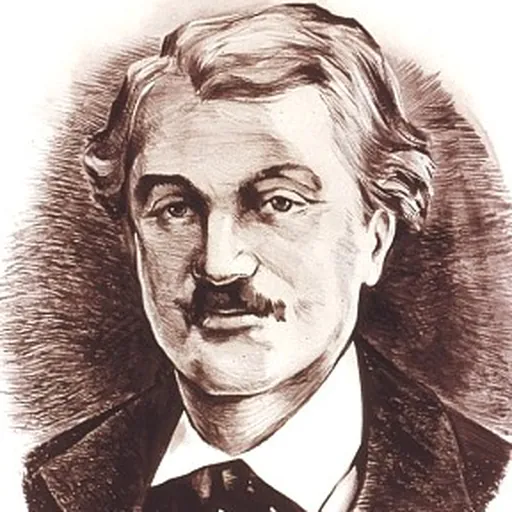
About Hippolyte Mège-Mouriès
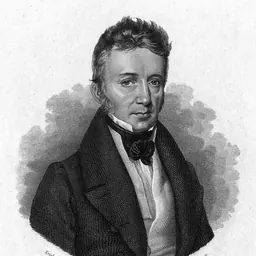
Lived 1817 – 1880 (aged 62). Hippolyte Mège-Mouriès was a French chemist, pharmacist and inventor, known for Margarine.
Hippolyte Mège-Mouriès (; 24 October 1817 – 31 May 1880) was a French chemist and inventor who is famous for his invention of margarine.
Early life Hippolyte Mège was born on 24 October 1817 in Draguignan to Jean Joseph-Emmanuel Mège and his wife, Marie Marguerite Mouriès. The son of a primary school teacher, he added his mother's surname to his own around 1850 to distinguish himself from others of the same last name. Legal documents, however, often used "Mège". In addition to examining the coloration of bread, he developed a way of making bread that allowed bakers to produce 14% more bread given a fixed amount of ingredients. This was a major achievement, arousing international interest in France, Germany, Eliza Acton discussed his new discoveries in detail in The English Bread-Book For Domestic Use (1857). Mège-Mouriès received two gold medals for his work.
Margarine In the 1860s, Mège-Mouriès focused on fat processing. France was experiencing a butter shortage, and Napoleon III offered a prize for producing a butter substitute. Mège-Mouriès experimented with what was believed to be a new fatty acid discovered by Michel Eugene Chevreul, acide margarique or margaric acid. By 1867, Mège-Mouriès was working at la Ferme Impériale de la Faisanderie, Napoleon III's private farm in Vincennes near Paris. It produced whitish-looking beads or pearls. A British patent application describes the process as follows:
Although Mège-Mouriès did not correctly understand the chemistry involved, his process was a significant achievement in that he successfully rendered a bland, neutral fat at low temperatures, using water, and discovered that working fat and milk together gave the result a flavor similar to butter. He attempted to start a manufacturing facility at Poissy, but the enterprise floundered because of the Franco-Prussian War. It was granted on 2 October 1869 for a period of fifteen years. Mège-Mouriès also received an English patent on July 17, 1869, Patents were obtained for Bavaria on April 8, 1873, and Patent 146012 for the United States on December 30, 1873.
This did not protect him from competitors in all countries. In 1869, the Netherlands repealed its Patent Act of 1817. In 1883, the Paris Convention attempted to regularize the rights of all signatory countries, but the Dutch did not pass a new patent act until 1910. In the absence of a Dutch legal framework that defined patent rights, Mège-Mouriès could not claim, assert or sell such rights. He could not apply for a patent, establish a monopoly, or license others to do so in the Netherlands.
Untroubled by patent restrictions, Jurgens developed Mège-Mouriès's ideas further and began to manufacture and sell margarine, as did another Dutch company under Simon van den Bergh. Both were located in Oss in North Brabant. Jurgens' company eventually became part of Unilever.
Mège-Mouriès made very little profit from the invention of oleomargarine, which never became popular in France. Jurgens and van den Bergh created a substantial export industry, selling margarine to England and other countries, as did a number of smaller competitors. In the 1880s there were at least 70 margarine factories in the Netherlands. In 1911 Jurgens exported 111,000 tons of margarine, and Van den Bergh 112,000.
Don’t just read it —
keep it.
Full-length biographies made to live with: read them, listen on the way to work, watch them tonight.
- E-book
- Audio
- Video
Instant download · yours to keep · every purchase keeps this site free
Important facts
People in Hippolyte Mège-Mouriès's life
Named in this biography and alive at the same time

Related people
Same field, nearest in time



Contemporaries
People whose lives overlapped Hippolyte Mège-Mouriès's




Frequently asked questions
Who was Hippolyte Mège-Mouriès?
French chemist (1817-1880)
When was Hippolyte Mège-Mouriès born?
Hippolyte Mège-Mouriès was born on 24 October 1817 in Draguignan.
When did Hippolyte Mège-Mouriès die?
Hippolyte Mège-Mouriès died on 31 May 1880 in Paris.
What was Hippolyte Mège-Mouriès's occupation?
Hippolyte Mège-Mouriès was a chemist, pharmacist and inventor.
What was Hippolyte Mège-Mouriès known for?
Hippolyte Mège-Mouriès was known for Margarine.
What nationality was Hippolyte Mège-Mouriès?
Hippolyte Mège-Mouriès was French.
Sources & further reading
· Wikipedia: Hippolyte Mège-Mouriès
· DBpedia: Hippolyte Mège-Mouriès
Cite this page
APA: Biography.guide. (2026). Hippolyte Mège-Mouriès. https://biography.guide/hippolyte-mege-mouries/
MLA: "Hippolyte Mège-Mouriès." Biography.guide, https://biography.guide/hippolyte-mege-mouries/.
Chicago: "Hippolyte Mège-Mouriès." Biography.guide. https://biography.guide/hippolyte-mege-mouries/.
Data last updated: 2026-09-23 · Spot an error? Report a correction.
Portrait: Wikimedia Commons · author & licence
Page generated 2026-09-27 05:08 UTC