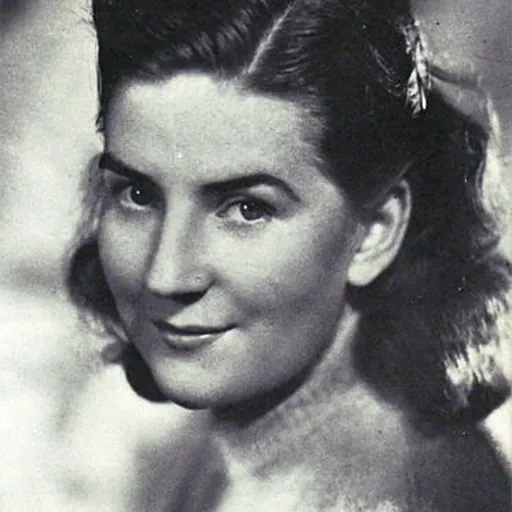
About Hilde Purwin
Lived 1919 – 2010 (aged 90). Hilde Purwin was a German journalist and translator.
Hilde Purwin (born Hildegard Burkhardt: 16 September 1919 – 29 March 2010) was a German journalist. She was exceptionally talented as a linguist and had an unusually powerful memory. After the defeat of Nazi Germany the American intelligence services benefited from her wartime intelligence gathering. They also acquired valuable additional intelligence because she took extra carbon copies - unbeknownst to German intelligence - of more than 700 sheets that she had translated from Italian source documents into German during the final months of the war. She sorted and sequenced these, and buried them in a large carefully sealed tin under the strawberry patch beside the apple tree in the garden at the family home where her widowed mother still lived.
In 1946 the United States military administration in Germany employed her as a simultaneous translator and recruited her for intelligence work. They gave her a new identity, knocking a year off her age. She became "Hilde Blum" born in 1920 and was mandated, under the code name "Gambit", to identify and unmask Soviet agents operating in Berlin. Her father, Eduard Burkhardt, She completed her schooling in 1937 and went to Dresden to take a "Pflichtjahr" (a form of mandatory gap year From Ciampino they were flown to Munich on board a Luftwaffe Ju 52 transport. What Ciano regarded as his escape was organised personally by Beetz's new boss Wilhelm Höttl. For Höttl and German Intelligence, the over-riding objective of the "Ciano operation" was to obtain Ciano's diaries and extensive supporting papers concerning his years at the heart of Italy's political establishment, which the German government feared might include incriminating or embarrassing information about relations between the two governments or, indeed, about the German foreign minister, Joachim von Ribbentrop (whom Ciano was known to hate). Ciano would have been under no doubt that Beetz was there to spy on him, but she was self-evidently not a "typical career spook", and he was charmed by her. The charm was clearly mutual and the two became close, though Beetz always insisted that they never became lovers. Edda Ciano was probably more aware of the acute danger in which her husband found himself than he was. In the months that followed she treated Beetz not as a rival for Ciano's affection, but as a well-positioned ally in a shared struggle to save his life.
In September 1943 the Germans rescued Mussolini (who was held prisoner in Campo Imperatore) and "restored him" as dictator of the Italian Social Republic, which covered the central and northern parts of Italy still controlled by the Germans. On 19 October 1943 Ciano was flown back to Italy where he faced a treason trial and probable execution. The transfer back to Italy was arranged by two of Foreign Minister von Ribbentrop's men. Hitler knew about it but the intelligence services received no advanced notification. Beetz spent the last night of Ciano's life ("...[the] most terrible night of my life") at Ciano's side in his cell. Later she let it be known that she thought Ciano had been betrayed by the Germans. She complained to Kaltenbrunner after the war about his failure to live up to his promises in respect of the matter. In the words of one source, Kaltenbrunner "in return, subtly reminded Beetz of hierarchical realities and her gender: he sent he a bouquet of roses". However, she never found it necessary to commit suicide.
Someone who did commit suicide at the end of April 1945 was Adolf Hitler. A couple of weeks earlier he gave orders that all the Ciano papers should be destroyed. However, Hilde Beetz had somehow got hold of two volumes of Ciano diaries that had been left by Edda while a patient at the "La Ramiola" clinic at Parma shortly before her husband was executed. These covered the important pre-war period from 1937 till 1939. It is not clear whether Beetz had the originals or merely micro-fiched copies of them. In the summer of 1944, by now back in Weimar living with her mother in the house where she had grown up, she was instructed to produce translations of them all. These, it turns out, are the papers (or possibly only some of the papers) identified in the US intelligence report produced by Lt. Col. Andrew H. Berding in June 1945. Beetz had sorted them and hid them in her parents' garden during the early months of 1945. edited by the journalist Malcolm Muggeridge who provided a characteristically sanctimonious introduction, and translated by Stuart Hood who had spent the war years as a British intelligence officer in Egypt and Italy.
Beetz's role during the war years later provided the plot for a succession of books and feature films. One example was Il processo di Verona ("The Verona Trial"), a film directed by Carlo Lizzani which appeared in 1963 and in which Beetz's role was portrayed by Françoise Prévost. That part of her life was also recaptured by Dietlinde Turban in the 1985 television "docudrama" Mussolini and I, directed by Alberto Negrin.
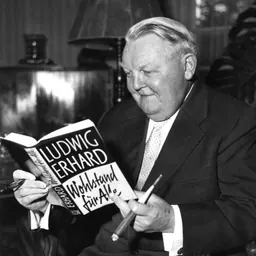
US intelligence The wartime marriage with Gerhard Beetz ended in divorce in 1947. Henry Hecksher, who in 1946 became head of OSS counterintelligence in Berlin, described Beetz approvingly as "probably one of those extremely rare Germans who understand and are sympathetic to Democracy." The Strategic Services Unit (SSU) falsified her "denazification papers" and gave her a new identity as "Hildegard Blum". The intention was that she should become a target for recruitment by Soviet intelligence and then a double agent controlled covertly by American Intelligence. Similar attempts had already been made using American "decoy" personnel to attract Soviet recruiters, but it was asserted that the Soviets had found it difficult to trust an American insider so readily as they might be persuaded to trust "a well-placed German secretary". "Project Sitting Duck" had to be deemed a failure in November 1946. Hecksher now changed tack, using another SSU agent to entice an MVD agent called Captain Skurin to recruit "Gambit" to the Soviet cause. At least one meeting between "Gambit" and Skurin took place in the French sector of Berlin. However, this attempt to plant Beetz as a double agent with the Soviets also came to nothing. The "old man" (by now well into his ninth decade) was in such good form that she risked a very direct question: "Why, Chancellor, do you hold such a low opinion of your Economics Minister, Vice-chancellor Erhard?". Although confidentiality had already been agreed among those present, Adenauer chose not to answer. More unexpectedly, a couple of days later he invited Purwin to a one-on-one meeting in the chancelry office. She was not permitted to take notes, but she was armed with her excellent memory, and the chancellor told her at some length why he thought that Ludwig Erhard was totally unsuitable to replace him. (Erhard did succeed Adenauer, but he had to wait till 1963.)
An interview with Adenauer under these circumstances would have been a rare opportunity for any journalist, and Purwin took her chance and asked him about other issues, such as his policy in respect of East Germany. His answers were, again, quite open. In the end she extracted his agreement that she might publish a report of the interview in the NRZ. However, the chancellor insisted he should be able to read the article first. The text amounted in most respects to a word for word record of their exchange. To Purwin's astonishment, Chancellor Adenauer's stiff handwriting appeared only in a couple of places, where he entered his "corrections". He left undeleted his potentially head-line grabbing statement that he hoped First Party Secretary Kruschev would soon visit him in Bonn. When the interview appeared in the NRZ the next day it was clear that Adenauer had not consulted with his media staff about his interview with Purwin. The chancellor's press spokesman, Felix von Eckardt, was as surprised as other readers (but much more profoundly vexed) by what he found in the NRZ that morning.
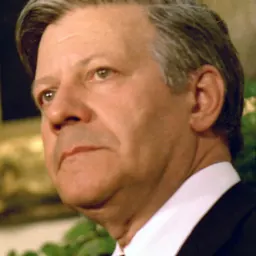
During the 1960s and 70s Purwin was also close to West Germany's two Social Democratic chancellors, Willy Brandt and the intellectually formidable Helmut Schmidt. In 1974, when Schmidt was elected to lead the party in succession to Brandt following the Guillaume Affair she asked Schmidt if he was not happy with the way fate had landed him with the top job. But Schmidt expressed only anger. "He had passionately urged Brandt - sadly without success - not to resign the chancellorship. It would be a wretched thing if a West German chancellor were to resign his office because of a grubby little East German spy" ("Er habe Brandt dringend, leider vergeblich, vom Rücktritt abgeraten, denn es sei doch eine erbärmliche Sache, dass ein deutscher Bundeskanzler wegen eines miesen kleinen DDR-Spions sein Amt aufgebe"). Purwin subsequently developed a huge respect for the way that Helmut Schmidt approached his work as chancellor, commending his "Hanseatic sobriety".
Hilde Purwin made a number of television appearances in her capacity as a political commentator, notably with stalwart moderator-presenters Werner Höfer and Reinhard Appel. She also participated in numerous radio programmes.
After her retirement in 1984 she continued for some years to write as a freelance journalist.
Celebration and commemoration Hilde Purwin was awarded the Order of Merit, 1st class in 1970 by Heinz Kühn, at that time Minister-president of North Rhine-Westphalia.
Her still (in 2018) unpublished memoires as well as some of the original documents from the "Felizitas" years have been held, since 2007, in the archive at the German Historical Institute in Rome.
Don’t just read it —
keep it.
Full-length biographies made to live with: read them, listen on the way to work, watch them tonight.
- E-book
- Audio
- Video
Instant download · yours to keep · every purchase keeps this site free
Important facts
People in Hilde Purwin's life
Named in this biography and alive at the same time


Related people
Same field, nearest in time


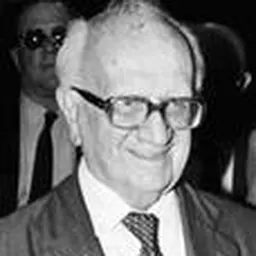
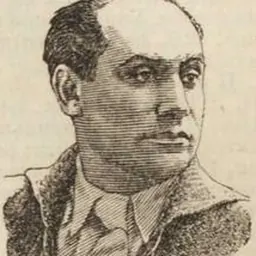

Contemporaries
People whose lives overlapped Hilde Purwin's
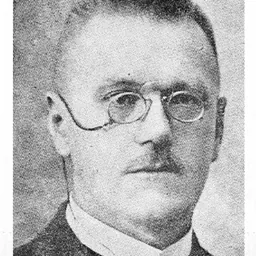
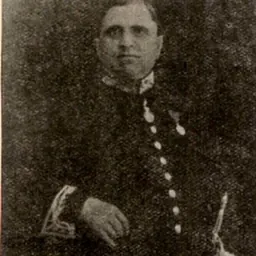



Frequently asked questions
Who was Hilde Purwin?
German journalist (1919–2010)
When was Hilde Purwin born?
Hilde Purwin was born on 16 September 1919 in Obernissa.
When did Hilde Purwin die?
Hilde Purwin died on 29 March 2010 in Bonn.
What was Hilde Purwin's occupation?
Hilde Purwin was a journalist and translator.
What nationality was Hilde Purwin?
Hilde Purwin was German.
Sources & further reading
Cite this page
APA: Biography.guide. (2026). Hilde Purwin. https://biography.guide/hilde-purwin/
MLA: "Hilde Purwin." Biography.guide, https://biography.guide/hilde-purwin/.
Chicago: "Hilde Purwin." Biography.guide. https://biography.guide/hilde-purwin/.
Data last updated: 2026-09-22 · Spot an error? Report a correction.
Portrait: Wikimedia Commons · author & licence
Page generated 2026-09-27 05:01 UTC