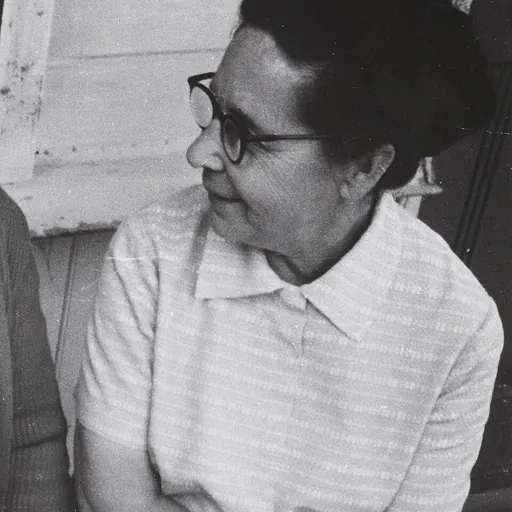
Hilda Grīva
Livonian musician, music teacher, founder and artistic director of the Livonian folklore ensemble "Kāndla"
About Hilda Grīva
Lived 1910 – 1984 (aged 74). Hilda Grīva was a singer, musician, music educator and music teacher.
Hilda Grīva, also known as Hilda Cerbach-Grīva (née Cerbaha; 1910 – 13 September 1984), was a Latvian music teacher, choir conductor, and prominent Livonian cultural figure. She was the founder and artistic director of the Livonian folklore ensemble "Kāndla", a contributor to Livonian-language publishing, and an important tradition bearer and preserver of the Livonian language and song.
Early life and education Hilda Grīva was born in 1910 in the fishing hamlet of Sīkrags (in what is now Kolka Parish, Talsi Municipality, Latvia) in the household of Livonian fisherman Oskars and his Estonian wife Minna Cerbaha. She and her sister Elfrīda grew up speaking Livonian, Estonian, and Latvian.
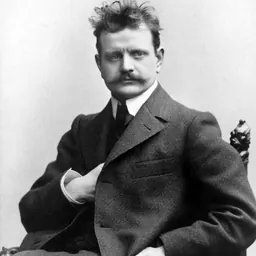
During World War I, her family lived in Estonia, where Grīva began school. After the war, she studied in Mazirbe elementary school and later in Ventspils, where she began private violin lessons. In 1927, through the help of linguists Oskar Loorits and Lauri Kettunen, she was sent to study in Finland. There she attended the Tūsola Folk High School, studying Finnish language and receiving private piano instruction from the daughter of composer Jean Sibelius. She also studied voice at the Helsinki Academy (now Sibelius Academy). In 1928, she continued her teacher's training at the Heinola Teacher Institute, then at the Jelgava Teacher Institute, graduating in 1934.
Only in the 1970s did the Livonian community and cultural life resume its activities under the Soviet era. This is because the Livonian ethnographic ensembles Livlist in Riga, Latvia (whose first conductor was Dzidra Kļaviņa) and Kāndla in Ventspils (which is Hilda Grīva) were established in 1972 by Emma Ērenštreite's suggestion. These were put in place to protect and advance the Livonian language and musical culture.
Erenštreite, E. (1997). "Dažas piezīmes par lībiešu etnogrāfisko ansambļu Līvlist un Kãndla nodibināšanu", *Lībiešu gadagrāmata*, Mazirbe, p. 18. Krasts, U. (1997). "Dziedošā lībiešu tilbīte", *Lībiešu gadagrāmata*, p. 26.
Don’t just read it —
keep it.
Full-length biographies made to live with: read them, listen on the way to work, watch them tonight.
- E-book
- Audio
- Video
Instant download · yours to keep · every purchase keeps this site free
Important facts
People in Hilda Grīva's life
Named in this biography and alive at the same time

Related people
Same field, nearest in time



Contemporaries
People whose lives overlapped Hilda Grīva's






Frequently asked questions
Who was Hilda Grīva?
Livonian musician, music teacher, founder and artistic director of the Livonian folklore ensemble "Kāndla" (1910-1984)
When was Hilda Grīva born?
Hilda Grīva was born on 27 February 1910 in Sīkrags.
When did Hilda Grīva die?
Hilda Grīva died on 13 September 1984 in Ventspils.
What was Hilda Grīva's occupation?
Hilda Grīva was a singer, musician, music educator and music teacher.
Sources & further reading
Cite this page
APA: Biography.guide. (2026). Hilda Grīva. https://biography.guide/hilda-griva/
MLA: "Hilda Grīva." Biography.guide, https://biography.guide/hilda-griva/.
Chicago: "Hilda Grīva." Biography.guide. https://biography.guide/hilda-griva/.
Data last updated: 2026-09-21 · Spot an error? Report a correction.
Portrait: Wikimedia Commons · author & licence
Page generated 2026-09-27 05:01 UTC