
About Hilarius Breitinger
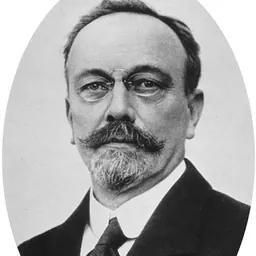
Lived 1907 – 1994 (aged 87). Hilarius Breitinger was a German catholic priest, friar, regular priest and pastor.
Hilarius Breitinger, OFM Conv (7 June 1907 – 23 August 1994) was a German Franciscan prelate made apostolic administrator of the Reichsgau Wartheland during World War II by Pope Pius XII, one of the most controversial examples of the reorganization of occupied dioceses during World War II. Breitinger's appointment and those like it were the justification of the Polish Provisional Government for declaring the Concordat of 1925 "null and void" in 1945.
Early life Breitinger was born as Lorenz Breitinger on 7 June 1907 in Glattbach near Aschaffenburg. His parents were Martin, a carpenter, and Barbara Breitinger.
When the German army came upon Breitinger and the Volksdeutsche they sang "Deutschland, Deutschland über Alles'", the German national anthem. During this period, Breitinger came to regard Polish Catholicism as "superficial" as—in his letters—he tried to explain how "all this was possible in a Catholic country". However, Breitinger's formerly "disenchanted" opinion of Pius XII reversed in 1943 when he wrote that the pope's "heroic silence" would "create the foundation for a new peaceful order in the world".
Assistant to Paech
In 1941, Pius XII appointed Poznań's Capitular vicar Joseph Paech (1880–1942), a Pole of German ethnicity, as apostolic administrator to the Catholic faithful of German language within Reichsgau Wartheland.
Administrator to the Wartheland In May 1942, Pius XII made Breitinger apostolic administrator to Catholics of German language in the Reichsgau Wartheland, a portion of Poland annexed into Nazi Germany. Though this action fell short of the German demand that a new German church administration be created for the occupied territories (subject to the terms of the Reichskonkordat, which would have given Nazi Germany a voice in appointments), "betrayal was exactly what the Poles felt". For example, when relaying a letter critical of the Pope's silence on the condition of Poland to Orsenigo, he also gave a second copy to Bishop Michael von Faulhaber (correctly) trusting only the second to deliver the letter to Rome. However, Bishop Dymek, and Gniezno's Cathedral Capitular Eduard van Blericq, whom Hlond had appointed vicar general for Gniezno, had pleaded to comply Greiser's policy of ethnic segregation in order to prevent him suppressing any church life. For example, in September 1942, the exiled Bishop Karol Mieczyslaw Radonski wrote two letters to Rome protesting these appointments which—in his view—"signaled the Vatican's willingness to let Hitler have the northwest sector of Poland that he had incorporated into his Greater Reich". The appointment of Breitinger and other German prelates was the pretext of the Polish Provisional Government for declaring the Concordat "null and void" in 1945.
Return to Germany As the Red Army advanced, Breitinger fled Poland in 1944, returning to his Franciscan order in Germany. In 1947 he became the Guardian of the Franciscan monastery of Würzburg, transferring to the Upper Bavarian monastery of Maria Eck in 1953, and to a Vienna seminary and hospital chaplaincy in 1959. In 1964, he was elected the provincial leader of the Austrian Franciscans monasteries.
In 1972 he returned to the Guardian of the Graz monastery and the pastor of Graz-Mariahilf. In 1978, he returned to Maria Eck in Upper Bavaria. In Maria Eck, he began to write his memoirs, published in 1984. In 1992, Pope John Paul II gave a special blessing to Breitinger on his birthday, expressing his "appreciation of his tireless pastoral ministry and apostolic ministry deserving as Apostolic Administrator of German Catholics in the Warta". Breitinger died on August 23, 1994.
Works by Breitinger 1984. Als Deutschenseelsorger in Posen und im Warthegau 1934–1945: Erinnerungen. Mainz: Grünewald.
Don’t just read it —
keep it.
Full-length biographies made to live with: read them, listen on the way to work, watch them tonight.
- E-book
- Audio
- Video
Instant download · yours to keep · every purchase keeps this site free
Important facts
People in Hilarius Breitinger's life
Named in this biography and alive at the same time
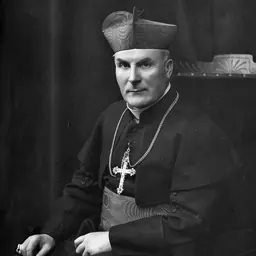

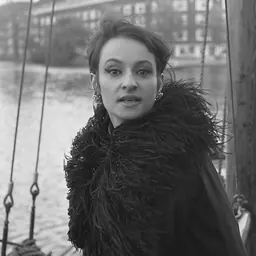

Related people
Same field, nearest in time

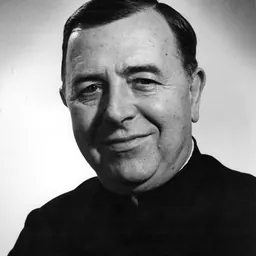
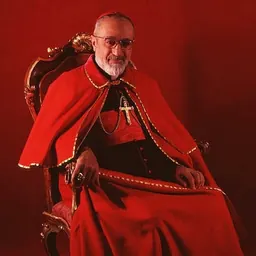

Contemporaries
People whose lives overlapped Hilarius Breitinger's



Frequently asked questions
Who was Hilarius Breitinger?
German priest (1907-1994)
When was Hilarius Breitinger born?
Hilarius Breitinger was born on 7 June 1907 in Glattbach.
When did Hilarius Breitinger die?
Hilarius Breitinger died on 23 August 1994 in Kloster Maria Eck.
What was Hilarius Breitinger's occupation?
Hilarius Breitinger was a catholic priest, friar, regular priest and pastor.
What nationality was Hilarius Breitinger?
Hilarius Breitinger was German.
Sources & further reading
· Wikipedia: Hilarius Breitinger
· DBpedia: Hilarius Breitinger
Cite this page
APA: Biography.guide. (2026). Hilarius Breitinger. https://biography.guide/hilarius-breitinger/
MLA: "Hilarius Breitinger." Biography.guide, https://biography.guide/hilarius-breitinger/.
Chicago: "Hilarius Breitinger." Biography.guide. https://biography.guide/hilarius-breitinger/.
Data last updated: 2026-09-20 · Spot an error? Report a correction.
Page generated 2026-09-27 05:30 UTC