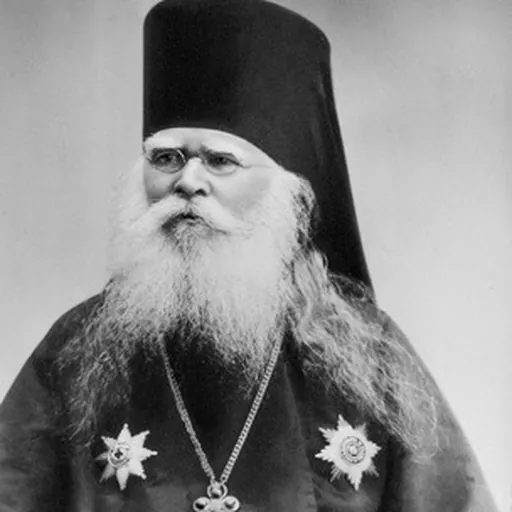
About Hieronymus Ekziemplarski
Lived 1836 – 1905 (aged 69). Hieronymus Ekziemplarski was a Russian christian minister.
Hieronymus, secular name Ilya Tikhonovich Ekziemplarski, (born 20 July 1836 in Dmitriyevy Gory, died 2 November 1905 in Warsaw) was an archbishop of the Russian Orthodox Church.
Hieronymus came from a family of Orthodox priests. He graduated from the theological seminary in Vladimir and then from the Kyiv Theological Academy. After obtaining his degree in theological sciences in 1861, he was employed as a lecturer at the theological seminary in Kyiv, specializing in pedagogy and homiletics. He was ordained a priest in 1871 as a married man. He served in Kyiv and was also a catechist in various schools in the city. In 1885, nine years after his wife's death, he took permanent monastic vows, adopting the monastic name Hieronymus. Later that year, he was consecrated as the bishop of Chehrin, a vicar of the Kyiv eparchy. From 1890 to 1894, he was the ordinary of the Russian Orthodox Diocese of Lithuania, from 1894 to 1898 of the , and then for seven years he headed the Eparchy of Chełm and Warsaw, and in the last months of his life, the Eparchy of Warsaw and the Vistula.
In all the eparchies he managed, he conducted extensive charitable activities, supporting orphanages, charitable societies, and schools. He was also interested in the functioning of monasteries and Orthodox press, the education of church singers, and he consecrated new sacred objects. As the archbishop of Chełm and Warsaw, he promoted Orthodoxy among resistant Uniate communities and their Russification. He unsuccessfully sought the abolition of the Archdiocese of Lublin, whose clergy, in his opinion, spread anti-Orthodox views among former Uniates and strengthened their resistance against the actions of the Tsarist authorities. He also called on the Orthodox clergy to be more active in working with resistant Uniates, and from 1902 he sought the establishment of the .
He died in 1905, and was buried in St. John Climacus's Orthodox Church in Warsaw, which he constructed at his own expense, planning to make it a family tomb. He was the only Orthodox bishop of Warsaw in the jurisdiction of the Russian Orthodox Church who died while in office and was buried in Warsaw.
Biography
Childhood and family He was the son of the Orthodox priest Tikhon Ivanovich Ekziemplarski and his wife Anna Stepanovna, who came from the priestly family of the Stepans. His father served as the parish priest in Dmitriyevy Gory in Vladimir Governorate since 1821, taking over the parish from his father-in-law, who was unable to continue his priestly duties due to blindness. He received his surname while studying at the theological seminary. The Ekziemplarski family was not wealthy; to make a living, the future archbishop's father had to combine pastoral service with work on the farm. The future hierarch had older brothers, Konstantin and Fiodor, as well as sisters Maria and Praskovya. Three children who were born before him – Alexandr, Pavel, and Dmitri – died prematurely. After him, two daughters, Evdokiya and Yelena, and a son, Ivan, were born.
Ilya Ekziemplarski was born on 20 July 1836, on the day commemorating the prophet Elijah, which determined the choice of his name. He was baptized on the same day by his uncle, Varsonofyi Stepanov; his godparents were his older sister, 12-year-old Maria Ekziemplarska, and his cousin, Ivan Valedinski, a student at the theological seminary. The boy was raised in a deeply religious atmosphere, with his father preparing him for future priestly service from an early age. At the age of nine – one year later than prescribed by the rules (previously, his parents were concerned that the boy was too weak in health) – he was sent to a lower theological school in Vladimir. In this role, he continued the work of his predecessors, focusing on the construction of new Orthodox churches, both for civilians and the military. In March of the same year, Hieronymus was one of the initiators of a meeting with the Ministers of the Interior, Justice, War, and Finance, along with the Ober-Procurator of the Most Holy Synod, Konstantin Pobedonostsev, during which they discussed the project of creating the Kholm Governorate and implementing special legislation favoring the Orthodox in that region. In 1904, when Catholic churches in Warsaw held celebrations marking the 50th anniversary of the proclamation of the dogma of the Immaculate Conception of Mary, he ordered special services in Orthodox churches and the delivery of anti-Catholic sermons. Nevertheless, his attitude toward Catholicism was less hostile than that of Bishop Eulogius Georgiyevsky of Lublin. To strengthen and promote Orthodoxy, he primarily called on the clergy under his authority to engage in active work.
After the issuance of the 1905 Edict of Toleration, which allowed people to abandon Orthodoxy, mass conversions of former Uniates to Latin-rite Catholicism began in the Eparchy of Chełm and Warsaw. Archbishop Hieronymus sought to counteract these conversions primarily by issuing proclamations to the faithful and clergy. His age and health, however, prevented him from undertaking broader efforts, such as parish visitations.
In his first proclamation, published on 12 May 1905, he acknowledged that the edict was met with joy by those who had been previously forced to adopt Orthodoxy, and that the Russian Orthodox Church would no longer be accused of persecuting other faiths. At the same time, he wrote that Orthodox believers were now particularly vulnerable to false teachings. link=:pl:File:041012 Orthodox church of St. John Climacus in Warsaw – 02.jpg In 1905, Archbishop Hieronymus also personally funded the construction of the St. John Climacus's Orthodox Church at the Orthodox Cemetery in Warsaw. The building was intended to serve as his family's mausoleum. The archbishop arranged for the remains of his son, Ivan, who had died three years earlier, to be brought to the church, and he chose it as his own burial site as well. The church was consecrated in October 1905. Two weeks after the ceremony, Archbishop Hieronymus died and was buried in the place he had designated for himself.
At the direction of the Most Holy Synod, his funeral was led by Archbishop of Vilnius and Lithuania, accompanied by Bishop Eulogius of Chełm, Archimandrite Dionysius, rector of the theological seminary in Chełm, as well as clergy from the Warsaw and Vistula eparchies.
He was decorated with the Order of Saint Vladimir, 3rd and 2nd Class, the Order of Saint Anna, 1st Class, and the Order of Saint Alexander Nevsky. He also received a personalized panagia from the Tsar on two occasions.
Don’t just read it —
keep it.
Full-length biographies made to live with: read them, listen on the way to work, watch them tonight.
- E-book
- Audio
- Video
Instant download · yours to keep · every purchase keeps this site free
Important facts
People in Hieronymus Ekziemplarski's life
Named in this biography and alive at the same time


Related people
Same field, nearest in time
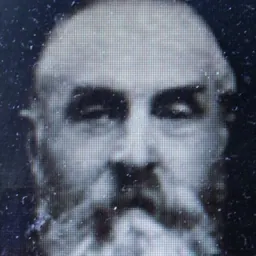
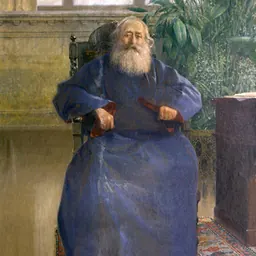
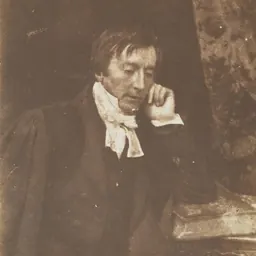

Contemporaries
People whose lives overlapped Hieronymus Ekziemplarski's


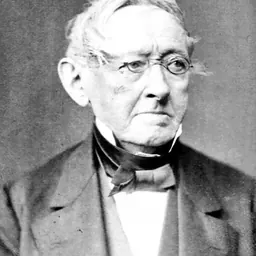



Frequently asked questions
Who was Hieronymus Ekziemplarski?
Archbishop of the Russian Orthodox Church
When was Hieronymus Ekziemplarski born?
Hieronymus Ekziemplarski was born on 20 July 1836 in Dmitriyevy Gory.
When did Hieronymus Ekziemplarski die?
Hieronymus Ekziemplarski died on 2 November 1905 in Warsaw.
What was Hieronymus Ekziemplarski's occupation?
Hieronymus Ekziemplarski was a christian minister.
What nationality was Hieronymus Ekziemplarski?
Hieronymus Ekziemplarski was Russian.
Sources & further reading
· Wikipedia: Hieronymus Ekziemplarski
· DBpedia: Hieronymus Ekziemplarski
Cite this page
APA: Biography.guide. (2026). Hieronymus Ekziemplarski. https://biography.guide/hieronymus-ekziemplarski/
MLA: "Hieronymus Ekziemplarski." Biography.guide, https://biography.guide/hieronymus-ekziemplarski/.
Chicago: "Hieronymus Ekziemplarski." Biography.guide. https://biography.guide/hieronymus-ekziemplarski/.
Data last updated: 2026-09-21 · Spot an error? Report a correction.
Portrait: Wikimedia Commons · author & licence
Page generated 2026-09-27 05:00 UTC