
About Heywood Sumner
Lived 1853 – 1940 (aged 86–87). Heywood Sumner was a British anthropologist, archaeologist, painter, illustrator, barrister and graphic artist.
George Heywood Maunoir Sumner (14 October 1853 – 21 December 1940), known as Heywood Sumner, was a British artist, archaeologist and representative of the Arts and Crafts movement. In his mid-forties he relocated to Cuckoo Hill, near Fordingbridge in Hampshire, England, and spent the rest of his life investigating and recording the archaeology, geology and folklore of the New Forest and Cranborne Chase regions.
Early life and education Sumner was born George Heywood Maunoir Sumner on 14 October 1853 in Old Alresford, Hampshire to George Sumner, then rector of Alresford and future Bishop of Guildford, and Mary Sumner , an educator and activist. The youngest of three children, Sumner was grandson of Thomas Heywood, an antiquarian and banker, and Charles Sumner, the Bishop of Winchester.
Educated at Eton College, Sumner later attended Christ Church, Oxford.
Sumner engaged in projects to bring Arts and Crafts within the experience of the general public. In particular in the 1890s he helped to set up the Fitzroy Picture Society, a group of artists dedicated to producing boldly coloured prints that could be sold cheaply to liven up the walls of public institutions such as schools and hospitals.
Sumner did not excel in any one particular technique, but his breadth of achievement was remarkable. Several of his areas of expertise are described below.
Line drawing and etching Sumner's earliest publications – The Itchen Valley from Tichbourne to Southampton (1881) and The Avon from Naseby to Tewkesbury (1882) – were illustrated with his own etchings, and in 1883 he was commissioned to illustrate an edition of John R. Wise's The New Forest. In the process of illustrating various children's books he developed a more stylised technique, used to good effect in his later publications on the topography and archaeology of the New Forest and surroundings.
Sgraffito Sumner experimented with sgraffito, a technique of incising designs in coloured plaster. He started by decorating the houses of his relatives, and later his narrative designs and ornamental patterns covered the walls of several Victorian churches and chapels in the British Isles: from the Church of St Mary the Virgin, Llanfair Kilgeddin(1887–88) to All Saints in Ennismore Gardens, London (1897–1903). There are very fine examples of his work and stained glass at Christ Church, Crookham, Hampshire.
Stained glass Sumner designed stained-glass windows for several churches built or redecorated around 1900, sometimes as part of a bigger scheme including his sgraffito and mosaic.
Don’t just read it —
keep it.
Full-length biographies made to live with: read them, listen on the way to work, watch them tonight.
- E-book
- Audio
- Video
Instant download · yours to keep · every purchase keeps this site free
Important facts
People in Heywood Sumner's life
Named in this biography and alive at the same time



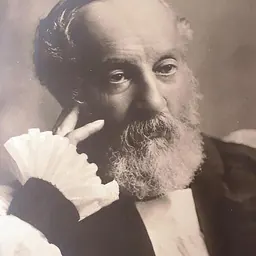


Related people
Same field, nearest in time
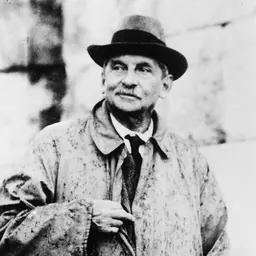

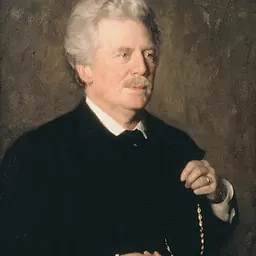



Contemporaries
People whose lives overlapped Heywood Sumner's
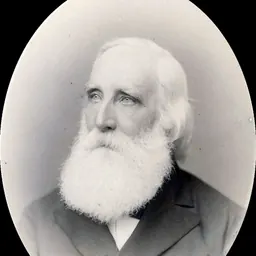


Frequently asked questions
Who was Heywood Sumner?
British artist and archaeologist (1853–1940)
When was Heywood Sumner born?
Heywood Sumner was born in 1853.
When did Heywood Sumner die?
Heywood Sumner died in 1940.
What was Heywood Sumner's occupation?
Heywood Sumner was an anthropologist, archaeologist, painter, illustrator, barrister and graphic artist.
What nationality was Heywood Sumner?
Heywood Sumner was British.
Sources & further reading
Cite this page
APA: Biography.guide. (2026). Heywood Sumner. https://biography.guide/heywood-sumner/
MLA: "Heywood Sumner." Biography.guide, https://biography.guide/heywood-sumner/.
Chicago: "Heywood Sumner." Biography.guide. https://biography.guide/heywood-sumner/.
Data last updated: 2026-09-20 · Spot an error? Report a correction.
Page generated 2026-09-27 05:34 UTC