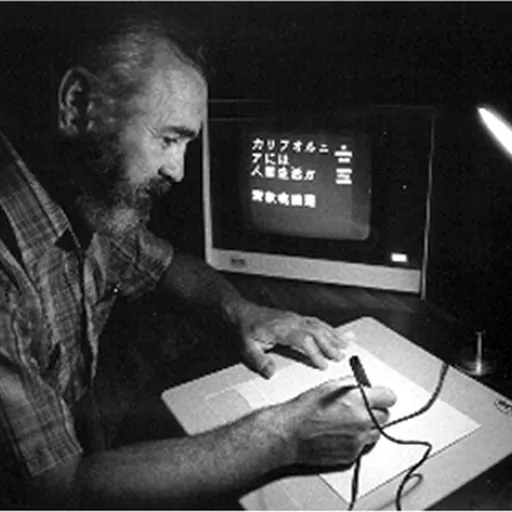
About Hewitt Crane
Lived 1927 – 2008 (aged 80–81). Hewitt Crane was an American engineer and writer, known for Electronic Recording Machine, Accounting.
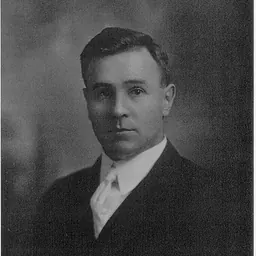
Hewitt D. Crane (1927–2008) was an American engineer best known for his pioneering work at SRI International on ERMA (Electronic Recording Machine, Accounting), for Bank of America, magnetic digital logic, neuristor logic, the development of an eye-movement tracking device, and a pen-input device for computers.
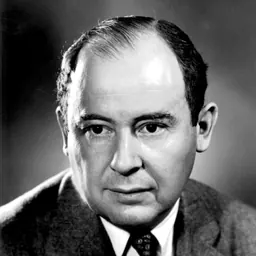
Early life and career Crane was born in 1927 in Jersey City, New Jersey. After a stint in the United States Navy as a radar technician during World War II, he worked as a computer maintenance technician for IBM (1949–1952), followed by working on digital computer design under the leadership of John von Neumann at the Institute for Advanced Study, in Princeton, New Jersey (IAS is not affiliated with Princeton University).
He then developed magnetic multiaperture devices (MADs) at RCA Laboratories (now Sarnoff Corporation). In order to develop magnetic logic, Crane controlled the direction of bit flow in magnetic ferrite memory cores. Ferrite logic circuits are inherently more stable than vacuum tubes and transistors, draw no power when unused, and are impervious to electromagnetic interference. In 1959, Crane introduced the all-magnetic logic approach at the Fall Joint Computer Conference, eventually leading to a demonstration of the world's first all-magnetic computer in 1961. The technology was soon commercialized by Aircraft Marine Products (AMP) Inc., under license from SRI, and used primarily in the rapid transit system of New York City and at railroad switching yards, where electro-magnetic interference made electronic computers unfeasible. The development and growth of planar transistors in silicon chips and integrated circuits displaced magnetic core logic, although it may still be useful for extended space missions and other extreme conditions, but using integrated circuit manufacturing techniques (e.g. etching and deposition of a substrate, and not an assembly of discrete magnetic cores). The prototype of the first all-magnetic computer now resides at the Computer History Museum, in Mountain View, California.
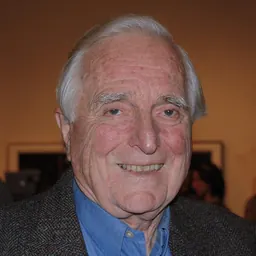
Douglas Engelbart worked with Crane on magnetic logic devices beginning in 1957, before Engelbart moved on to work on hypermedia and augmenting the human intellect with computers, and before Crane began research on replicating human functions with digital computers. In addition to his engineering work at SRI, Crane cofounded Communication Intelligence Corporation (CIC), to commercialize computer-based handwriting recognition on graphics tablets. CIC's "Jot" handwriting recognition software was later acquired by Palm and renamed Graffiti 2.
Later career Assorted bottles from Ridge, the winery co-founded by Crane.
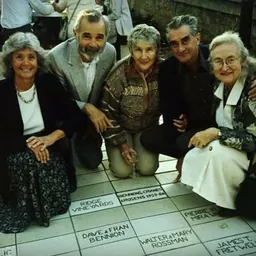
In 1959, with fellow SRI engineers David Bennion, Charles Rosen, and Howard Zeidler, Crane co-founded Ridge Vineyards. One of its red wines placed fifth in the Judgment of Paris wine tasting.
Crane's last intellectual effort was promoting the use of a cubic mile of oil as an energy measure and issues related to energy development. In 2010 in collaboration with SRI-International colleagues, Ed Kinderman, and Ripudaman Malhotra, he wrote a book on the topic. A cubic mile of oil is the approximate yearly consumption of oil and Crane and his co-authors examine the possible replacements with other sources, for example, it would require building 32,850 wind turbines or 52 nuclear power plants annually for fifty years to replace one cubic mile of oil.
Crane died from complications of Alzheimer's disease on June 17, 2008, at his home in Portola Valley, California.
Don’t just read it —
keep it.
Full-length biographies made to live with: read them, listen on the way to work, watch them tonight.
- E-book
- Audio
- Video
Instant download · yours to keep · every purchase keeps this site free
Important facts
People in Hewitt Crane's life
Named in this biography and alive at the same time

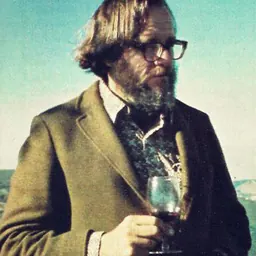

Related people
Same field, nearest in time





Contemporaries
People whose lives overlapped Hewitt Crane's

Frequently asked questions
Who was Hewitt Crane?
American inventor (1927–2008)
When was Hewitt Crane born?
Hewitt Crane was born in 1927 in Jersey City.
When did Hewitt Crane die?
Hewitt Crane died on 17 June 2008 in Portola Valley.
What was Hewitt Crane's occupation?
Hewitt Crane was an engineer and writer.
What was Hewitt Crane known for?
Hewitt Crane was known for Electronic Recording Machine, Accounting.
What nationality was Hewitt Crane?
Hewitt Crane was American.
Sources & further reading
Cite this page
APA: Biography.guide. (2026). Hewitt Crane. https://biography.guide/hewitt-crane/
MLA: "Hewitt Crane." Biography.guide, https://biography.guide/hewitt-crane/.
Chicago: "Hewitt Crane." Biography.guide. https://biography.guide/hewitt-crane/.
Data last updated: 2026-09-22 · Spot an error? Report a correction.
Portrait: Wikimedia Commons · author & licence
Page generated 2026-09-27 05:02 UTC