
About Herwig Schopper
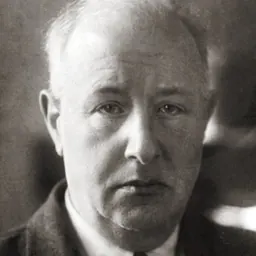
Lived 1924 – 2025 (aged 101). Herwig Schopper was a German physicist, pedagogue, university teacher and nuclear physicist.
Herwig Franz Schopper (28 February 1924 – 19 August 2025) was a German experimental physicist. He researched and taught at the University of Erlangen, the University of Mainz from 1958, the University of Karlsruhe from 1961, and the University of Hamburg from 1973. The same year, he became chairman of the directorate of the German DESY research centre. He was the director general of CERN for European research from 1981 to 1988. After retiring in Hamburg in 1989, he held functions such as president of the German Physical Society and president of the European Physical Society. He was a founding father of SESAME, an international laboratory in the Middle East, and of the Cyprus Institute.
Early life Schopper was born in Lanškroun, Czechoslovakia, on 28 February 1924, to a family of Austrian descent; his father was a teacher. He grew up in a German-speaking town in the newly founded Czechoslovakia. A few years after Schopper's birth, his parents amicably divorced, and he lived with his mother during the week and with his father on weekends. His parents and relatives encouraged his scientific and musical interests.
Schopper was advanced one year early into secondary school and took his final exams in 1942, after being taught alone in his last year because his classmates had left school early with an . In 1938, following the annexation of the Sudetenland as a result of the Munich Agreement, Schopper had become a German citizen. After completing school, he was conscripted into the Reich Labour Service and then drafted into the Wehrmacht, where he was assigned to the Luftwaffe's intelligence service. He chose a career as an officer, which meant alternating between training and combat service (twice on the Eastern Front, then in the West during the Ardennes Offensive). At the end of the war, Schopper was taken prisoner by the British in Schleswig-Holstein.
During these fellowships, Schopper worked on nuclear physics and contributed substantially to the evidence of parity violation in weak interactions. He measured the circular polarization of gamma rays following a beta decay, thought unfeasible by Lee and Yang, and showed in the same experiment that the helicities of neutrino and antineutrino are opposite. Later, he was involved in an experiment to test time reversal symmetry. In 1956, he followed Fleischmann to the University of Erlangen where he continued to do research in optics and solid-state physics, with emphasis on thin metal layers, which he had started at Hamburg. Also he developed, along with Clausnitzer, the first source of polarised protons. In 1957 he became Privatdozent at the University of Erlangen.
Schopper was appointed professor at the University of Karlsruhe in 1961 and director of the newly established Institutes for Experimental Nuclear Physics of TH Karlsruhe and the Karlsruhe Nuclear Research Centre. In order to continue his research on electron scattering he set up a group to carry out one of the first experiments at DESY. He also created a group at CERN to investigate neutron scattering at high energies at the Proton Synchrotron (PS) and Intersecting Storage Rings (ISR). These experiments where then continued at the Institute for High Energy Physics (IHEP) in Serpukhov, Russia. The group made important contributions to the study of neutron-proton and neutron-nuclei scattering cross sections. For this purpose, the first hadron calorimeter was developed and optimised by Monte Carlo simulations. Another group at Karlsruhe developed the first superconducting high frequency cavities in Europe, a technology which was transferred to CERN for particle separators and later for particle acceleration at LEP.
In 1973 Schopper became professor at the University of Hamburg and the chairman of the directorate of DESY, serving until end of 1980. Also, by establishing HASYLAB at DORIS synchrotron light science became an important branch of research at DESY. He proposed and completed the construction of the electron-positron collider PETRA which led to the discovery and study of the gluon. During his mandate, DESY, a national laboratory became as far as science was concerned an international particle physics laboratory. This included the start of the first collaboration with China. Thus, this particle accelerator transformed high energy physics into a field of precision measurements and provided estimates to the mass of the top quark, Higgs boson and other supersymmetric and hypothetical particles. LEP was approved under the condition of a reduced and constant budget with the consequence that some unique activities at CERN (e.g. ISR) had to be abandoned. Schopper was obliged to introduce a new way of international collaboration for the four LEP experiments since CERN could not provide funds for them. The experiments became rather independent activities organised in a rather democratic way bringing together hundreds of scientists from many universities and national organisations. The LEP experiments became a model for the later LHC experiments, shaping the way this organization works today. He contributed to the globalisation of research at CERN and was also responsible for the return of Spain and Portugal in the CERN's member states.
Later life and work
Schopper was professor at the University of Hamburg from 1973 and professor emeritus from 1989. For many years he was member of the scientific council of the Joint Institute for Nuclear Research in Dubna and of the board of trustees of the Max Planck Institute for Plasma Physics in Garching.
Schopper's vision of science without borders resulted in him becoming a founding father of SESAME, the laboratory for Synchrotron-Light for Experimental Science and Applications in the Middle East, which provides an extremely bright light source to investigate a broad range of domains from condensed matter to biology and archeology.
Schopper was a founding member of The Cyprus Institute at Nicosia, Cyprus, and from 2000, a Member of the board of trustees. He was also chairman of the Scientific Council, and member of the executive committee of the board of trustees of the Cyprus Institute. He later worked as an advisor and goodwill ambassador on science for peace. He wrote articles about research policy, science and religion, and also science and society.
Honours and awards Honorary academic degrees Schopper received honorary doctoral degrees from: University of Erlangen (1982), Moscow State University (1988), University of Geneva (1989), University of London, Joint Institute for Nuclear Research (Dubna) (1999), Institute for High Energy Physics (Protvino), The Cyprus Institute (Nicosia) (2018) and the Karlsruhe Institute of Technology (KIT) (2024).
Awards
of Göttingen Academy of Sciences and Humanities (1957) of the Academy of Sciences Leopoldina in Halle (1957) (1978) (1984) Gold Medal of the Weizmann Institute (Israel) with CERN (1985) Commander's Cross of the Order of Merit of the Federal Republic of Germany (1989) J. E. Purkyne Memorial Medal of the Czech Academy of Sciences (1994) Grand Cordon of the Order of Independence awarded by King Abdullah II of Jordan (2003) Tate Medal of the American Institute of Physics (2003) UNESCO Albert Einstein Gold Medal, Denmark (2004) Scientific Merit Medal, Portugal (2009) Grand Cross of the Order of Merit of the Republic of Cyprus (2012) Golden Honorary Needle of DESY (Hamburg) (2013) AAAS Award for Science Diplomacy (2019) Goldmedal of the Heisenberg Society (2024)
Memberships
Academy of Sciences Leopoldina in Halle Academia Europaea in London from 1992 Academia Scientiarium et Artium Europea in Salzburg Corresponding member of the Bavarian Academy of Sciences in Munich Honorary member of the Hungarian Academy of Sciences Fellow of the Institute of Physics in London Academy of Sciences in Lisbon Member and trustee of the World Academy of Art and Science in San Francisco Honorary Member of the Swiss Physical Society
Honorary Member of the German Physical Society Honorary Member of the Polish Academy of Sciences
Publications and books Scientific publications Schopper wrote more than 200 original publications in optics, nuclear physics, elementary particle physics and accelerator technology, including: H. Schopper, LEP — The Lord of the Rings Collider at CERN 1980–2000, Springer Verlag (2009); with a foreword by Rolf-Dieter Heuer; ; e-book
H. Schopper and L. Di Lella, editors, 60 years of CERN Experiments and Discoveries, World Scientific (2015); pbk
Don’t just read it —
keep it.
Full-length biographies made to live with: read them, listen on the way to work, watch them tonight.
- E-book
- Audio
- Video
Instant download · yours to keep · every purchase keeps this site free
Important facts
People in Herwig Schopper's life
Named in this biography and alive at the same time

Related people
Same field, nearest in time


Contemporaries
People whose lives overlapped Herwig Schopper's




Frequently asked questions
Who was Herwig Schopper?
German experimental physicist (1924–2025)
When was Herwig Schopper born?
Herwig Schopper was born on 28 February 1924 in Lanškroun.
When did Herwig Schopper die?
Herwig Schopper died on 19 August 2025 in Hamburg.
What was Herwig Schopper's occupation?
Herwig Schopper was a physicist, pedagogue, university teacher and nuclear physicist.
What nationality was Herwig Schopper?
Herwig Schopper was German.
Sources & further reading
Cite this page
APA: Biography.guide. (2026). Herwig Schopper. https://biography.guide/herwig-schopper/
MLA: "Herwig Schopper." Biography.guide, https://biography.guide/herwig-schopper/.
Chicago: "Herwig Schopper." Biography.guide. https://biography.guide/herwig-schopper/.
Data last updated: 2026-09-20 · Spot an error? Report a correction.
Page generated 2026-09-27 05:29 UTC