
About Hertha Wambacher
Lived 1903 – 1950 (aged 47). Hertha Wambacher was an Austrian physicist and university teacher, known for Cosmic rays.
Hertha Wambacher (9 March 1903 – 25 April 1950) was an Austrian physicist.
Education After having obtained the general certificate of education from the girls' high school run by the Association for the Extended Education of Women in 1922, she studied first chemistry, then physics at the University of Vienna. Work with Marietta Blau
Wambacher's dissertation at the 2nd Physics Institute was supervised by Marietta Blau, with whom Wambacher continued to collaborate also after her Ph.D. graduation in 1932. The cooperation of the two women referred to the photographic method of detecting ionizing particles. For their methodical studies at the Institute for Radium Research of the Austrian Academy of Sciences in Vienna, Blau and Wambacher received the Lieben Prize of the Austrian Academy of Sciences in 1937. Also in 1937, Blau and Wambacher jointly discovered "disintegration stars" in photographic plates that had been exposed to cosmic radiation at an altitude of, 2300 m above sea level. These stars are the patterns of particle tracks from nuclear reactions (spallation events) of cosmic-ray particles with nuclei of the photographic emulsion.
Academic career and further research After Blau had to leave Austria in 1938, Hertha Wambacher continued working on the identification of particles from nuclear reactions of cosmic rays with the emulsion constituents. With this work, she obtained her university teaching certification in 1940. She taught classes at the University of Vienna. Nazism, post-war life In 1945, Wambacher who – according to her own words – had belonged to the NSDAP since 1934, was removed from the University of Vienna. She was detained in Russia and is said to have returned only in 1946. She contracted cancer, but was still able to work in a research laboratory in Vienna. Death Wambacher died from cancer on 25 April 1950.
Don’t just read it —
keep it.
Full-length biographies made to live with: read them, listen on the way to work, watch them tonight.
- E-book
- Audio
- Video
Instant download · yours to keep · every purchase keeps this site free
Important facts
People in Hertha Wambacher's life
Named in this biography and alive at the same time

Related people
Same field, nearest in time


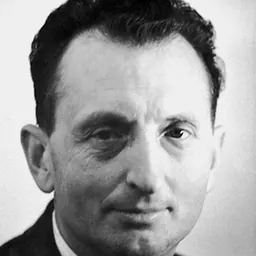
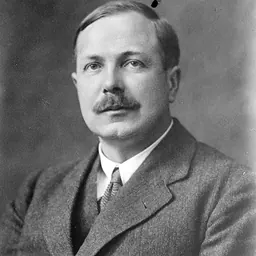
Contemporaries
People whose lives overlapped Hertha Wambacher's
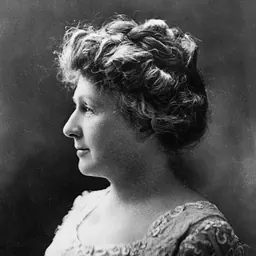
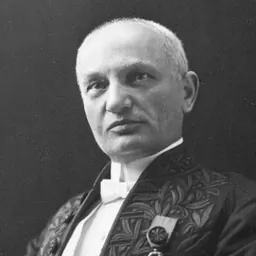
Frequently asked questions
Who was Hertha Wambacher?
Austrian physicist (1903-1950)
When was Hertha Wambacher born?
Hertha Wambacher was born on 9 March 1903 in Vienna.
When did Hertha Wambacher die?
Hertha Wambacher died on 25 April 1950 in Vienna.
What was Hertha Wambacher's occupation?
Hertha Wambacher was a physicist and university teacher.
What was Hertha Wambacher known for?
Hertha Wambacher was known for Cosmic rays.
What nationality was Hertha Wambacher?
Hertha Wambacher was Austrian.
Sources & further reading
Cite this page
APA: Biography.guide. (2026). Hertha Wambacher. https://biography.guide/hertha-wambacher/
MLA: "Hertha Wambacher." Biography.guide, https://biography.guide/hertha-wambacher/.
Chicago: "Hertha Wambacher." Biography.guide. https://biography.guide/hertha-wambacher/.
Data last updated: 2026-09-20 · Spot an error? Report a correction.
Page generated 2026-09-27 05:33 UTC