
About Hersch Lauterpacht
Lived 1897 – 1960 (aged 62). Hersch Lauterpacht was a British and Austrian judge, lawyer, university teacher, jurist and international Court of Justice.
Sir Hersch Lauterpacht (16 August 1897 – 8 May 1960) was a British international lawyer, human rights activist, and judge at the International Court of Justice.
Biography Hersch Lauterpacht was born on 16 August 1897 to a Jewish family in the small town of Żółkiew, in the Austro-Hungarian Empire, near Lemberg (now Lviv), the capital of East Galicia. In 1911 his family moved to Lemberg. He has two siblings. which was published in 1927.
His 1933 book The Function of Law in the International Community has been characterized as arguably his most influential.
By 1937 he had written several books on international law. He assisted in the prosecution of the defendants at the Nuremberg trials—helping to draft the British prosecutor's (Hartley Shawcross) speech. He was a member of the British delegation in two International Court of Justice cases: the Corfu Channel case (1948) and the Anglo-Iranian Oil Co. case (1951).
Lauterpacht was invited in 1942 by the American Jewish Committee to author a book on the International Law of Human Rights. Hersch's writings and (concurring and dissenting) opinions continue, nearly 50 years after his death, to be cited frequently in briefs, judgments, and advisory opinions of the World Court. He famously said that "international law is at the vanishing point of law".
The Lauterpacht Centre for International Law at the University of Cambridge is named after him and his son, Sir Elihu Lauterpacht, CBE, QC, who founded the centre and was its first director; Elihu remained actively involved in its work as Director Emeritus and Honorary Professor of International Law until his death in February 2017.
Samuel Moyn has suggested that Hersch was one of the few international lawyers actively campaigning for human rights in the late 1940s, and that he had "denounced the Universal Declaration as a shameful defeat of the ideals it grandly proclaimed". In the aftermath of the Holocaust, Lauterpacht's thinking also included the question of how this unpreceded event could be properly met by an international law that was based on established rules and precedents. When asked about the possibilities for the newly established state of Israel to claim citizenship for deceased Jewish victims of the Holocaust, Lauterpacht ambivalently stated that, although this was not possible according to the present state of international law, it would only be an extraordinary reaction to an unprecedented event in history.
In 1948, Lauterpacht was asked by Yishuv diplomats to consider the legal basis for Israel's independence or write a declaration of independence for Israel. By May 1948, Lauterpacht had produced a two-part document that amounted to a declaration of independence. Some of Lauterpacht's draft was incorporated into what would ultimately become the ultimate draft of Israel's Declaration of Independence.
Personal life He was married to Rachel Lauterpacht and was the father of Elihu Lauterpacht. The Development of International Law by the International Court, London, 1958; Oppenheim's International Law, Vol. 1, 8th ed., 1958; Sir Gerald Fitzmaurice, Hersch Lauterpacht – The Scholar as Judge, Part I. 37 British Yearbook of International Law 1-72, 1961; Part II, 38 British Yearbook of International Law 1-84, 1962; Part III, 39 British Yearbook of International Law 133–189, 1963 Annual Digest and Reports of Public International Law Cases, Vols. 1–16, subsequently continued as International Law Reports, Vols. 17–24 International Law – The Collected Papers of Hersch Lauterpacht, Vol.5, Edited by Elihu Lauterpacht (Cambridge 2004) as reviewed by H.E. Former ICJ President Stephen M. Schwebel, in 99 American Journal of International Law 726-729 (2005) The Life of Hersch Lauterpacht (Cambridge November 2010) by Elihu Lauterpacht and ILR Announcement as reviewed by H.E. Former ICJ President Schwebel
Don’t just read it —
keep it.
Full-length biographies made to live with: read them, listen on the way to work, watch them tonight.
- E-book
- Audio
- Video
Instant download · yours to keep · every purchase keeps this site free
Important facts
People in Hersch Lauterpacht's life
Named in this biography and alive at the same time

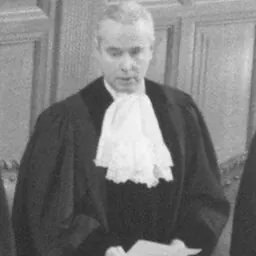

Related people
Same field, nearest in time
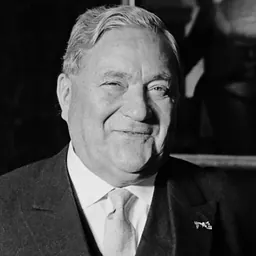
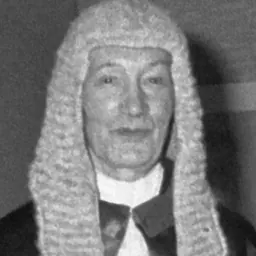
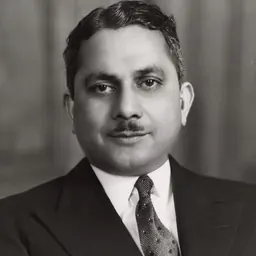



Contemporaries
People whose lives overlapped Hersch Lauterpacht's


Frequently asked questions
Who was Hersch Lauterpacht?
Polish-British judge, legal scholar (1897–1960)
When was Hersch Lauterpacht born?
Hersch Lauterpacht was born on 16 August 1897 in Zhovkva.
When did Hersch Lauterpacht die?
Hersch Lauterpacht died on 8 May 1960 in London.
What was Hersch Lauterpacht's occupation?
Hersch Lauterpacht was a judge, lawyer, university teacher, jurist and international Court of Justice.
What nationality was Hersch Lauterpacht?
Hersch Lauterpacht was British and Austrian.
Sources & further reading
· Wikipedia: Hersch Lauterpacht
Cite this page
APA: Biography.guide. (2026). Hersch Lauterpacht. https://biography.guide/hersch-lauterpacht/
MLA: "Hersch Lauterpacht." Biography.guide, https://biography.guide/hersch-lauterpacht/.
Chicago: "Hersch Lauterpacht." Biography.guide. https://biography.guide/hersch-lauterpacht/.
Data last updated: 2026-09-22 · Spot an error? Report a correction.
Page generated 2026-09-27 05:02 UTC