
About Herod the Great
Lived 74 BC – 4 BC (aged 69–70). Herod the Great was a sovereign, politician and monarch.
Reign in Judea
Herod's rule marked a new beginning in the history of Judea. Judea had been ruled autonomously by the Hasmonean kings from 140 until 63 BCE. The Hasmonean kings retained their titles, but became clients of Rome after the conquest by Pompey in 63 BCE. Herod overthrew the Hasmonean Antigonus in a three-year-long war between 37 and 34 BCE, ruled under Roman overlordship until his death, and officially passed on the throne to his sons, thus establishing his own, so-called Herodian dynasty.
Herod was granted the title of "King of Judea" by the Roman Senate. As such, he was a vassal of the Roman Empire, expected to support the interests of his Roman patrons. Nonetheless, just when Herod obtained leadership in Judea, his rule faced two threats. The first threat came from his mother-in-law Alexandra, who sought to regain power for her family, the Hasmoneans, whose dynasty Herod had overthrown in 37 or 36 BCE (see Siege of Jerusalem). In the same year, Cleopatra married the Roman leader Antony. Recognizing Cleopatra's influence over Antony, Alexandra asked Cleopatra for aid in making Aristobulus III the High Priest. As a member of the Hasmonean family, Aristobulus III might partially repair the fortunes of the Hasmoneans if made High Priest. Alexandra's request was made, but Cleopatra urged Alexandra to leave Judea with Aristobulus III and visit Antony. Herod received word of this plot, and feared that if Antony met Aristobolus III in person he might name Aristobulus III King of Judea. This concern induced Herod, in 35 BCE, to order the assassination of Aristobulus, ending this first threat to Herod's throne. The marriage of 37 BCE also sparked a power struggle between Roman leaders Octavian, who would later be called Augustus, and Antony. Herod, owing his throne to Rome, had to pick a side, and he chose Antony. In 31 at Actium, Antony lost to Octavian, posing a second threat to Herod's rule. Herod had to regain Octavian's support if he was to keep his throne. At Rhodes in 31 BCE, Herod, through his ability to keep Judea open to Rome as a link to the wealth of Syria and Egypt, and ability to defend the frontier, convinced Octavian that he would be loyal to him. Herod continued to rule his subjects as he saw fit. Despite the autonomy afforded to Herod in his internal reign over Judea, restrictions were placed upon him in his relations with other kingdoms.
Herod's support from the Roman Empire was a major factor in enabling him to maintain his authority over Judea. There have been mixed interpretations concerning Herod's popularity during his reign. In The Jewish War, Josephus characterizes Herod's rule in generally favorable terms, and gives Herod the benefit of the doubt for the infamous events that took place during his reign. However, in his later work, Antiquities of the Jews, Josephus emphasizes the tyrannical authority that many scholars have come to associate with Herod's reign.
Herod's despotic rule has been demonstrated by many of his security measures aimed at suppressing the contempt his people, especially Jews, had towards him. For instance, it has been suggested that Herod used secret police to monitor and report the feelings of the general populace toward him. He sought to prohibit protests, and had opponents removed by force. He had a bodyguard of 2,000 soldiers. Josephus describes various units of Herod's personal guard taking part in Herod's funeral, including the Doryphnoroi, and a Thracian, Celtic (probably Gallic) and Germanic contingent. In some instances, Herod took it upon himself to provide for his people in times of need, such as during a severe famine that occurred in 25 BCE.
Although he made many attempts at conforming to traditional Jewish laws, there were more instances where Herod was insensitive, which constitutes one of the major Jewish complaints of Herod as highlighted in Josephus' Antiquities of the Jews. In Jerusalem, Herod introduced foreign forms of entertainment, and erected a golden eagle at the entrance of the Temple, which suggested a greater interest in the welfare of Rome than of Jews. Herod's outreach efforts gained him little, and at the end of his reign anger and dissatisfaction were common amongst Jews. Heavy outbreaks of violence and riots followed Herod's death in many cities, including Jerusalem, as pent-up resentments boiled over. The scope of the disturbances sparked hopes that the Jews of Judea might some day overthrow the Roman overlords, hopes reawakened decades later in the outbreak of the First Jewish–Roman War in 66 CE.
Herod and Augustus The relationship between Herod and Augustus demonstrates the fragile politics of a deified Emperor and a King who ruled over the Jewish people and their holy lands. As they interacted, Herod's desire to satisfy both the Jewish and non-Jewish people of his kingdom had to be balanced with satisfying Augustus' aim to spread the culture, architecture and values of Rome throughout his empire. The sway of Augustus and the Roman Empire on the policy led to the use of Romanized construction throughout Herod's Kingdom. An example of Herod's architectural expansion of Judea in devotion to Rome can be seen with the third temple he commissioned, the Augusteum, a temple dedicated to Augustus.
Architectural achievements
Herod's most famous and ambitious project was the expansion of the Second Temple in Jerusalem which was undertaken so that he would "have a capital city worthy of his dignity and grandeur", and with this reconstruction, Herod hoped to gain more support from the Jews. Recent findings suggest that the Temple Mount walls and Robinson's Arch may not have been completed until at least 20 years after his death, during the reign of Herod Agrippa II.
In the 18th year of his reign (20–19 BCE), Herod rebuilt the Temple on "a more magnificent scale". Although work on out-buildings and courts continued for another 80 years, the new Temple was finished in a year and a half. To comply with religious law, Herod employed 1,000 priests as masons and carpenters in the rebuilding. The finished temple, which was destroyed in 70 CE, is sometimes referred to as Herod's Temple. Today, only the four retaining walls remain standing, including the Western Wall. These walls created a flat platform (the Temple Mount) upon which the Temple was then constructed.
Herod's other achievements include the development of water supplies for Jerusalem, building fortresses such as Masada and Herodium, and founding new cities such as Caesarea Maritima and the enclosures of Cave of the Patriarchs and Mamre in Hebron. He and Cleopatra owned a monopoly over the extraction of asphalt from the Dead Sea, which was used in shipbuilding. He leased copper mines on Cyprus from the Roman emperor.
New Testament references
Massacre of the Innocents, 10th century Codex Egberti. Herod on the left.
The Gospel of Matthew describes an episode known as the Massacre of the Innocents. According to this account, after the birth of Jesus, a group of magi from the East visited Herod to inquire the whereabouts of "the one having been born king of the Jews", because they had seen his star in the east (or, according to certain translations, at its rising) and therefore wanted to pay him homage. Herod, as King of the Jews, was alarmed at the prospect of a usurper. Herod assembled the chief priests and scribes of the people and asked them where the "Anointed One" (the Messiah, ) was to be born. They answered, in Bethlehem, citing Micah 5:2. Herod therefore sent the magi to Bethlehem, instructing them to search for the child and, after they had found him, to "report to me, so that I too may go and worship him". However, after they had found Jesus, they were warned in a dream not to report back to Herod. Similarly, Joseph was warned in a dream that Herod intended to kill Jesus, so he and his family fled to Egypt. When Herod realized he had been outwitted, he gave orders to kill all boys of the age of two and under in Bethlehem and its vicinity. Joseph and his family stayed in Egypt until Herod's death, then moved to Nazareth in Galilee to avoid living under Herod's son Archelaus.
Most modern biographers of Herod, and a majority of biblical scholars, dismiss Matthew's story as a literary device. Contemporary non-biblical sources, including Josephus and the surviving writings of Nicolaus of Damascus (who knew Herod personally), provide no corroboration for Matthew's account of the massacre, and it is not mentioned in any other gospel. Classical historian Michael Grant states "he tale is not history but myth or folk-lore", while Peter Richardson notes that the story's absence from the Gospel of Luke and the accounts of Josephus "work against the account's accuracy". Richardson suggests that the event in Matthew's gospel was inspired by Herod's murder of his own sons. Jodi Magness has said that "many scholars believe that the massacre of the innocents never occurred, but instead was inspired by Herod's reputation". Others, such as Paul Maier, suggest that since Bethlehem was a smaller town, the slaughter of about a half dozen children would not have warranted a mention from Josephus. Josephus states that the pain of his illness led Herod to attempt suicide by stabbing, and that the attempt was thwarted by his cousin. In some much later narratives and depictions, the attempt succeeds; for example, in the 12th-century Eadwine Psalter. Other medieval dramatizations, such as the Ordo Rachelis, follow Josephus' account.
Josephus stated that Herod was so concerned that no one would mourn his death that he commanded a large group of distinguished men to come to Jericho, and he gave an order that they should be killed at the time of his death so that the displays of grief that he craved would take place; his brother-in-law Alexas and his sister Salome did not carry out this wish.
Dating In the 20th century, most scholarship concerning the date of Herod's death followed Emil Schürer's 1896 chronology, which placed the death of Herod in 4 BCE. This is three years earlier than all previous scholarship and tradition had placed his death (1 BCE). The primary argument for the 4 BCE date is that two of Herod's sons, Archelaus and Philip the Tetrarch, reported reign lengths that imply they believed their reigns started prior to 1 BCE. Josephus says that Archelaus reigned for ten years, and also says that he was deposed in 6 CE. It is also clear that Philip reckoned the length of his reign from a date prior to 1 BCE, although the different manuscripts of Josephus report conflicting figures about how long he reigned and when he died. However, Josephus reports that Herod gave his sons royal titles before his death, and that Archelaus held royal authority during Herod's lifetime.
In recent years, some scholars have presented new arguments for the traditional date of 1 BCE for Herod's death. According to Andrew Steinmann and Robert Young, the coins minted by Herod's sons Antipas and Philip indicate that their first regnal year started on 1 Tishrei 5 BCE, after they were given royal titles while Herod was still alive. While thousands of coins survive from Herod's sons, the earliest dated coins from Antipas and Philip are from years 4 and 5 respectively. This is expected if they first gained the ability to mint coins after their father died early in 1 BCE, but officially dated the beginning of their first year to the autumn of 5 BCE.
Schürer's chronology dates Herod's siege of Jerusalem to the summer of 37 BCE. Josephus records that there was a shortage of food during this siege because it took place at the end of a Sabbatical year, the seventh year when the fields were not sown. Steinmann and Young have argued that if the siege took place in 37 BCE, then 40-41 CE (starting in the month of Tishrei and ending in Elul) must have been a Sabbatical year, 77 years after 38-37 BCE. But the records of Josephus and Philo imply that that year was not Sabbatical. During the Caligula statue crisis in late 40 CE, Josephus reports that "the season of the year required them to sow [the land]." Steinmann and Young conclude that Herod's siege could not have occurred in 37 BCE, and must have occurred in 36 BCE, which is consistent with a 1 BCE date for Herod's death. Augustus recognised Herod's son Herod Archelaus as ethnarch of Judea, Samaria, and Idumea until 6 CE. Augustus then judged Archelaus incompetent to rule, removed him from power, and combined the provinces of Samaria, Judea proper, and Idumea into Iudaea province. This enlarged province was ruled by a prefect until the year 41 CE. As to Herod's other sons, Herod Antipas was tetrarch of Galilee and Peraea from Herod's death to 39 CE when he was deposed and exiled. Philip became tetrarch of territories north and east of the Jordan, namely Iturea, Trachonitis, Batanea, Gaulanitis, Auranitis and Paneas, and ruled until his death in 34 CE.
Herod's tomb
The location of Herod's tomb is documented by Josephus, who writes, "And the body was carried two hundred furlongs, to Herodium, where he had given order to be buried." Professor Ehud Netzer, an archaeologist from the Hebrew University, read the writings of Josephus and focused his search on the vicinity of the pool and its surroundings. An article in the New York Times states, Lower Herodium consists of the remains of a large palace, a race track, service quarters, and a monumental building whose function is still a mystery. Perhaps, says Ehud Netzer, who excavated the site, it is Herod's mausoleum. Next to it is a pool, almost twice as large as modern Olympic-size pools. thumb
On 7 May 2007, an Israeli team of archaeologists of Hebrew University, led by Netzer, announced they had discovered the tomb. The site is located at the exact location given by Josephus, atop tunnels and water pools, at a flattened desert site, halfway up the hill to Herodium, south of Jerusalem. The tomb contained a broken sarcophagus but no remains of a body.
Not all scholars agree with Netzer: in an article for the Palestine Exploration Quarterly, archaeologist David Jacobson (University of Oxford) wrote that "these finds are not conclusive on their own and they also raise new questions." In October 2013, archaeologists Joseph Patrich and Benjamin Arubas also challenged the identification of the tomb as that of Herod. According to Patrich and Arubas, the tomb is too modest to be Herod's and has several unlikely features. Roi Porat, who replaced Netzer as excavation leader after the latter's death, stood by the identification.
The Israel Nature and Parks Authority and the Gush Etzion Regional Council intended to recreate the tomb out of a light plastic material, a proposal that received strong criticism from major Israeli archeologists. Accordingly, the plan was later abandoned.
Opinions of his reign Macrobius , one of the last pagan writers in Rome, in his book Saturnalia, wrote: "When it was heard that, as part of the slaughter of boys up to two years old, Herod, king of the Jews, had ordered his own son to be killed, he [the Emperor Augustus] remarked, 'It is better to be Herod's pig [Gr. hys] than his son' [Gr. hyios]". This was a reference of how Herod, as a Jew, would not kill pigs, but had three of his sons, and many others, killed.
According to contemporary historians, Herod the Great "is perhaps the only figure in ancient Jewish history who has been loathed equally by Jewish and Christian posterity", and as one who would be "prepared to commit any crime in order to gratify his unbounded ambition." His extraordinary spending spree is cited as one of the causes of the serious impoverishment of the people he ruled, adding to the opinion that his reign was exclusively negative. Herod's religious policies gained a mixed response from the Jewish populace. Although Herod considered himself king of the Jews, he let it be known that he also represented the non-Jews living in Judea, building temples for other religions outside of the Jewish areas of his kingdom. Many Jews questioned the authenticity of Herod's Judaism on account of his Idumean background and his infamous murders of members of his family. However, he generally respected traditional Jewish observances in his public life. For instance, he minted coins without human images to be used in Jewish areas and acknowledged the sanctity of the Second Temple by employing priests as artisans in its construction.
Along with holding some respect for the Jewish culture in his public life, there is also evidence of Herod's sensitivity toward Jewish traditions in his private life: around 40 ritual baths or were found in several of his palaces. These were known for being used during this time in Jewish purity rituals in which Jewish people could submerge themselves and purify their bodies without the presence of a priest. There is some speculation as to whether or not these baths were actual as they have also been identified as stepped or Roman cold-water baths; however, several historians have identified these baths as a combination of both types. While it has been proven that Herod showed a great amount of disrespect toward the Jewish religion, scholar Eyal Regev suggests that the presence of these ritual baths shows that Herod found ritual purity important enough in his private life to place a large number of these baths in his palaces despite his several connections to gentiles and pagan cults.
However, he was also praised for his work, being considered the greatest builder in Jewish history, and one who "knew his place and followed [the] rules". What is left of his building ventures are now popular tourist attractions in the Middle East.
Chronology
39 – 20 BCE 39–37 BCE – War against Antigonus the Hasmonean begins. After the conquest of Jerusalem and victory over Antigonus, Mark Antony executes Antigonus. 36 BCE – Herod makes his 17-year-old brother-in-law Aristobulus III high priest, fearing that the Jews would appoint him as King of the Jews in his place. 35 BCE – Aristobulus III is drowned at a party on Herod's orders. 32 BCE – The Nabatean war begins, with victory one year later. 31 BCE – Judea suffers a devastating earthquake. Octavian defeats Mark Antony, and Herod switches allegiances to him. 30 BCE – Herod is shown great favor by Octavian, who confirms him as King of Judea at Rhodes.
29 BCE – According to Josephus, amid Herod's great passion and jealousy concerning his wife Mariamne I, she learns of Herod's plans to murder her and stops sleeping with him. Herod charges her with adultery and puts her on trial. His sister Salome I is the primary witness against her. Mariamne's mother Alexandra makes an appearance to further incriminate her daughter. Historians speculate that Alexandra was next on Herod's list to be executed, and she only did this to save her own life. Mariamne is executed, and Alexandra declares herself Queen, stating that Herod was mentally unfit to serve. Josephus states that this is a strategic mistake, and Herod executes her without a trial. 28 BCE – Herod executes his brother-in-law Kostobar, husband of Salome and father to Berenice, for conspiracy. There is a large festival in Jerusalem, as Herod had built a theater and an amphitheater. 27 BCE – An assassination attempt on Herod is foiled. To honor now-Emperor Augustus, Herod rebuilt Samaria, and renames it Sebaste. 25 BCE – Herod imports grain from Egypt and starts an aid program to combat widespread hunger and disease following a massive drought. He also waives a third of taxes due. He begins construction on Caesarea Maritima and its adjoining harbor. 23 BCE – Herod builds a palace in Jerusalem as well as the Herodion fortress. He marries his third wife Mariamne II, the daughter of the priest Simon Boethus. Immediately, Herodes deprives Jesus, son of Fabus of the high priesthood, and confers that dignity on Simon instead. 22 BCE – Augustus grants Herod the regions of Trachonitis, Batanaea, and Auranitis in the northeast. – Expansion starts on the Temple Mount; Herod completely rebuilds the Second Temple.
19 BCE – Death
– Herod traveled to Rome for the second time. 14 BCE – Herod supports the Jews in Anatolia and Cyrene. Owing to prosperity in Judea, he waives a quarter of taxes due. 13 BCE – Herod makes his first-born son Antipater, by Doris, first heir in his will. 12 BCE – Herod suspects his sons Alexander and Aristobulus, from his marriage to Mariamne, of threatening his life. He takes them to Aquileia to be put on trial. Augustus ultimately reconciles the three. Herod supports the financially strapped Olympic Games and ensures their future. He amends his will so that Alexander and Aristobulus rise in the succession plans, but Antipater remains the primary heir. – The newly expanded temple in Jerusalem is inaugurated. War breaks out against the Nabateans. 9 BCE – Caesarea Maritima is inaugurated. Owing to the course of the Nabatean war, Herod falls out of favor with Augustus. He again suspects Alexander of plotting to kill him. 8 BCE – Herod accuses his sons Alexander and Aristobulus of high treason. He reconciles with Augustus, who also gives him permission to prosecute his sons. 7 BCE – Court hearings take place in Beirut in front of a Roman court. Alexander and Aristobulus are found guilty and executed. The succession is amended such that that Antipater becomes the exclusive successor to the throne. Herod Philip, his son by Mariamne II, is now second in the line of succession. 6 BCE – Herod takes action against the Pharisees. 5 BCE – Antipater is brought before a court, charged with plotting to murder Herod. Now seriously ill, Herod names his son Herod Antipas from his fourth marriage with Malthace as successor. Final year (4 or 1 BCE) – Young disciples of the Pharisees smash the golden eagle over the main entrance of the Temple after their teachers label it as an idolatrous symbol. Herod arrests them, brings them to court, and sentences them. Augustus approves the death penalty for Antipater. Herod executes his son, and changes his will again: now Herod Archelaus, from the marriage with Malthace, would rule as ethnarch over the tetrachy of Judea, while Herod Antipas by Malthace and Philip from Herod's fifth marriage with Cleopatra of Jerusalem would rule as tetrarchs over Galilee and Perea, as well as over Gaulanitis, Trachonitis, Batanaea, and Panias. Salome I was also given a small toparchy in the Gaza region. As Augustus did not confirm this revision, no one receives the title of King. However, the three sons were ultimately granted rule of the stated territories.
Family Wives and children + Herod's wives and children Wife Children Doris Son Antipater II, executed soon before Herod's death (4 or 1 BCE) Mariamne I, daughter of executed 29 BCE Son Alexander, executed 7 BCE Son Aristobulus IV, executed 7 BCE Daughter Salampsio Daughter Cypros Mariamne II, daughter of Son Herod II Malthace Son Herod Archelaus – ethnarch Son Herod Antipas – tetrarch Daughter Olympias Cleopatra of Jerusalem Son Philip the Tetrarch Son Herod Pallas Son Phasael Phaidra Daughter Roxanne Elpis Daughter Salome A cousin (name unknown) A niece (name unknown) It is very probable that Herod had more children, especially with the last wives, and also that he had more daughters, as female births at that time were often not recorded. As polygamy (the practice of having multiple wives at once) was then permitted under Jewish law, Herod's later marriages were almost certainly polygamous.
Family trees In part based on the tree of Rick Swartzentrover.
Ancestors
Marriages and descendants
Don’t just read it —
keep it.
Full-length biographies made to live with: read them, listen on the way to work, watch them tonight.
- E-book
- Audio
- Video
Instant download · yours to keep · every purchase keeps this site free
Important facts
Family & relationships
People in Herod the Great's life
Named in this biography and alive at the same time
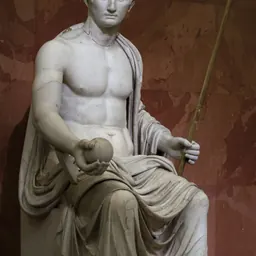



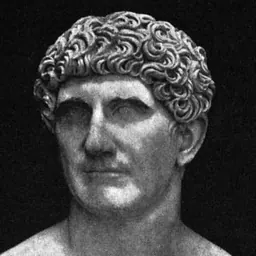
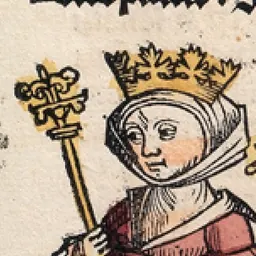

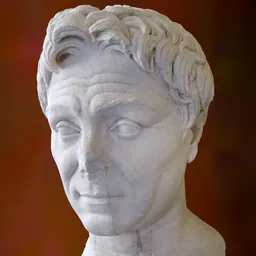
Related people
Same field, nearest in time
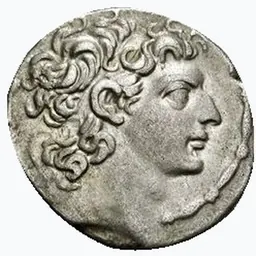
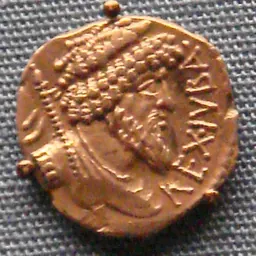
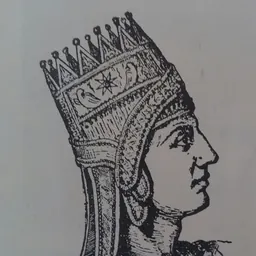

Contemporaries
People whose lives overlapped Herod the Great's
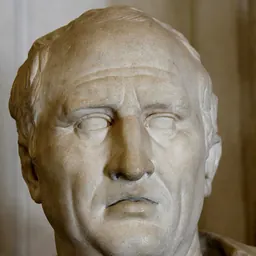



Frequently asked questions
Who was Herod the Great?
king of Judea from 37/6 BCE to 4/1 BCE
When was Herod the Great born?
Herod the Great was born in 74 BC in Edom.
When did Herod the Great die?
Herod the Great died in 4 BC in Jericho.
What was Herod the Great's occupation?
Herod the Great was a sovereign, politician and monarch.
What nationality was Herod the Great?
Herod the Great's recorded nationality: Herodian Kingdom of Judea.
Sources & further reading
Cite this page
APA: Biography.guide. (2026). Herod the Great. https://biography.guide/herod-the-great/
MLA: "Herod the Great." Biography.guide, https://biography.guide/herod-the-great/.
Chicago: "Herod the Great." Biography.guide. https://biography.guide/herod-the-great/.
Data last updated: 2026-09-20 · Spot an error? Report a correction.
Page generated 2026-09-27 05:29 UTC