
About Archelaus
Lived 500 BC – AD 5. Archelaus was a Greek philosopher.
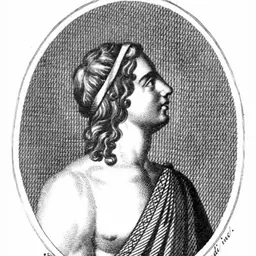
Archelaus (; ; fl. 5th century BC) was a Greek philosopher, a pupil of Anaxagoras, and may have been a teacher of Socrates. He asserted that the principle of motion was the separation of hot from cold, from which he endeavoured to explain the formation of the Earth and the creation of animals and humans.
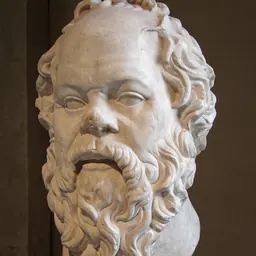
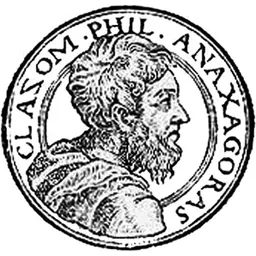
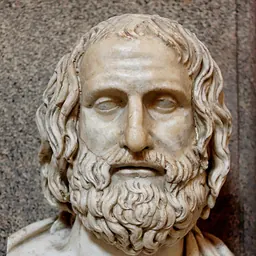
Life Archelaus was a philosopher of the Ionian School, called Physicus from having been the first to teach natural philosophy at Athens. This statement of Diogenes Laërtius, is contradicted by Clement of Alexandria, but the two may be reconciled by supposing that Archelaus was the first Athenian who did so. According to Simplicius, who probably got his information from Theophrastus, Archelaus was a native of Athens, even though Diogenes Laërtius or Myson; was a pupil of Anaxagoras; and is said to have taught at Lampsacus before he established himself at Athens. He is commonly reported to have taught Socrates and Euripides. If he was the instructor of Socrates, he is never mentioned by Xenophon, Plato, or Aristotle, and this story may have been an attempt to connect Socrates with the Ionian School. However, Diogenes Laërtius does report, on the authority of Ion of Chios, a contemporary of Socrates, that Socrates went with Archelaus on a trip to Samos. Also, some scholars have seen in Socrates' "autobiographical" sketch in Plato's Phaedo a reference to Archelaus' theory about the generation and nourishment of the first animals. The tradition which connects Archelaus with Euripides may have arisen from a confusion with Euripides' patron, Archelaus I, king of Macedonia.
Philosophy No fragments of Archelaus have survived; his doctrines have to be extracted from Diogenes Laërtius, Simplicius, Pseudo-Plutarch, and Hippolytus.
Archelaus held that air and infinity are the principle of all things, by which Pseudo-Plutarch supposes that he meant infinite air; and we are told that by this statement he intended to exclude Mind from the creation of the world. If so, he abandoned the doctrine of Anaxagoras at its most important point; and it seems safer to conclude that while he wished to teach the materialist notion that the mind is formed of air, he still held infinite Mind to be the cause of all things. This explanation has the advantage of agreeing with Simplicius.
Don’t just read it —
keep it.
Full-length biographies made to live with: read them, listen on the way to work, watch them tonight.
- E-book
- Audio
- Video
Instant download · yours to keep · every purchase keeps this site free
Important facts
People in Archelaus's life
Named in this biography and alive at the same time


Related people
Same field, nearest in time

Contemporaries
People whose lives overlapped Archelaus's

Frequently asked questions
Who was Archelaus?
5th-century BC Greek philosopher
When was Archelaus born?
Archelaus was born in 500 BC in Athens, Miletus.
When did Archelaus die?
Archelaus died in AD 5.
What was Archelaus's occupation?
Archelaus was a philosopher.
What nationality was Archelaus?
Archelaus was Greek.
Sources & further reading
· DBpedia: Archelaus (philosopher)
Cite this page
APA: Biography.guide. (2026). Archelaus. https://biography.guide/archelaus-philosopher/
MLA: "Archelaus." Biography.guide, https://biography.guide/archelaus-philosopher/.
Chicago: "Archelaus." Biography.guide. https://biography.guide/archelaus-philosopher/.
Data last updated: 2026-09-20 · Spot an error? Report a correction.
Page generated 2026-09-27 05:30 UTC