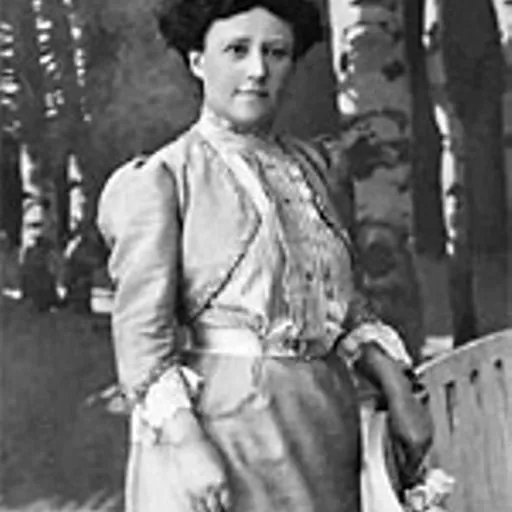
About Hermine Hug-Hellmuth
Lived 1871 – 1924 (aged 53). Hermine Hug-Hellmuth was an Austrian teacher and psychoanalyst.
Hermine Hug-Hellmuth (born Hermine Hug Edle von Hugenstein; 31 August 1871, Vienna – 9 September 1924, Vienna) was an Austrian psychoanalyst. She is regarded as the first psychoanalyst practicing with children and the first to conceptualize the technique of psychoanalysing children.
Her book, A Young Girl's Diary (1921), published in New York by Thomas Seltzer, was prefaced with an endorsement from Sigmund Freud dated 27 April 1915. Hug-Hellmuth denied authorship, however, and published the diary under the pseudonym Grete Lainer. In 1923 Hug-Hellmuth ultimately accepted title of editor for the diary in the third German edition. Written from a psychoanalyst perspective, the work which included Freudian theories to explain phenomena. It was praised within the field of psychoanalysis. It is one of the most cited contributions to child psychoanalysis.
She became a member of the Vienna Psychoanalytic Society from 1913 to 1924 but was murdered by her nephew, Rudolf Hug, on 9 September 1924.
Her work influenced such notable psychoanalysts as Anna Freud, Melanie Klein, Jean Berges and Gabriel Balbo.
Early life and education Hug-Hellmuth was born into a Catholic family, the second daughter of Hugo Hug Von Hugenstein, a military officer in the Austrian war ministry. He was father to an illegitimate daughter named Antonia Farmer who later went by the name Antonia Hug. Hug-Hellmuth became a teacher and taught in private and public school for several years before she returned to her studies and enrolled in University of Vienna in 1897. She studied physical sciences and in 1909, received her doctorate in physics.
She quit her teaching job in 1910 and became a patient of Isidor Sadger Viennese Analyst, who influenced her interest in psychoanalysis. Hug-Hellmuth published her first piece on psychoanalysis in the Zentralblatt fur Psyoanalyse in 1911 entitled "The Analysis of a Dream of 5-Year-Old Boy". In 1921, she became the director of the Educational Counselling Centre associated with the Psychoanalytic. Many of Hug-Hellmuth’s papers included observations of Rolf, such as his early development, behavior, and dreams. He became an important research subject for Hug-Hellmuth, emerging as the major personality in her first book, Aus Dem Seelenleben des Kindes (On the Spiritual and Mental Life of the Child), published in 1913. She concluded in the book that Rolf’s actions were based on abnormal sexual motives and tendencies. This request is often cited as a reason for the lack of credit Hug-Hellmuth receives for her contributions in child psychoanalysis and lack of acknowledgement on the influence her work had on other contributors to the field.
In a letter written in 1915 and later published as a preface to the book, Sigmund Freud expressed strong support for the publication of A Young Girl’s Diary, describing it as an unusually detailed and informative account of adolescent psychological development. Although the book caused a scandal as many people thought to be its contents as fabricated, A Young Girl’s Diary was generally acknowledged as an interesting prospect of developing sexuality within a youthful adolescent.
Melanie Klein Klein was also influenced by Hug-Hellmuth’s contribution to the field regarding child psychoanalysis. Like Anna Freud, Klein started publishing her first important works in 1927, while also unacknowledging Hug-Hellmuth’s input in the field. One of the only times Klein acknowledged Hug-Hellmuth was to criticize her technique on child play experimentation as it lacked fixed-rules within the session - a concept that Hug-Hellmuth believed to be beneficial. Hellmuth claimed the diaries were written by a girl named Vera under the pseudonym Grete Lainer, and were intended for Grete’s best friend Hella.
1912 The Analysis of a Dream of a 51/2-Year-Old Boy 1912 Contributions to the Subject "Lapses in Writing and Reading" 1912 "A Lapse of Speech" in a Small Schoolboy 1912 The True Nature of the Child's Psyche: The Child's Concept of Death 1912 On Hearing Colours: An Attempt to Clarify the Phenomenon on the Basis of Psychoanalytical Methods 1913 On Female Masturbation 1913 The Mental Life of the Child: A Psychoanalytic Study 1913 On the True Nature of the Child's Psyche: On the First Memories of Childhood 1913 Claire Henrika Weber: "Liddy" 1913 Mother Love 1913 On the True Nature of the Child's Psyche 1913 Children's Dreams 1913 A Female Counterpart to Rank's "A Contribution to Infantile Sexuality" 1913 Child Misdemeanours and Naughtiness 1914 On the True Nature of the Child's Psyche: God and Father 1914 On the True Nature of the Child's Psyche: Children's Letters 1914 Child Psychology, Pedagogy 1915 A Dream About Oneself 1915 War Neurosis in Children 1915 War Neurosis in Women 1915 Some Relations Between Eroticism and Mathematics 1915 A Case of Female Foot Fetishism, or Rather, Shoe Fetishism 1917 On the True Nature of the Child's Psyche: On Early Learning and Maturity 1917 Mother-Son, Father-Daughter 1919 A Young Girl's Diary 1920 On the Technique of the Analysis of Children 1920 Child Psychology and Education 1920 The Technique of Child Analysis 1921 On the True Nature of the Child's Psyche: The "Middle" Child 1921 Psychoanalytical Findings About Women 1921 Correspondence between reviewer of his book (A Young Girl's Diary) and H. Hug-Hellmuth 1923 The Importance of the Family for the Fate of the Individual 1924 The Libidinal Structure of the Family 1924 Child Psychology and Pedagogy 1924 New Paths to the Understanding of Youth. Psychoanalytical Lectures for Parents, Teachers, Educators, Kindergarten Teachers and Social Workers
Don’t just read it —
keep it.
Full-length biographies made to live with: read them, listen on the way to work, watch them tonight.
- E-book
- Audio
- Video
Instant download · yours to keep · every purchase keeps this site free
Important facts
People in Hermine Hug-Hellmuth's life
Named in this biography and alive at the same time
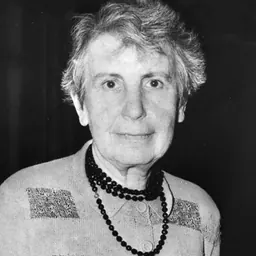



Related people
Same field, nearest in time
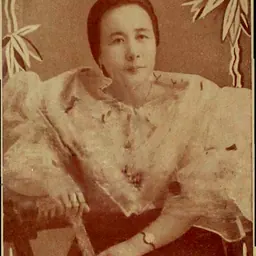
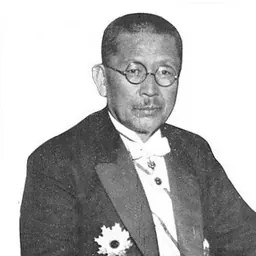


Contemporaries
People whose lives overlapped Hermine Hug-Hellmuth's



Frequently asked questions
Who was Hermine Hug-Hellmuth?
Austrian psychoanalyst (1871–1924)
When was Hermine Hug-Hellmuth born?
Hermine Hug-Hellmuth was born on 31 August 1871 in Vienna.
When did Hermine Hug-Hellmuth die?
Hermine Hug-Hellmuth died on 8 September 1924 in Vienna.
What was Hermine Hug-Hellmuth's occupation?
Hermine Hug-Hellmuth was a teacher and psychoanalyst.
What nationality was Hermine Hug-Hellmuth?
Hermine Hug-Hellmuth was Austrian.
Sources & further reading
· Wikipedia: Hermine Hug-Hellmuth
· DBpedia: Hermine Hug-Hellmuth
Cite this page
APA: Biography.guide. (2026). Hermine Hug-Hellmuth. https://biography.guide/hermine-hug-hellmuth/
MLA: "Hermine Hug-Hellmuth." Biography.guide, https://biography.guide/hermine-hug-hellmuth/.
Chicago: "Hermine Hug-Hellmuth." Biography.guide. https://biography.guide/hermine-hug-hellmuth/.
Data last updated: 2026-09-23 · Spot an error? Report a correction.
Portrait: Wikimedia Commons · author & licence
Page generated 2026-09-27 05:06 UTC