
About Hermann Lingg
Lived 1820 – 1905 (aged 85). Hermann Lingg was a German poet, physician, writer and medical officer.
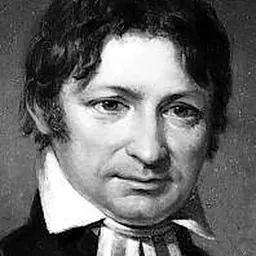
Hermann (Ritter von) Lingg (22 January 1820 – 18 June 1905) was a German poet who also wrote plays and short stories. His cousin, Maximilian von Lingg, was Bishop of Augsburg.
He was born in Lindau. Lingg studied medicine at the universities of Munich, Freiburg, Berlin, and Prague, and became a doctor in the Bavarian Army. From 1839, he was a member of the Corps Suevia München. His battalion was used to quell revolutionary uprisings in Baden; forced to act against his convictions, he fell into severe depression, entered a mental hospital in 1851 and soon submitted his resignation. From that point on, he lived in Munich and devoted himself to historical and poetic studies, financially supported by King Maximilian II. His marriage to a forester's daughter in 1854 improved his mental stability, and a pension (with occasional financial support from friends, such as Max von Pettenkofer and Justus von Liebig, and the German Schiller Foundation) improved their living standards.
Lingg first gained attention with a collection of poems introduced by Emanuel Geibel (Stuttgart 1853). His most famous work is Die Völkerwanderung ("The Great Migration", Stuttgart, 1866–68, 3 vols). He was ennobled in 1890.
His poem "Immer leiser wird mein Schlummer" was set by Johannes Brahms as No. 2 of his Fünf Lieder, Op. 105 and Max Bruch’s cantata Salamis is based on another of his poems. His manuscripts are now located in the Bavarian State Library. There are streets named after him in both Munich and Lindau.
Works Catilina, 1864 Die Walküren, 1865 Vaterländische Balladen und Gesänge, 1868 Liebesblüten aus Deutschlands Dichterhain, lyrical collection, 1869 Gedichte, 3rd book, 1870 Zeitgedichte, 1870 Wanderungen durch die internationale Kunstausstellung in München, 1870 Violante, tragedy, 1871 Dunkle Gewalten, epic poetry, 1872 Die Besiegung der Cholera, play, 1873 Der Doge Candiano, 1873 Berthold Schwarz, 1874 Die Sizilianische Vesper, 1876 Macalda, tragedy, 1877 Schlusssteine, poems, 1878 Byzantinische Novellen, stories, 1881 Von Wald und See, stories, 1883 Clytia. Eine Szene aus Pompeji, 1883 Skaldenklänge, collection of ballads by contemporary poets (with Gräfin Ballestrem), 1883 Högnis letzte Heerfahrt. Nordische Szene, 1884 Lyrisches, poems, 1885 Die Bregenzer Klause, 1887 Meine Lebensreise, autobiography, 1899
Don’t just read it —
keep it.
Full-length biographies made to live with: read them, listen on the way to work, watch them tonight.
- E-book
- Audio
- Video
Instant download · yours to keep · every purchase keeps this site free
Important facts
People in Hermann Lingg's life
Named in this biography and alive at the same time



Related people
Same field, nearest in time

Contemporaries
People whose lives overlapped Hermann Lingg's



Frequently asked questions
Who was Hermann Lingg?
German poet and playwright (1820-1905)
When was Hermann Lingg born?
Hermann Lingg was born on 22 January 1820 in Lindau.
When did Hermann Lingg die?
Hermann Lingg died on 18 June 1905 in Munich.
What was Hermann Lingg's occupation?
Hermann Lingg was a poet, physician, writer and medical officer.
What nationality was Hermann Lingg?
Hermann Lingg was German.
Sources & further reading
Cite this page
APA: Biography.guide. (2026). Hermann Lingg. https://biography.guide/hermann-lingg/
MLA: "Hermann Lingg." Biography.guide, https://biography.guide/hermann-lingg/.
Chicago: "Hermann Lingg." Biography.guide. https://biography.guide/hermann-lingg/.
Data last updated: 2026-09-26 · Spot an error? Report a correction.
Page generated 2026-09-27 05:13 UTC