
About Hermann-Bernhard Ramcke
Lived 1889 – 1968 (aged 79). Hermann-Bernhard Ramcke was a German military officer.
Hermann-Bernhard Ramcke (24 January 1889 – 4 July 1968) was a German general of paratroop forces during World War II. He led units in Crete, North Africa, Italy, the Soviet Union and France, and was captured by American forces at the conclusion of the Battle for Brest in September 1944. He was a recipient of the Knight's Cross of the Iron Cross with Oak Leaves, Swords and Diamonds, one of only 27 people in the German military so decorated. Ramcke's career was unusual in that he served in all three branches of the German Wehrmacht.
Ramcke was an ardent Nazi who committed war crimes in Crete and France. Following the fighting on Crete in 1941, he ordered his men to attack civilians. In 1951 Ramcke was convicted of war crimes against French civilians during the Battle for Brest, but was released after three months, since he had already spent nearly five years in prison. During the 1950s he was a prominent nationalist and supported extreme right-wing movements.
World War I Born in 1889, Ramcke joined the Imperial German Navy in 1905 and served during the First World War. Ramcke fought in the West with the Marine-Infanterie, mainly in the area of Flanders. In 1916 he was decorated with the Iron Cross second class and later the Iron Cross first class. After a defensive action against three British attacks he was decorated with the Prussian Golden Merit Cross, the highest decoration for non-commissioned officers in the German Imperial Forces.
In 1919 Ramcke fought against the Bolshevik forces in the Baltic region as a member of the West Russian Volunteer Army, composed mostly of German veterans. Ramcke stayed in the Reichswehr during the Weimar Republic period. He continued to serve in the new Wehrmacht, attaining the rank of Oberstleutnant in 1937. After the costly victory in Crete, remainders of several paratroop units were formed into an ad hoc brigade, and command was given to Ramcke. He was promoted to Generalmajor on 22 July 1941.
In 1942, Ramcke's unit, later known as Ramcke Parachute Brigade, was sent to North Africa to join Rommel's Afrikakorps. The brigade supported the offensive towards the Suez Canal, but when the offensive got bogged down they entered the line at El Alamein. During the withdrawal of the Afrikakorps, the brigade was surrounded and written off as lost by the high command since it had no organic transport. Rather than surrender, Ramcke led his troops out of the British trap and headed west, losing about 450 men in the process. They soon captured a British supply column that provided not only trucks, but also food, tobacco and other luxuries. About 600 of the paras later rejoined the Afrikakorps in late November 1942. Ramcke was sent back to Germany, where he was awarded the Oak Leaves to the Knights Cross personally by Adolf Hitler.
Brittany Ramcke returned to service in mid-February 1944. At this time the 2nd Parachute Division was deployed to the Eastern Front where it was retreating. Ramcke soon fell ill, and returned to Germany on 17 March. He rejoined the division, which was now stationed near Cologne, on 5 or 6 May. He also ordered the destruction of all facilities in Brest which could be used by the Allied forces for any purpose. After learning of this decision, Middleton instructed his men to "take the Germans apart". Historian Derek R. Mallett has called Ramcke's actions during the Battle of Brest "fanatical". On the same day of the surrender he was awarded the Swords (99th Recipient) & Diamonds (20th recipient) to the Knight's Cross.
According to the documents about Wilton Park Estate residents, he was caught in his bunker with a French woman, an Irish Setter and Major General Hans von der Mosel, and brought to the Park just in two days since his capture. In order to make him cooperative MI19 drafted fake press release from a newspaper about getting an award of Knight's Cross of the Iron Cross with diamonds from Hitler himself.
Post-war Imprisonment and war crimes trial
After being taken prisoner, Ramcke was interrogated by an American officer. During this interrogation he expressed strong support for the Nazi Party, claimed that Germany was a "clean innocent nation greatly wronged by other nations" and that after the war he would prepare his sons to help Germany rise again. The American officer judged that Ramcke was "an egotistical, conceited Nazi" and "a firm believer in Hitler and greatly inclined to the [Nazi] Party". Ramcke was then transferred to the Trent Park facility for captured senior German officers in London. The British officers who ran the facility also considered him to be one of the most vocal supporters of the Nazi Party they had encountered. A report prepared on Ramcke stated that "if there [was] to be such a thing as a list of especially dangerous men to be kept under surveillance [after the war], General Ramcke ought to qualify as one of the first candidates".
Ramcke was later moved to the United States as a prisoner of war. On 1 January 1946 he briefly escaped from Camp Clinton, Mississippi to post letters protesting about American propaganda campaigns and the withdrawal of tobacco and other luxury items from the POWs to Byron Price, the director of the Office for Censorship, and Senator James Eastland. After the camp authorities learned of Ramcke's escape, he was transferred to Camp Shelby in Mississippi and held in solitary confinement on a diet of bread and water for four days.
Ramcke was returned to Europe in March 1946. After a brief period in Belgium, he was transferred to the London Cage. Historian Helen Fry has written that he was considered at this time to be a "bombastic nasty man who sought to blame others for the crimes of the regime". During his interrogation at the London Cage Ramcke retracted claims that New Zealand soldiers, including Māori personnel, had committed atrocities during the fighting on Crete which were contained in the book of memoirs he had written while in American custody. Ramcke was later transferred to a camp at Lüneburg and gave evidence in Student's war crimes trial. He was greatly angered when Student was convicted. He was released after three months' imprisonment either on account of his age or due to having already been held in French captivity for five years before the verdict. by his fellow generals and supported extreme right-wing movements such as the Naumann-Kreis in Germany. During an address to a meeting of the German paratrooper veterans' association in July 1951, Ramcke criticised what he claimed was Allied defamation of former German soldiers, and called for the release of "so-called war criminals". Ramcke's remarks caused a furor in Germany; even the former SS General Felix Steiner distanced himself from them. Konrad Adenauer was so furious with Ramcke's remarks that he directed Thomas Dehler, the German federal Minister of Justice, to investigate the possibility of prosecuting Ramcke. Adenauer publicly described Ramcke's remarks as "irresponsible" and his associated behavior as "foolishness"—a reaction likely prompted since Adenauer's government had made a significant effort to obtain the early release for Ramcke from French custody.
Ramcke and his supporters argued that the intent of his actions following the war was to again seek to protect his men, both in their reputations and their future, such as in cautioning against their being used as "cannon fodder" in the speech to ex-paratroopers during the rearmament debate. This was consistent with his behavior throughout his military career. Prussian Golden Military Merit Cross on 24 April 1918 145th Oak Leaves on 13 November 1942 as Generalmajor and commander of Fallschirmjäger-Brigade "Ramcke" 99th Swords on 19 September 1944 as General der Fallschirmtruppe and commander of Fortress Brest 20th Diamonds on 19 September 1944 as General der Fallschirmtruppe and commander of Fortress Brest
Works Vom Ritterkreuzträger zum Angeklagten. Nation-Europa-Verlag, Coburg 2001. . Fallschirmjäger. Schütz, Preußisch Oldendorf 1973. Fallschirmjäger, damals und danach. Lorch, Frankfurt am Main 1951. Vom Schiffsjungen zum Fallschirmjäger-General. Verlag Die Wehrmacht, Berlin 1943.
Don’t just read it —
keep it.
Full-length biographies made to live with: read them, listen on the way to work, watch them tonight.
- E-book
- Audio
- Video
Instant download · yours to keep · every purchase keeps this site free
Important facts
People in Hermann-Bernhard Ramcke's life
Named in this biography and alive at the same time

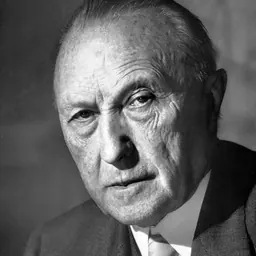




Related people
Same field, nearest in time


Contemporaries
People whose lives overlapped Hermann-Bernhard Ramcke's




Frequently asked questions
Who was Hermann-Bernhard Ramcke?
German general (1889-1968)
When was Hermann-Bernhard Ramcke born?
Hermann-Bernhard Ramcke was born on 24 January 1889 in Schleswig.
When did Hermann-Bernhard Ramcke die?
Hermann-Bernhard Ramcke died on 4 July 1968 in Kappeln.
What was Hermann-Bernhard Ramcke's occupation?
Hermann-Bernhard Ramcke was a military officer.
What nationality was Hermann-Bernhard Ramcke?
Hermann-Bernhard Ramcke was German.
Sources & further reading
· Wikipedia: Hermann-Bernhard Ramcke
· DBpedia: Hermann-Bernhard Ramcke
Cite this page
APA: Biography.guide. (2026). Hermann-Bernhard Ramcke. https://biography.guide/hermann-bernhard-ramcke/
MLA: "Hermann-Bernhard Ramcke." Biography.guide, https://biography.guide/hermann-bernhard-ramcke/.
Chicago: "Hermann-Bernhard Ramcke." Biography.guide. https://biography.guide/hermann-bernhard-ramcke/.
Data last updated: 2026-09-20 · Spot an error? Report a correction.
Page generated 2026-09-27 05:33 UTC