
About Herman Branover
Lived 1931 – 2026 (aged 94). Herman Branover was a Latvian, Israeli and Russian physicist, educator, rabbi and inventor.
Herman Branover (, ; 13 December 1931 – 4 May 2026) was a Soviet-Israeli physicist and Jewish educator. He is best known in the Jewish world as an author, translator, publisher and educator. Branover is known in the scientific community as a pioneer in the field of magnetohydrodynamics. In his personal conduct, he adhered to the customs and mystical philosophy of Chabad Hasidism.
Life and career Early life and education
Branover was born in Riga, Latvia, into an atheist Jewish family. His father, Hertz Branover, was an agronomist who directed the Muskati experimental farm to prepare young Jews to work in agriculture in British Mandatory Palestine. Branover's father was accidentally killed in World War II by the withdrawing Red Army, but his mother managed to escape with him and his sister to Siberia and survive. He earned his Ph.D. in 1953 in hydro-energetics from the Leningrad Polytechnic Institute and completed a D.Sc. degree 1962 from the Moscow Aviation Institute, specializing in magnetohydrodynamics. Concurrently, he spent a substantial part of his time in the National Library of Russia where he learned Hebrew from whatever books he could find there, until they were confiscated, as part of the Soviet oppression of Jewish culture. After finishing his studies, he returned to Riga and started working in several scientific institutions while also making inroads into the underground Chabad movement. When he first applied for a permission to immigrate to Israel in 1971, he lost his academic job.
As a young scientist in Riga, Branover wrote philosophical essays questioning atheism, materialism, and determinism and seeking God. During his time in the USSR after becoming associated with Chabad, he initiated and directed a great number of activities advancing Jewish education and culture; he was among the initiators of the Jewish revival movement in Soviet Russia. Being a Refusenik, he underwent frequent arrests, interrogations, and harassment by the KGB. This did not stop him from teaching Jewish thought and ethics to many individuals and groups. In the end of 1972, Branover received an exit visa to go to Israel. Branover was the first Jew holding a Doctor of Science degree and the title of Full Professor to receive an exit visa to leave the USSR. The ransom tax for these diplomas was 31,000 rubles (~37,000 USD then). He obtained funding for the laboratory through a chance meeting at a lecture he delivered with representatives from the Office of Naval Research. He credits the Lubavitcher Rebbe for encouraging him to accept the speaking invitation.
In 1980, Branover developed a method through which electricity could be produced through the heating of liquid mercury through a magnet. His innovation was that the electrical field could be produced at relatively low temperatures. In 1984 he created a working model for his innovative electrical source. His aim was to manufacture a magnetohydrodynamics power generator to produce clean energy without the use of petroleum. A research and development company, Solmecs, was created to market Branover's magnetohydrodynamics generator and many technological by-products of his research. He published over 300 professional papers and textbooks on the behavior of liquid metals in magenetic fields (see "Works" below).
Activism for Russian Jews In addition to his scientific achievements, Branover was an active spiritual leader of Jews in the Soviet Union and later emigrants to Israel. He chaired the Shamir Association of Professionals from the USSR and served as editor-in-chief of its publishing house which printed over 400 titles of Torah literature in Russian, notably translations of the Pentateuch with commentaries, prayer books, the Code of Jewish Law, Maimonides, Yehuda Halevi, and the Tanya. Branover was also the founding editor-in-chief of the B'Or Ha'Torah Journal of Science, Life and Art in the Light of the Torah. Together with Rabbi Shalom D. Lipskar of The Shul of Bal Harbour, B'Or Ha'Torah organized 15 international conferences on Torah and science in Miami.
Under Branover's direction, SHAMIR established a well-accredited Jewish day school in Saint Petersburg, Russia. Together with Rabbi Natan Barkan and Professor Ruvin Ferber, Branover organized international conferences in Riga entitled "Jews in a Changing World."
In 1987 Branover founded SATEC, which started out as a technological business incubator, soon after focusing on the development and manufacturing of power metering solutions, such as power meters and power quality analyzers. This move was inspired by the Lubavitcher Rebbe, who predicted an influx of Jewish immigration from the Soviet Union, following Perestroika. His aim was to create jobs in a fitting technological environment for these immigrants, many of them holding advanced scientific degrees and in-depth technological experience.
In 1991, the Russian Academy of Natural Sciences invited Branover to supervise its 8-volume Encyclopedia of Russian Jewry. Covering 1000 years, the encyclopedia details the contribution of Jews to Russian and world civilization. The late Isaiah Berlin of Oxford was the first chief consultant of the encyclopedia, Martin Gilbert was its second chief consultant, and the Israeli Ministry of Education helped support the project.
Personal life Branover was a dedicated Hasid of Rabbi Menachem Mendel Schneerson.
Branover was married to Fania Branover who died in 2012. Their only child is Danny Branover.
Herman Yirmiyahu Branover died in New York on 4 May 2026, at the age of 94, and was buried in the Mount of Olives in Jerusalem.
Works His early philosophical manuscripts were secretly reproduced and smuggled out of the USSR to Israel and published there in Russian and Hebrew by the Israeli Ministry of Education. While in the USSR, Branover undertook to translate some of the fundamental works of Judaism into Russian. He continued this work in Israel through SHAMIR, where he organized and trained a team of translators and editors to complete and expand his work, which included most importantly the Pentateuch with commentaries, the Code of Jewish Law, and writings of Maimonides and Yehuda Halevy. Over 12 million copies of 400 titles of Russian-language Judaica were published by SHAMIR. Single- and Multi-Phase Flows in an Electromagnetic Field: Energy, Metallurgical, and Solar Applications Magnetohydrodynamic Flow in Ducts (Wiley/Israel Universities Press, 1978) "Turbulence and Structures: Chaos, Fluctuations, and Helical Self-organization" in Nature and the Laboratory (Academic Press, 1999). "The Growth of Magnetohydrodynamics in Latvia and Israel: A retrospective on the evolution of MHD technology" (Springer, 2007). "Liquid-Metal Flows and Magnetohydrodynamics: Proceedings from the 3rd Beer-Sheva International Seminar" (AIAA, 1983). "Experimental investigation of the origin of residual disturbances in turbulent MHD flows after laminarization" Journal of Fluid Mechanics (1979). Branover, H. & Chkhetiani, O. & Eidelman, Alexander & Golbraikh, E. & Moiseev, S. (2001). "Chiral phenomena in MHD and MHD-like media." Magnetohydrodynamics 37, 06-01-2001. "The Growth of Magnetohydrodynamics in Latvia and Israel": A retrospective on the evolution of MHD technology (Springer, 2007). Branover H.H. and Lielausis O., "The characteristics of the transverse magnetic field effect onturbulent flow of liquid metal at different Reynolds numbers." Sov. Phys.-Techn. Phys. 10 (1965) 191–195.
Don’t just read it —
keep it.
Full-length biographies made to live with: read them, listen on the way to work, watch them tonight.
- E-book
- Audio
- Video
Instant download · yours to keep · every purchase keeps this site free
Important facts
People in Herman Branover's life
Named in this biography and alive at the same time
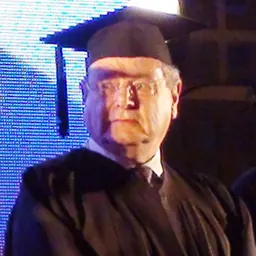




Related people
Same field, nearest in time
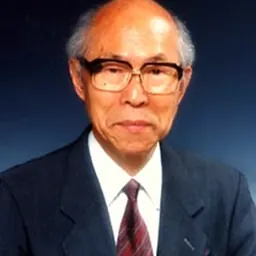



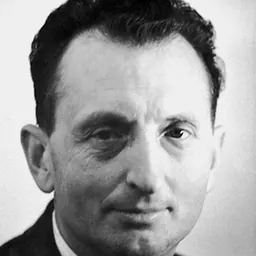
Contemporaries
People whose lives overlapped Herman Branover's
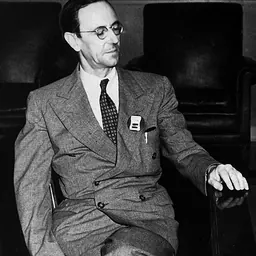
Frequently asked questions
Who was Herman Branover?
Soviet-Israeli physicist ( 1931-2026)
When was Herman Branover born?
Herman Branover was born on 13 December 1931 in Riga.
When did Herman Branover die?
Herman Branover died on 4 May 2026 in Crown Heights.
What was Herman Branover's occupation?
Herman Branover was a physicist, educator, rabbi and inventor.
What nationality was Herman Branover?
Herman Branover was Latvian, Israeli and Russian.
Sources & further reading
Cite this page
APA: Biography.guide. (2026). Herman Branover. https://biography.guide/herman-branover/
MLA: "Herman Branover." Biography.guide, https://biography.guide/herman-branover/.
Chicago: "Herman Branover." Biography.guide. https://biography.guide/herman-branover/.
Data last updated: 2026-09-20 · Spot an error? Report a correction.
Page generated 2026-09-27 05:05 UTC