
About Herbert Schiller
Lived 1919 – 2000 (aged 80). Herbert Schiller was an American writer, sociologist, journalist, university teacher and communication scholar.
Herbert Irving Schiller (November 5, 1919 – January 29, 2000) was an American media critic, sociologist, military economist and author. He is known for having established the University of California, San Diego communications programme in 1970 and for having inspired the unsuccessful New World Information and Communication Order project at UNESCO during the later 1970s.
Biography Schiller was born in New York City as the son of Benjamin, a craftsman jeweler, and Gertrude. He grew up in Washington Heights, Manhattan during the Great Depression, with his father unemployed for a decade, and attended the public DeWitt Clinton High School in the Bronx. He studied social science and economics at the free City College of New York in a cohort with Daniel Bell, Irving Kristol, Melvin J. Lasky and Seymour Martin Lipset, graduating in 1940, and obtained a master's degree in economics from Columbia University in 1941. ). After returning to New York, he transferred in March 1946 to the War Department as a labor economist in the Manpower Division of the US Army European Theater of Operations's Office of Military Government in Berlin, on a contract running until the summer of 1948. In Allied-occupied Germany, he observed the limited denazification efforts and is said to have become disillusioned with a business-dominated society.
Schiller returned to the Bronx with his wife in 1948 and enrolled for a PhD in history at Columbia University. He worked as an evening lecturer in economics at the City College School of Business and Civic Administration from 1949. On securing an additional appointment as full-time instructor in economics at the Pratt Institute in Brooklyn in 1950, he transferred to a PhD program in economics at New York University. He was promoted to assistant professor at the Pratt Institute in 1953. He was supervised by the Austrian-born economist Kurt F. Flexner (1915–2006), the chief economist and deputy manager of the American Bankers Association from 1959, who later advised the Soviet president Mikhail Gorbachev and the Russian president Boris Yeltsin from 1990 to 1995.
Schiller then taught economics at the Bureau of Economics and Business Research of the University of Illinois, Urbana, where he took up an interest in the social influence of mass media. In 1969, he joined the University of California, San Diego and established a world-renowned communications programme (along with the Department of Communication) there in 1970.
Schiller later became a critic of the overall impact of corporate communications on democracy, independent thinking and free speech, dismissing the notion of the Information Age as a misnomer due to the hegemony of consumer culture. He publicly protested the Gulf War in San Diego in 1991 from a liberal position. He was widely known for the term "packaged consciousness", that argues American media is controlled by a few corporations that "create, process, refine and preside over the circulation of images and information which determines our beliefs, attitudes and ultimately our behavior". Schiller used Time Warner Inc. as an example of packaged consciousness, stating that it “basically dominates publishing, cable television, recordings, tapes and filmmaking.”
He wrote opinion pieces for The Nation and Le Monde diplomatique, among other titles.
Personal life He married the librarian and scholar Anita R.Schiller (née Rosenbaum), whom he met in New York, in November 1946 in Paris. Among their children, Zach Schiller is a public policy analyst in Ohio, and Dan Schiller is a telecommunications historian at the University of Illinois at Urbana-Champaign. After moving to the West Coast, Schiller was a resident of La Jolla, California, for 30 years.
Books Authored Mass Communications and American Empire (A.M. Kelley, 1969) The Mind Managers (Beacon Press, 1973) Communication and Cultural Domination (International Arts and Sciences Press, 1976) Who Knows: Information in the Age of the Fortune 500 (Ablex Publishing, 1981) Information and the Crisis Economy (Ablex Publishing, 1984; reprinted by Oxford University Press, 1986) Culture, Inc.: The Corporate Takeover of Public Expression (Oxford University Press, 1989) Hope and Folly: The United States and Unesco, 1945–1985 (with William Preston, Jr. and Edward S. Herman, University of Minnesota Press, 1989) The Ideology of International Communications (with Eileen Mahoney, Laurien Alexander, Colleen Roach and Robin Anderson, Institute for Media Analysis, 1992) Beyond National Sovereignty: International Communications in the 1990s (with Kaarle Nordenstreng, Ablex Publishing, 1995) Information Inequality: The Deepening Social Crisis in America (Routledge, 1996) Living in the Number One Country: Reflections from a Critic of American Empire (Seven Stories Press, 2000)
Edited Super-State: Readings in the Military-Industrial Complex (with Joseph D. Phillips, University of Illinois Press, 1970) National Sovereignty and International Communication (with Kaarle Nordenstreng, Ablex Publishing, 1979) Triumph of the Image: The Media's War in the Persian Gulf: A Global Perspective (with Hamid Mowlana and George Gerbner, Westview Press, 1992) Invisible Crises: What Conglomerate Control of Media Means for America and the World (with George Gerbner and Hamid Mowlana, Westview Press, 1996)
Don’t just read it —
keep it.
Full-length biographies made to live with: read them, listen on the way to work, watch them tonight.
- E-book
- Audio
- Video
Instant download · yours to keep · every purchase keeps this site free
Important facts
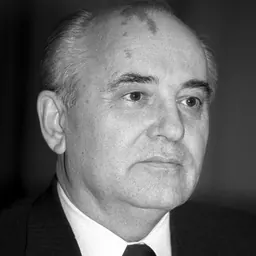
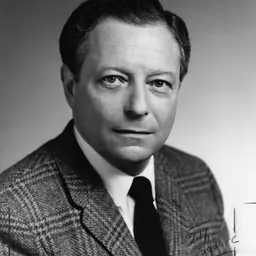
People in Herbert Schiller's life
Named in this biography and alive at the same time






Related people
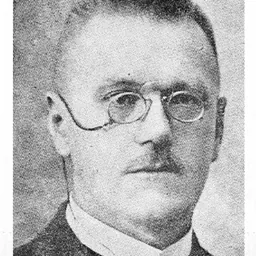
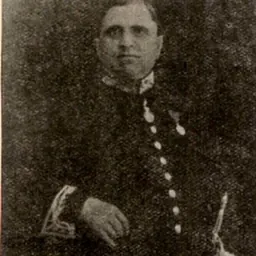
Same field, nearest in time




Contemporaries
People whose lives overlapped Herbert Schiller's


Frequently asked questions
Who was Herbert Schiller?
American media critic (1919–2000)
When was Herbert Schiller born?
Herbert Schiller was born on 5 November 1919 in New York City.
When did Herbert Schiller die?
Herbert Schiller died on 29 January 2000 in La Jolla.
What was Herbert Schiller's occupation?
Herbert Schiller was a writer, sociologist, journalist, university teacher and communication scholar.
What nationality was Herbert Schiller?
Herbert Schiller was American.
Sources & further reading
Cite this page
APA: Biography.guide. (2026). Herbert Schiller. https://biography.guide/herbert-schiller/
MLA: "Herbert Schiller." Biography.guide, https://biography.guide/herbert-schiller/.
Chicago: "Herbert Schiller." Biography.guide. https://biography.guide/herbert-schiller/.
Data last updated: 2026-09-20 · Spot an error? Report a correction.
Page generated 2026-09-27 05:19 UTC