
About Herbert Jankuhn
Lived 1905 – 1990 (aged 84). Herbert Jankuhn was a German anthropologist, archaeologist, prehistorian, university teacher and politician.
Herbert Jankuhn (8 August 1905 – 30 April 1990) was a German archaeologist who specialized in the archaeology of Germanic peoples. He is best known for his excavations at the Viking Age site of Hedeby, and for his instrumental role in the publishing of the second edition of the Reallexikon der Germanischen Altertumskunde.
Jankuhn joined the Nazi Party, SS and SA in the 1930s.
Early life and education Herbert Jankuhn was born in Angerburg, East Prussia, Germany on 8 August 1905. His paternal grandfather was Lithuanian, and his mother was a Masur. Spending his youth in Mitau and Tilsit, Jankuhn studied Germanistics, history, philology and physical exercise at the universities of Königsberg, Jena and Berlin. Having studied under Max Ebert and Carl Schuchhardt, Jankuhn received in PhD in archaeology at the University of Berlin in 1931. Jankuhn was strongly influenced by Wilhelm Unverzagt and Albert Kiekebusch, both of whom where critical of the settlement archaeology theories of Gustaf Kossinna.
Early career Jankuhn completed his habilitation at the University of Kiel in 1935. Since 1930, Jankuhn had conducted excavations at the Viking Age settlement of Hedeby. From 1938, with the help of Ahnenerbe, Jankuhn organized the excavations at Hedeby into one of the largest archaeological projects in the world. The results of his excavations at Hedeby were initially published in 1936, and have since been republished in numerous revised editions.
Jankuhn's work at Hedeby greatly impressed Heinrich Himmler, leader of the Schutzstaffel, with whom Jankuhn became friendly. Jankuhn eventually joined both the Nazi Party, the Schutzstaffel, and became Head of the Excavation and Archaeology Department Ahnenerbe in 1940. During World War II, Jankuhn travelled across German-occupied Europe, where he reported to the Sicherheitsdienst on the reliability of scholars in occupied countries.
Jankuhn was made an associate professor at the University of Kiel in 1940. In the summer of 1942, Jankuhn followed 5th SS Panzer Division Wiking into the Crimea to conduct excavations at Mangup, capital of the Crimean Goths. From 1942 to 1943, Jankuhn was Professor at the University of Rostock. He spent the last years of the war as an intelligence officer in 5th SS Panzer Division Wiking, which surrendered to the United States Army in Bavaria in 1945.
Post-war career Jankuhn was imprisoned from 1945 to 1948. After his release from prison, Jankuhn was forbidden from teaching, but nevertheless continued to teach and research privately. He returned to Kiel in 1949 to work on restoring museums destroyed during World War II. He subsequently served as a guest lecturer at the universities of Hamburg and Kiel. From the 1950s onward, Jankuhn played an instrumental role in reviving the field of settlement archaeology, and advocated an interdisciplinary approach to the study of prehistory.
Since 1956, Jankuhn served as associate professor, and from 1959 professor of prehistory and protohistory at the University of Göttingen. During this time, Jankuhn founded and led a number of scholarly organizations, and edited several scholarly publications. From 1968, Jankuhn was instrumental in the publishing of the second edition of the Reallexikon der Germanischen Altertumskunde (1969-2008). He advocated broadening the scope of the series to include not only Germanic peoples, but also Celts, Slavs, Sarmatians and other peoples of ancient north-central Europe. Jankuhn retired from the University of Göttingen in 1973.
Selected works Gürtelgarnituren der älteren römischen Kaiserzeit im Samland, 1932 Die Wehranlagen der Wikingerzeit zwischen Schlei und Treene, 1935 Haithabu – eine germanische Stadt der Frühzeit, 1938 Gemeinschaftsform und Herrschaftsbildung in frühgermanischer Zeit, 1939 Die Ausgrabungen in Haithabu (1937–1939), 1943 Haithabu – Ein Handelsplatz der Wikingerzeit, 1956 Die Römische Kaiserzeit und die Völkerwanderungszeit, 1966 Einführung in die Siedlungsarchäologie, 1977
Don’t just read it —
keep it.
Full-length biographies made to live with: read them, listen on the way to work, watch them tonight.
- E-book
- Audio
- Video
Instant download · yours to keep · every purchase keeps this site free
Important facts
People in Herbert Jankuhn's life
Named in this biography and alive at the same time
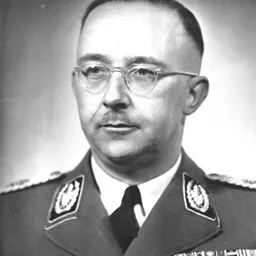
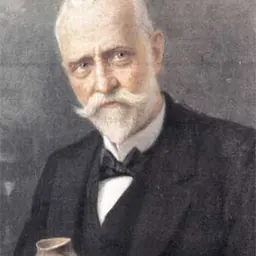



Related people
Same field, nearest in time


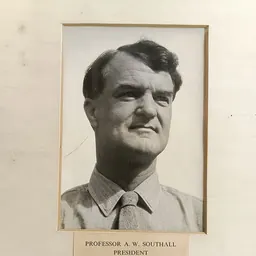
Contemporaries
People whose lives overlapped Herbert Jankuhn's




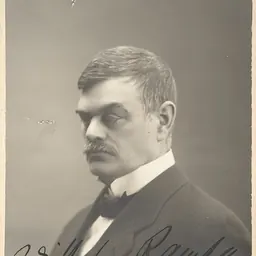

Frequently asked questions
Who was Herbert Jankuhn?
SS Officer (1905-1990)
When was Herbert Jankuhn born?
Herbert Jankuhn was born on 8 August 1905 in Węgorzewo.
When did Herbert Jankuhn die?
Herbert Jankuhn died on 30 April 1990 in Göttingen.
What was Herbert Jankuhn's occupation?
Herbert Jankuhn was an anthropologist, archaeologist, prehistorian, university teacher and politician.
What nationality was Herbert Jankuhn?
Herbert Jankuhn was German.
Sources & further reading
Cite this page
APA: Biography.guide. (2026). Herbert Jankuhn. https://biography.guide/herbert-jankuhn/
MLA: "Herbert Jankuhn." Biography.guide, https://biography.guide/herbert-jankuhn/.
Chicago: "Herbert Jankuhn." Biography.guide. https://biography.guide/herbert-jankuhn/.
Data last updated: 2026-09-20 · Spot an error? Report a correction.
Page generated 2026-09-27 05:05 UTC