
About Herbert Gladstone, 1st Viscount Gladstone
Lived 1854 – 1930 (aged 76). Herbert Gladstone, 1st Viscount Gladstone was a British politician.
Herbert John Gladstone, 1st Viscount Gladstone (7 January 1854 – 6 March 1930 ) was a British Liberal politician. The youngest son of William Ewart Gladstone, he was Home Secretary from 1905 to 1910 and Governor-General of the Union of South Africa from 1910 to 1914.
Appointed whip in 1899, Gladstone was an innovator who provided a long-term strategy, kept the party from splitting over the Second Boer War, introduced more modern constituency structures; and encouraged working-class candidates. In secret meetings with Labour leaders in 1903 he forged the Gladstone–MacDonald pact. In two-member constituencies, it arranged that Liberal and Labour candidates did not split the vote. Historians give him much of the credit for the Liberal triumph in 1906, with 397 MPs and a majority of 243.
Background and education Gladstone was the youngest son of Prime Minister William Ewart Gladstone and his wife Catherine, daughter of Sir Stephen Glynne, 8th Baronet, and was born in Downing Street where his father was living at the time as Chancellor of the Exchequer. William Henry Gladstone and Lord Gladstone of Hawarden were his elder brothers. He was educated at Eton and University College, Oxford, and lectured in history at Keble College, Oxford, for three years. That same year, having unsuccessfully contested the Middlesex constituency, he was elected Liberal Member of Parliament for Leeds.
The Hawarden Kite was a famous newspaper scoop of December 1885, an instance of flying a kite, made by Gladstone, who often served as his father's secretary. At the time William Ewart Gladstone was Leader of the Liberal Opposition. Herbert gave the report to Edmund Rogers of the National Press Agency in London. The key statement was that his father now supported home rule for Ireland. The statement is accurate but it is unknown whether the father knew and approved of releasing it to the press. The bombshell announcement resulted in the fall of Lord Salisbury's Conservative government. Irish Nationalists, led by Charles Stewart Parnell's Irish Parliamentary Party, held the balance of power in Parliament. Gladstone's conversion to Home Rule convinced them to switch away from the Conservatives and support the Liberals using the 86 seats in Parliament they controlled.
In the 1885 General Election Gladstone was returned to Parliament for Leeds West. at which time he was also sworn of the Privy Council. In 1895 he gave the first contract to Mary Howard Ashworth to create the first typing facility in the Houses of Parliament just before the Liberals fell from power. He became the Liberals' Chief Whip in 1899, and in 1903 he negotiated on behalf of the Liberals an electoral pact with the Labour Representation Committee.
Gladstone returned to office in 1905 when Sir Henry Campbell-Bannerman appointed him Home Secretary. According to historian Professor Ian Machin, Gladstone was not among "the foremost New Liberals such as Lloyd George and Churchill,” but was nevertheless a believer (as noted by one observer) in positive government, and played a large part in carrying a number of the Liberal welfare reforms during his time in office, including the Workmen's Compensation Act 1906, the Children Act 1908 (8 Edw. 7. c. 67), and the Trade Boards Act 1909.
As Prince of Wales, King Edward VII had come to enjoy warm and mutually respectful relations with W. E. Gladstone, whom Queen Victoria detested. These feelings did not extend to his son. In September 1908 Herbert permitted Roman Catholic priests in vestments, led by Cardinal Vincenzo Vannutelli, to carry the Host in a procession through the streets of London. There were a flood of protests, and the King asked Gladstone to ban the procession to avert a breach of the peace. The Home Secretary was on holiday in Scotland at the time, and did not reply, giving rise to false rumours that the King – who was known to take an interest in Roman Catholic rituals when abroad – favoured the procession. In the end the Prime Minister H. H. Asquith had to ask Lord Ripon, the only Catholic Cabinet Minister, to ask for the Host and vestments to be cancelled.
The following year the King rebuked Gladstone for appointing two women, Lady Frances Balfour and May Tennant, to serve on a Royal commission on reforming Divorce Law – the King thought divorce could not be discussed with "delicacy or even decency" before ladies. Philip Magnus suggests that Gladstone may have become a whipping-boy for the King's general irritation with the Liberal Government. He was appointed a Knight Commander of the Order of St Michael and St George and raised to the peerage as Viscount Gladstone, of the County of Lanark, the same year.
Later life
After his return from South Africa in 1914, Lord Gladstone was appointed a Knight Grand Cross of the Order of the Bath (GCB), and spent much of the First World War being involved with various charities and charitable organisations, including the War Refugees Committee, the South African Hospital Fund, and the South African Ambulance in France. He was appointed a Knight Grand Cross of the Order of the British Empire (GBE) in 1917.
Family In 1901 Lord Gladstone married Dorothy Mary, daughter of Sir Richard Paget, 1st Baronet, who was over twenty years his junior. He died in March 1930, aged 76, at his Dane End, Hertfordshire home, and had funeral service in the village's Little Munden Church but is buried in the Family plot at St Deiniol's Church in Hawarden. There were no children from the marriage, and therefore his title became extinct at his death. Viscountess Gladstone died in June 1953.
Works After Thirty Years (1928)
Don’t just read it —
keep it.
Full-length biographies made to live with: read them, listen on the way to work, watch them tonight.
- E-book
- Audio
- Video
Instant download · yours to keep · every purchase keeps this site free
Important facts
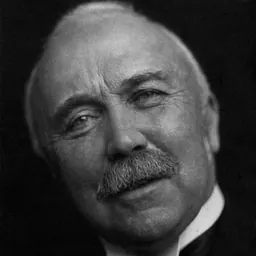
People in Herbert Gladstone, 1st Viscount Gladstone's life
Named in this biography and alive at the same time






Related people
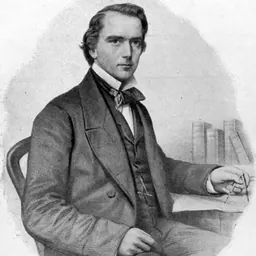
Same field, nearest in time




Contemporaries
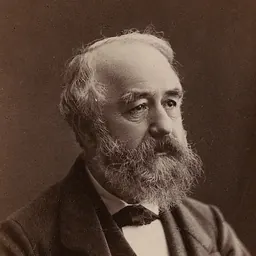
People whose lives overlapped Herbert Gladstone, 1st Viscount Gladstone's




Frequently asked questions
Who was Herbert Gladstone, 1st Viscount Gladstone?
British politician (1854-1930)
When was Herbert Gladstone, 1st Viscount Gladstone born?
Herbert Gladstone, 1st Viscount Gladstone was born on 18 February 1854 in London, 12 Downing Street.
When did Herbert Gladstone, 1st Viscount Gladstone die?
Herbert Gladstone, 1st Viscount Gladstone died on 6 March 1930 in Ware.
What was Herbert Gladstone, 1st Viscount Gladstone's occupation?
Herbert Gladstone, 1st Viscount Gladstone was a politician.
What nationality was Herbert Gladstone, 1st Viscount Gladstone?
Herbert Gladstone, 1st Viscount Gladstone was British.
Sources & further reading
· Wikipedia: Herbert Gladstone, 1st Viscount Gladstone
· DBpedia: Herbert Gladstone, 1st Viscount Gladstone
Cite this page
APA: Biography.guide. (2026). Herbert Gladstone, 1st Viscount Gladstone. https://biography.guide/herbert-gladstone-1st-viscount-gladstone/
MLA: "Herbert Gladstone, 1st Viscount Gladstone." Biography.guide, https://biography.guide/herbert-gladstone-1st-viscount-gladstone/.
Chicago: "Herbert Gladstone, 1st Viscount Gladstone." Biography.guide. https://biography.guide/herbert-gladstone-1st-viscount-gladstone/.
Data last updated: 2026-09-26 · Spot an error? Report a correction.
Page generated 2026-09-27 05:16 UTC