
Herbert G. MacPherson
Nuclear engineer
About Herbert G. MacPherson
Lived 1911 – 1993 (aged 81). Herbert G. MacPherson was a nuclear engineer.
Herbert G. MacPherson (2 November 1911 – 6 January 1993) was an American nuclear engineer and deputy director of Oak Ridge National Laboratory (ORNL). He contributed to the design and development of nuclear reactors and in the opinion of Alvin Weinberg he was "the country's foremost expert on graphite"...
Career
After receiving his Ph.D. in Physics from the University of California at Berkeley in 1936, MacPherson went to work at the National Weather Service in Washington DC. The following year he was hired by the National Carbon Division of the Union Carbide and Carbon Corporation in Cleveland Ohio, where he investigated the spectra of carbon arcs that were often used in the movie industry. In 1956 he moved to Oak Ridge TN to become a research scientist at the Oak Ridge National Laboratory. MacPherson became deputy director of Oak Ridge National Laboratory in 1965, a position he held until 1970. In 1973 he served as acting director of the Institute for Energy Analysis, (a semi-crystalline form of pure carbon).
The highest-purity graphite then commercially available (the so called electro-graphite) was dismissed by the Germans and the British as a possible moderator because it contained boron and cadmium impurities. Consequently, the German effort to create a chain reaction (see Walther Bothe#Uranium Club for details) involved attempts to use heavy water, an expensive and scarce alternative. Even as late as 1947, Werner Heisenberg still did not understand that the only problem with graphite were these impurities.
In February 1940, using funds that were allocated partly as a result of the Einstein–Szilard letter to President Roosevelt, Leo Szilard purchased 4 tons of graphite from National Carbon for use in Enrico Fermi's experimental reactor, the so-called exponential pile. Fermi writes that "The results of this experiment was [sic] somewhat discouraging" presumably due to the absorption of neutrons by some unknown impurity. So, in December 1940 Fermi and Szilard met with H. G. MacPherson and V. C. Hamister at National Carbon to discuss the possible existence of impurities in graphite, without specifically describing the reasons for their visit. Having previously (September 1939) read the article of R. B. Roberts and J. B. H. Kuper (which described the necessity of a moderator in a chain reaction), MacPherson was able to deduce the purpose of the visit. confirming a suspicion of Szilard. which resulted in the product "AGOT Graphite" of National Carbon. According to W. P. Eatherly, it was "the first true nuclear grade graphite". By November 1942, National Carbon had shipped 250 tons of AGOT graphite to the University of Chicago
Molten Salt Reactor
In 1956 MacPherson was appointed by ORNL director Alvin Weinberg, to lead the Molten Salt Reactor Experiment, a revolutionary safe, efficient and relatively inexpensive reactor design, now referred to as the Thorium fuel cycle. Within two years the chemical tests of molten materials, cost studies, overall design, and calculations had been completed and were outlined in MacPherson's quarterly progress report on the MSRE. Computations were performed The MSRE was funded by the Atomic Energy Commission in 1959 and was completed in 1965. It ran continuously until it was shut down in 1969, but it had proved the viability of the design Weinberg refers to this project as "perhaps the most ingenious and daring engineering experiment ever conducted at ORNL". MacPherson (together with James Lane and Frank Maslan) edited and published their engineering treatise on fluid fuel reactors
Mayan Archaeology
After he retired, MacPherson developed an interest in Mayan culture and writings, especially those pertaining to the Dresden Codex. This ancient Mayan manuscript contains a table, commonly referred to as the "Eclipse Warning Table" of dates, the intervals between which approximately correspond to the intervals between solar eclipses that occur worldwide. Hundreds of articles have been written in attempts to understand this table (see ). MacPherson studied the baffling problem of how an ancient civilization may have succeeded in generating such a table when it did not possess the astronomical models that would be needed to predict eclipses worldwide and when only several solar eclipses would have been visible to the Maya throughout the whole period of their civilization. In what some experts consider to be "the most interesting of the recent studies of the eclipse table", a simple procedure by which such a table may have been assembled by Mayan astronomers in the process of determining the "lunar season".
Don’t just read it —
keep it.
Full-length biographies made to live with: read them, listen on the way to work, watch them tonight.
- E-book
- Audio
- Video
Instant download · yours to keep · every purchase keeps this site free
Important facts
People in Herbert G. MacPherson's life
Named in this biography and alive at the same time

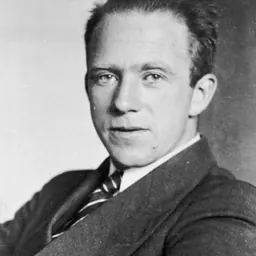
Related people
Same field, nearest in time


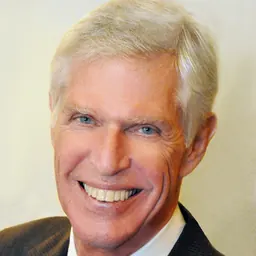



Contemporaries
People whose lives overlapped Herbert G. MacPherson's






Frequently asked questions
Who was Herbert G. MacPherson?
nuclear engineer
When was Herbert G. MacPherson born?
Herbert G. MacPherson was born on 2 November 1911.
When did Herbert G. MacPherson die?
Herbert G. MacPherson died on 6 January 1993.
What was Herbert G. MacPherson's occupation?
Herbert G. MacPherson was a nuclear engineer.
Sources & further reading
· Wikipedia: Herbert G. MacPherson
· DBpedia: Herbert G. MacPherson
Cite this page
APA: Biography.guide. (2026). Herbert G. MacPherson. https://biography.guide/herbert-g-macpherson/
MLA: "Herbert G. MacPherson." Biography.guide, https://biography.guide/herbert-g-macpherson/.
Chicago: "Herbert G. MacPherson." Biography.guide. https://biography.guide/herbert-g-macpherson/.
Data last updated: 2026-09-20 · Spot an error? Report a correction.
Page generated 2026-09-27 05:25 UTC