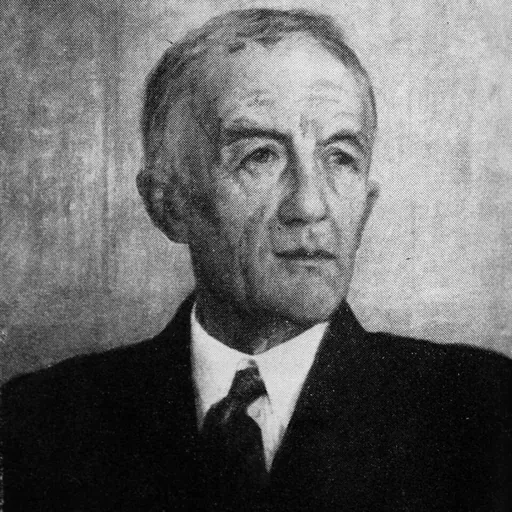
About Herbert Baker
Lived 1862 – 1946 (aged 83). Herbert Baker was a British architect.
Sir Herbert Baker , Hon. DArch. Hon DCL (9 June 1862 – 4 February 1946) was an English architect remembered as the dominant force in South African architecture, developing a Neo-Classical style which interacted theatrically with the landscape, and which projected Imperial strength and permanence. He was the most prominent and prolific architect of his generation.
Early life and education Baker was born at the country house Owletts, one of nine children of Thomas Henry Baker (1824–1904), J.P., a gentleman farmer and director of the Kent Fire and Life Insurance Company, and his wife Frances Davis. He was profoundly influenced by the stone construction used in Norman cathedrals and Anglo-Saxon churches in Kent, as is apparent in the churches, schools and houses he later designed.
He was educated at Tonbridge School. In 1879 he was articled to his cousin, architect Arthur Baker, while attending classes at the Architectural Association School and the Royal Academy Schools, where Edwin Lutyens was a classmate. He worked with Arthur Baker on St Padarn's Church, Llanberis in Wales, then went to work in the offices of Ernest George and Harold Peto. In 1890, Baker passed his examination for Associateship of the Royal Institute of British Architects and was awarded the Ashpitel Prize for being top of his class in 1889. The fruit farm was part of a parcel owned by Cecil Rhodes, whose new home Groote Schuur, had been destroyed by fire. Rhodes and Baker immediately became friends and Rhods asked Baker to rebuild the house. Baker fully embraced the Cape vernacular, but Rhodes had Baker in mind for other projects and wanted him to establish a formal architectural language for public buildings. To that end, in 1900, he sent Baker on a tour of archaeological sites in Italy, Egypt and Greece; this tour forever changed Baker's approach to design. It also led to the establishment of the Baker Traveling Scholarship, which Baker created in 1911 to send promising South African architects to study in Greece and Italy. Rhodes' patronage also cemented Baker's reputation, and career. Over the next two decades, he would build some of the grandest houses, and public buildings, in the country.
Career
South Africa In 1893, Baker was named Diocesan architect for Cape Town and built several churches; he also acted as the project architect for the English firm Dunn & Watson, overseeing their Cape Town projects. In 1899, he formed a partnership with his former Royal Academy classmate, Francis Edward Masey. The firm, Baker & Masey, designed numerous buildings; many Cape Town-area buildings attributed to Baker before 1910 were actually by Masey. Also during this time, Baker and Masey designed several buildings in Rhodesia, although complete records are unavailable. was added as a partner to form Baker & Kendall. In 1915, James Morris was added to form Baker, Kendall & Morris. Baker formally withdrew from this firm in 1918, but by then he was no longer in South Africa. Pretoria was to become the administrative centre for the new government of the Union of South Africa and, in 1909, Baker was commissioned to design the Government Building. He created the grand Union Buildings. In 1912, once they were complete, he left South Africa, designing buildings, and/or approving designs, from afar.
It was agreed that Lutyens would handle the design for the city's lay-out, the Viceroy's House and the war memorial, India Gate. Baker would design the Secretariat Building and the MPs bungalows; together, they would build the Parliament Building. Their fee was 5% of the total cost of the project. Lutyens arrived in Calcutta in 1912; Baker went on an architectural tour of Italy and arrived in Calcutta in 1913.
While the two men were old friends, they would have a bitter falling-out over the fact that Baker's positioning of the Secretariat Building interfered with the view of the Viceroy's House; Lutyen's had misjudged the effect of Baker's gradient and, despite his appeals to the committee, was unable to have it changed. When they returned to England in 1915, the feud continued and became very public. Writing of the New Delhi project, The Architectural Review, among others, heaped praise on Lutyens' work and dismissed Baker's in insulting and demeaning terms. Baker not only maintained a dignified silence but, when Lutyens died in 1944, wrote that his talents were equal to those of Christopher Wren. The incident appeared to destroy Baker's confidence; none of his post-Delhi buildings met the standard of his previous work.
Kenya In 1920, Kenya became a Colony of the British Empire, with Nairobi as its capital. At the end of World War I, it was merely the supply depot for the Uganda Railway and was nothing more than some wood and iron buildings—banks, churches, a theatre, a school, a hospital and some administrative buildings. To create a master plan for the new city, the Nairobi Municipal Council commissioned the South African engineer Frank Walton Jameson but, in 1925, the new Governor of Kenya, Edward Grigg, brought in Herbert Baker and would later refer to the city's plan as the "Baker-Jameson proposals". The planning of Nairobi was controversial as it clearly laid out racial segregation. Indian immigration and land ownership were restricted and there were mounting tensions between Africans, Indians and Europeans. Baker's solution for what he called the "Green City in the Sun" was the design of imposing, dominant Imperial structures placed on hilltops. He spent five years in Kenya. Assisted by the South African architect Jan Hoogterp, Baker undoubtedly designed numerous buildings, and it is known that he built many schools, however records indicate only his best-known structures such as the Prince of Wales School, Government House, the Supreme Court Building and Nairobi City Hall.
The Bank of England Through the 1920s and into the 1930s, Baker built numerous significant structures in England, mostly in London. His final building would be the Bank of England building, a project that would permanently cast a pall on his reputation.
In 1833, Sir John Soane completed the bank’s head office, a three-acre structure, built bit-by-bit, of interior halls, courtyards, domes and shadowy courts behind windowless, fortress-like walls. By 1920, this design was no longer fit for purpose; the bank’s staff had grown from 1,200 to 4,000. It needed offices, more light, a more organized, businesslike structure, and more public access. Baker was chosen (over Luytens) to build the new structure; he was told it needed to convey “strength, permanence and reliability”. The only way to achieve this was by demolishing the entire building.
Baker was an admirer of Soane. He also knew that Soane’s building, nicknamed the 'Old Lady of Threadneedle Street', was much loved. He went to great lengths to respect his predecessor, recreating Soane’s original classic symbolism and creative flourishes, even copying and repositioning entire spaces. He undertook the largest creative commission of that time, hiring Charles Wheeler to create numerous statues and the Russian artist Boris Anrep to create murals and mosaics. He kept the outer walls and re-used Soane’s columns and friezes. Soane’s foundation had been built over Roman ruins; Baker excavated these and used several found pieces. He used the new technology of steel framing for stability, created new tube staircases for the public, opened domes and expanded the entrance. He topped the structure with a golden statue of Shakespeare’s Ariel, representing the spirit of the bank.
Despite Baker’s efforts, the Bank of England building, completed in 1938, was savaged by critics, who called it “pompous”. Summing up the opinion of many members of the public, and Baker’s professional peers, the architectural historian Nikolaus Pevsner called the demolition of Soan’s building “the greatest architectural crime, in the City of London, of the 20th century”.
Honours Baker received a knighthood (in the 1926 King's Birthday Honours List), was elected to the Royal Academy, received the Royal Institute of British Architects' Royal Gold Medal in 1927, and received an honorary doctorate from the University of the Witwatersrand and an honorary Doctor of Civil Law degree from Oxford University.
In 2026, members of Baker's family established the Herbert Baker Heritage Trust, to promote and protect "excellence in traditional building techniques and heritage craft skills" and support "future generations of artists, makers, and heritage professionals."
Works
South Africa
Wynberg Boys' High School, Cape Town, 1892 Groote Schuur, Cape Town, 1893 House James Rose-Innes: 'Kolara', Cape Town, 1893 Church of the Good Shepherd, Robben Island, 1895 Church of St Barnabas, Cape Town, 1896 Kelvin Grove Club, Cape Town, 1896 Royal Observatory, Cape Town, 1897 St Philip's Church, Cape Town, 1898 (with Masey) St. John's College, Johannesburg, 1898 House Herbert Baker: 'Sandhills', Muizenberg, 1899 Wilson and Miller Building, Cape Town, 1899 House Harry Struben: 'Tafelberg Hall', Graaff-Reinet, 1900 Holy Trinity Anglican Church Rectory, Kalk Bay, 1900 Vredenburgh Cottages inc. Rhodes Cottage, Stellenbosch, 1900 House John Charles Molteno: 'Sandown', Cape Town, 1900 St Michael and All Angels Church & School, Cape Town, 1900 House Rudyard Kipling: 'The Woolsack', Cape Town, 1900 House Currey: 'Welgelegen', Cape Town, 1900 (with Masey) Cottage 1685, Champagne Homestead, Boschendal, 1901 St Matthew's Anglican Church, Riversdale, Extensions, 1901 House Searle: 'Highlands', Cape Town, 1901 Groot Constantia, Constantia, Cape Town, Restoration 1902 House Herbert Baker: 'Stone House', Johannesburg, 1902 Isaacs and Company Building, Cape Town, 1902 House H.E.S. Fremantle, Cape Town, 1902 De Beers Building, Cape Town, 1902 House Wilfred John Wybergh: 'Inanda', Johannesburg, 1902 Guardian Assurance Company Building, Cape Town, 1902 (with Masey) House Karri-Davies: 'The Outspan', Johannesburg, 1902 Languedoc Village, Boschendal, 1902 House Balfour: 'Pilrig', Johannesburg, 1903 The Stables of Pallinghurst, Johannesburg, 1903 House Barry: 'Hurstcliff', Johannesburg, 1903 (with Masey) House FitzPatrick: 'Buckland Downs', Verkykerskop, 1903 St Thomas' Church, Cape Town, Mission Chapel 1903 St Paul's Church, Cape Town, Rectory, 1903 Roedean School, Johannesburg, 1903 House Kuhlmann, Johannesburg, 1903 Rondebosch Girls' High School, Cape Town, 1903 Van der Byl & Co Building, Cape Town, 1904 House Dale Lace: 'Northwards', Johannesburg, 1904 (with Masey & Sloper) ERPM Recreation Hall, Boksburg, 1904 St. George's Grammar School, Cape Town, 1904, Expansion Rust en Vrede, Cape Town, 1904 Duke of Westminster Estate: 'The Big House', Tweespruit, 1904 St Andrew's Church, Cape Town, 1904 Honoured Dead Memorial, Kimberley, 1904 St Saviour's Church, Cape Town, 1904 (with Masey) Grey College, Bloemfontein, Additions, 1904 (with Masey) House Drummond Chaplin: 'Marienhof', Johannesburg, 1904 Bishops Diocesan College, Cape Town, 1905 (with Masey) Standard Bank, Malmesbury, 1905 Bedford Farm (St Andrew's School), Johannesburg, c 1905 Houses of Parliament, Cape Town, Extensions, 1906 Cathedral of St Andrew and St Michael, Bloemfontein, 1906 Government House, Pretoria, 1906 South African College, Cape Town, 1907 (with Masey) St Augustine's School, Cape Town, 1907 Lightfoot Memorial Fountain, Capetown, 1907 Pretoria Railway Station, 1908 St. Anne's Diocesan College Chapel, Hilton, 1908 House Pickstone, Lekkerwijn, Franschhoek, 1908 St Mary's Church, Richmond, 1909 St Dunstan's Anglican Church, Benoni, 1909 St Alban's Cathedral, Pretoria, 1909 (w Masey) House Dalrymple: 'Glenshiel', Johannesburg, 1910 (with Fleming) House Lionel Phillips: 'Villa Arcadia', Johannesburg, 1910 St Boniface Church, Germiston, 1910 House Mrs G B Given-Wilson, Johannesburg, 1910 Rhodes University, Grahamstown, 1910 St. George's Cathedral, Cape Town, 1911 St. Martin's School (Rosettenville), 1911 St Michael and All Angels Anglican Church, Boksburg, 1911 House Rockcorry, Kalk Bay, 1912 Rhodes Memorial, Cape Town, 1912 South African Institute for Medical Research, Johannesburg, 1912 Potchefstroom College of Agriculture, Selborne Hall, Potchefstroom, 1913 Bishop's Lea, George, 1913 Union Buildings, Pretoria, 1913 St John the Baptist Church, Vaalwater, 1913 (with Fleming) Union Club, Johannesburg, 1914 (with Fleming) Templeton High School, Bedford, 1914 St Margaret's School, Johannesburg, 1914 House Alpheus Williams: 'Vergenoegd', Muizenberg, 1915 Holiday Houses: 'Crawford Lea', 'Coel an Mar', 'Swanbourne' & 'Rokeby', Muizenberg, 1915 (with Kendall) Bishop Bavin School, St. George's, Johannesburg, 1915 House Pickstone: 'La Gratitude', Hermanus, 1917 House Drummond Chaplin: 'Noordhoek Manor', Cape Town, 1925 Old Mill House, De la Bat School for the Deaf, Worcester, 1929 Groote Schuur Zoo Lions' Den, Capetown, 1931 Barclays Bank, Cape Town, 1936
Rhodesia
Salisbury Stock Exchange, Salisbury, 1896 House Julius Weil, Salisbury, c 1910 Brontë Hotel, Salisbury, 1911 Cathedral of Saint Mary and All Saints, Salisbury, 1912 Rhodesia Museum, Bulawayo, 1922
France
Adanac Military Cemetery, Courcelette AIF Burial Ground, Flers Aire Communal Cemetery, Aire-sur-la-Lys Arnèke British Cemetery, Arnèke ANZAC Cemetery, Sailly-sur-la-Lys Australian Memorial Park, Fromelles Aval Wood Military Cemetery, Vieux-Berquin Bailleul Communal Cemetery, Bailleul Beaurevoir British Cemetery, Beaurevoir Bernafay Wood British Cemetery, Montauban Blighty Valley Cemetery, Authuille Borre British Cemetery, Borre Bouchoir New British Cemetery, Bouchoir Brewery Orchard Cemetery, Bois-Grenier Brie British Cemetery, Brie Bulls Road Cemetery, Flers Caix British Cemetery, Caix Calais Southern Cemetery, Pas De Calais Caterpillar Valley Cemetery & New Zealand Memorial, Longueval Cite Bonjean Military Cemetery & New Zealand Memorial, Armentières Combles Communal Cemetery Extension, Combles Contalmaison Chateau Cemetery, Contalmaison Courcelette British Cemetery, Courcelette Courcelette Canadian Memorial, Courcelette Croix-du-Bac British Cemetery, Steenwerck Dantzig Alley British Cemetery, Mametz Delville Wood Cemetery, Longueval Delville Wood South African National Memorial, Longueval Doingt Communal Cemetery Extension, Picardy Ebblinghem Military Cemetery, Ebblinghem Épehy Wood Farm Cemetery, Épehy Erquinghem-Lys Churchyard Extension, Erquinghem-Lys Estaires Communal Cemetery & Extension, Estaires Fifteen Ravine British Cemetery, Villers-Plouich Fins New British Cemetery, Sorel-le-Grand Flatiron Copse Cemetery, Mametz Flesquières Hill British Cemetery, Flesquières Fouquescourt British Cemetery, Fouquescourt Godewaersvelde British Cemetery, Godewaersvelde Gommecourt Wood New Cemetery, Foncquevillers Gordon Dump Cemetery, Ovillers-la-Boisselle Gouzeaucourt New British Cemetery, Gouzeaucourt Grandcourt Road Cemetery, Grandcourt Guards' Cemetery, Lesboeufs Guards' Grave, Villers-Cotterêts Guillemont Road Cemetery, Guillemont Hargicourt British Cemetery, Hargicourt Hazebrouck Communal Cemetery, Hazebrouck Hermies Hill British Cemetery, Hermies Houplines Communal Cemetery Extension, Houplines Jeancourt Communal Cemetery Extension, Jeancourt La Chaudiere Military Cemetery, Vimy La Kreule Military Cemetery, Hazebrouk Laventie Military Cemetery, La Gorgue Le Grand Beaumart British Cemetery, Steenwerck Le Grand Hasard Military Cemetery, Morbecque Le Trou Aid Post Cemetery, Fleurbaix Lebucquière Communal Cemetery Extension, Lebucquière Les Baraques Military Cemetery, Sangatte London Cemetery and Extension, Longueval Longuenese Souvenir Cemetery, Saint-Omer Lonsdale Cemetery, Authuille Loos British Cemetery & Memorial, Loos-en-Gohelle Maroc British Cemetery, Grenay Meerut Military Cemetery, Saint-Martin-Boulogne Merville Communal Cemetery & Extension, Merville Méteren Military Cemetery, Méteren Mill Road Cemetery, Thiepval Neuve-Chapelle Indian Memorial, Neuve-Chapelle Norfolk Cemetery, Bécordel-Bécourt Outtersteene Communal Cemetery Extension, Bailleul Ovillers Military Cemetery, Ovillers-la-Boisselle Peronne Road Cemetery, Maricourt Philosophe British Cemetery, Mazingarbe Pont-D'achelles Military Cemetery, Nieppe Pont-Du-Hem Military Cemetery, La Gorgue Prospect Hill Cemetery, Gouy Quarry Cemetery, Montauban Ration Farm Military Cemetery, La Chapelle-d'Armentières Regina Trench Cemetery, Grandcourt Royal Irish Rifles Graveyard, Laventie Roye New British Cemetery, Carrépuis Rue-David Military Cemetery, Fleurbaix Rue-du-Bacquerot No.1 Military Cemetery, Laventie Rue-du-Bois Military Cemetery, Fleurbaix Rue-Petillon Military Cemetery, Fleurbaix Sailly-Sur-La-Lys Canadian Cemetery, Sailly-sur-la-Lys St. Mary's Advance Dressing Station Cemetery, Haisnes St. Venant-Robecq Road British Cemetery, Robecq Stump Road Cemetery, Grandcourt Sunken Road Cemetery, Contalmaison Tannay British Cemetery, Thiennes Templeux-Le- Guérard British Cemetery, Templeux-le-Guérard Terlincthun British Cemetery, Wimille Tincourt New British Cemetery, Tincourt-Boucly Trois Arbres Cemetery, Steenwerck V.C. Corner Australian Cemetery and Memorial, Fromelles Vadencourt British Cemetery, Maissemy Vermelles British Cemetery, Vermelles Vieille-Chapelle New Military Cemetery, La Couture Villers-Faucon Communal Cemetery & Extension, Villers-Faucon White City Cemetery, Bois-Grenier Y Farm Military Cemetery, Bois-Grenier Tyne Cot, Passchendaele, Belgium
England
Port Lympne Mansion, Lympne, Kent, (with Philip Tilden), 1914 Blackmoor War Memorial, Blackmoor, Hampshire, 1920 Chicheley War Memorial, Chicheley, Buckinghamshire, 1920 Etchingham War Memorial, Etchingham, East Sussex, 1920 Thorney Hill War Memorial, New Forest, Hampshire, 1920 Ascot War Memorial, Ascot, Berkshire, 1921 Cobham War Memorial, Cobham, Kent, 1921 County of Kent War Memorial Cross, Canterbury, Kent, 1921 Hampshire & The Isle of Wight War Memorial, Winchester, 1921 Hatfield War Memorial, Hatfield, Hertfordshire, 1921 Kemerton War Memorial, Kemerton, Worcestershire, 1921 King's School War Memorial, Canterbury, Kent, 1921 Lych-Gate War Memorial, Overbury, Worcestershire, 1921 Potterne War Memorial, Devizes, Wiltshire, 1921 Richmond Borough War Memorial, Richmond, North Yorkshire, 1921 Chilham Castle, Canterbury, Kent: Alterations & Additions, 1922 Rochester War Memorial, Rochester, Kent, 1922 Tewin Memorial Hall, Tewin, Hertfordshire, 1922 Winchester College War Cloister, Winchester, 1922 Wadhurst War Memorial, Wadhurst, East Sussex, 1923 Lord's Cricket Ground, London: Grace Gates, Grandstands & Father Time Weather Vane, 1926 Harrow School War Memorial Building & Shrine, London, 1926 Rhodes House, Oxford University, 1928 India House, London, 1930 Downing College, Cambridge: Residential Blocks, 1931 Millicent Fawcett Memorial, Westminster Abbey, London, 1932 Glyn, Mills & Co., London, 1933 South Africa House, London, 1933 Westminster School, London: Busby's House, 1933 Scott Polar Research Institute, Cambridge University: Main Building, 1934 Church of St. Paul, Woldingham, Surrey, 1934 Goodenough College, London: Great Hall, Charles Parsons Library, Common Rooms, Guilford Street Entrance, 1935 Church House, Westminster, London, 1937 Bank of England, London, 1939
Kenya
All Saints Cathedral, Nairobi European School, Kitale Francis Scott High School, Nakuru Government House, Nairobi Government Indian School, Nairobi Highlands School, Eldoret Kenya High School, Nairobi Kenya Railways Headquarters, Nairobi McMillan Memorial Library, Nairobi Nairobi City Hall Prince of Wales School, Nairobi Supreme Court of Kenya, Nairobi
Australia
In 1924, Baker donated the design of Fairbridge Chapel to a children's charity founded by Kingsley Fairbridge.
Gallery
Don’t just read it —
keep it.
Full-length biographies made to live with: read them, listen on the way to work, watch them tonight.
- E-book
- Audio
- Video
Instant download · yours to keep · every purchase keeps this site free
Important facts
People in Herbert Baker's life
Named in this biography and alive at the same time




Related people
Same field, nearest in time



Contemporaries
People whose lives overlapped Herbert Baker's



Frequently asked questions
Who was Herbert Baker?
British architect (1862-1946)
When was Herbert Baker born?
Herbert Baker was born on 9 June 1862 in Kent, Owletts.
When did Herbert Baker die?
Herbert Baker died on 4 February 1946 in Kent, Owletts.
What was Herbert Baker's occupation?
Herbert Baker was an architect.
What nationality was Herbert Baker?
Herbert Baker was British.
Sources & further reading
Cite this page
APA: Biography.guide. (2026). Herbert Baker. https://biography.guide/herbert-baker/
MLA: "Herbert Baker." Biography.guide, https://biography.guide/herbert-baker/.
Chicago: "Herbert Baker." Biography.guide. https://biography.guide/herbert-baker/.
Data last updated: 2026-09-23 · Spot an error? Report a correction.
Portrait: Wikimedia Commons · author & licence
Page generated 2026-09-27 05:06 UTC