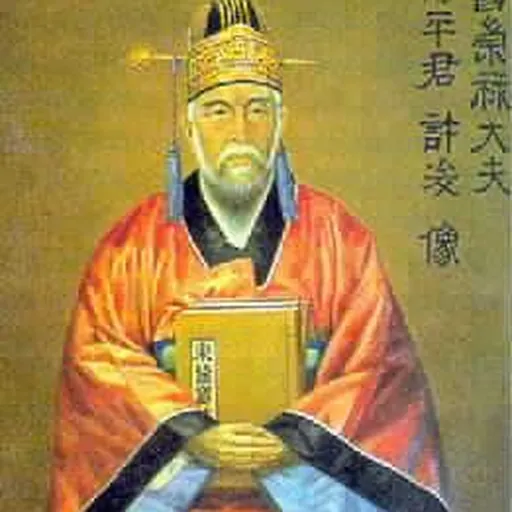
About Heo Jun
Lived 1546 – 1615 (aged 68–69). Heo Jun was a South Korean physician.
Hŏ Chun (; 1539 – October 9, 1615) was a Korean physician who served as the royal chief physician of the Naeuiwon during the reigns of King Seonjo (1597–1608) and King Gwanghaegun (1608–1623) of the Korea dynasty.
Biography
Childhood and youth Hŏ Chun was born in 1539 in what is now the Gangseo District of Seoul. He was a member of the Yangcheon Heo clan, a wealthy military family. Because his mother was a concubine, he was classified as a chungin rather than a full member of the Yangban class, limiting his social standing and opportunities.
Career progression At twenty-nine, Hŏ Chun became a court physician. Three years later, he began working at Naeŭiwŏn, the royal clinic, where his skill led to rapid advancement. In 1575, he treated King Seonjo and in 1590 he was promoted after curing the Crown Prince of smallpox.
During the Japanese invasions from 1592 to 1598, Hŏ stayed with King Seonjo when many officials fled. His loyalty and another successful treatment of the Crown Prince earned him a senior second rank in 1596.
In 1600, he was named chief physician at Naeuiwon, the palace infirmary and pharmacy. The king asked him to write a medical book for ordinary people that would cover preventive care, drug formulas, and simple treatments. Scholars regard this work as an early public health manual in Joseon Korea.
After King Seonjo’s death in 1608, Hŏ was accused of involvement in the king’s death and sent into exile in Ulju. The following year, King Gwanghaegun restored him to office. In 1610, he completed the twenty-five volumes of Donguibogam, a medical encyclopedia written over about fifteen years. He taught new physicians at Naeuiwon until his death in 1615.
Post-death and legacy Hŏ Chun’s writings influenced late Joseon court physicians and scholars. He combined Confucian, Taoist, and empirical methods and used Hangul to explain treatments so that commoners could understand them.
The Heo Jun Museum opened in the Gangseo District of Seoul in 2005. It displays his original texts and Joseon-era medical artifacts. Each year, the museum holds a festival celebrating his contributions to Korean medicine and culture.
Contribution to medicine He wrote several medical texts, but his most noted achievement is Donguibogam ("Mirror of Eastern Medicine"), which is considered a defining text of traditional Korean medicine that contributed to the expansion of Korean medicine utilisation among the general public. This work spread throughout East Asian countries like China, Japan, and Vietnam, where it is regarded as a classic of Oriental medicine.
It is divided into five chapters: "Internal Medicine", "External Medicine", "Miscellaneous Diseases", "Remedies", and "Acupuncture". In "Internal Medicine", Hŏ describes the interdependence of the liver, lungs, kidney, heart, and spleen. "External Medicine" explains how the skin, muscles, blood vessels, tendons, and bones function. "Miscellaneous Diseases" describes the symptoms, diagnoses, and treatment methods for various ailments. Hŏ's remedies often rely on medicinal herbs and provide detailed instructions on extraction, maintenance, and consumption. The final chapter explains methods of acupuncture. In addition to providing medical knowledge, the text reflects the philosophy of seventeenth-century East Asia.
As a royal physician, Hŏ Chun published 10 books:
Naeui Sunsaen An (The List of Royal Physicians, 內醫先生案, 1605) Unhae Taesan Jipyo (Compilation of the Essentials on Obstetrics with Korean Translations, 諺解胎産集要, 1607) Portrayed by Seo In-seok in the 1991 MBC TV series . Portrayed by Jun Kwang-ryul in the 1999–2000 MBC TV series Hur Jun. Portrayed by Kim Joo-hyuk and Kang Han-byeol in the 2013 MBC TV series Hur Jun, the Original Story. Portrayed by Yoon Shi-yoon and Kim Kap-soo in the 2016 JTBC TV series Mirror of the Witch. Portrayed by Um Hyo-sup in the 2017 tvN TV series Live Up to Your Name.
Literature The novel Dongui Bogam by Lee Eun-seong was published in 1990 and became a bestseller.
Don’t just read it —
keep it.
Full-length biographies made to live with: read them, listen on the way to work, watch them tonight.
- E-book
- Audio
- Video
Instant download · yours to keep · every purchase keeps this site free
Important facts
Related people
Same field, nearest in time


Contemporaries
People whose lives overlapped Heo Jun's


Frequently asked questions
Who was Heo Jun?
Korean court physician (1539 – 1615 )
When was Heo Jun born?
Heo Jun was born in 1546 in Joseon.
When did Heo Jun die?
Heo Jun died in 1615.
What was Heo Jun's occupation?
Heo Jun was a physician.
What nationality was Heo Jun?
Heo Jun was South Korean.
Sources & further reading
Cite this page
APA: Biography.guide. (2026). Heo Jun. https://biography.guide/heo-jun/
MLA: "Heo Jun." Biography.guide, https://biography.guide/heo-jun/.
Chicago: "Heo Jun." Biography.guide. https://biography.guide/heo-jun/.
Data last updated: 2026-09-20 · Spot an error? Report a correction.
Portrait: Wikimedia Commons · author & licence
Page generated 2026-09-27 04:58 UTC