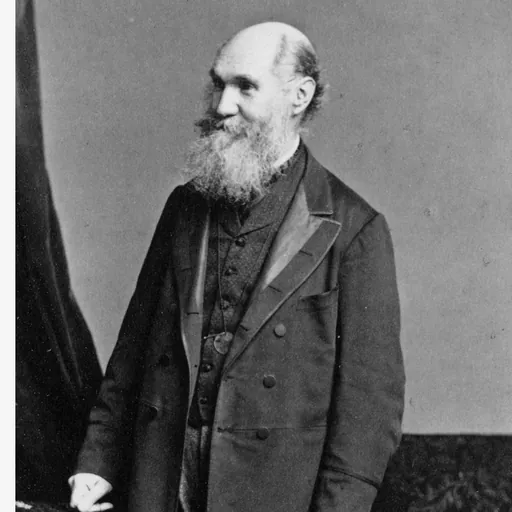
Henry Young
Governor of South Australia (1848–1854) and Tasmania
About Henry Young
Lived 1803 – 1870 (aged 67). Henry Young was a British colonial administrator and politician.
Sir Henry Edward Fox Young, KCMG (23 April 1803 – 18 September 1870) was the fifth Governor of South Australia, serving in that role from 2 August 1848 until 20 December 1854. He was then the first Governor of Tasmania, from 1855 until 1861.
Early life Young was the third son of Sir Aretas William Young. In 1834, he was posted briefly to St Lucia as treasurer, secretary and member of the council, and in 1835 returned to British Guiana as government secretary. He was knighted in 1847. in 1851 he offered a prize of 2000 for the first person to travel up the to its junction with the Darling River (now the town of Wentworth) in a paddle steamer. The prize was claimed in 1853 by Francis Cadell with his steamer Lady Augusta (named for Sir Henry's wife). Due to the difficulty of navigating the Murray Mouth, Young supported building the railway from the river port of Goolwa to the new sea port at Port Elliot (named after his friend, Charles Elliot). Young was a supporter of St Peter's College and the Young Prize, awarded annually from income from a section of land at Dry Creek, and vested in the college for the purpose, was named for him. He was president of the Adelaide Philosophical Society 1853–1854. Though it was expected sooner or later, the order for his transfer to Van Diemen's Land (today's Tasmania) gave little time for the usual formalities and farewells.
Governor of Van Diemen's Land/Tasmania Young began his duties in Van Diemen's Land in January 1855. Sir Henry Fox Young's term as Governor of Van Diemen's Land was significant, because in 1856 the Island colony received self-government, and was renamed Tasmania to mark the fact and as a deliberate measure by free-settlers to distance its convict past. Sir Henry was the first Tasmanian Governor to occupy Government House, Hobart, the beautiful neo-gothic Vice-Regal residence on the banks of the River Derwent.
Later life Young died on 18 September 1870.
Family Young married Augusta Sophia Marryat (born 1829) in 1848. She was the daughter of a former slaveholder, Charles Marryat, of Potter's Bar, Middlesex, who had been compensated part of £34,000 in the 1830s upon the emancipation of slavery. Augusta (later Lady Young) was the niece of the novelist Captain Frederick Marryat, and sister of Charles Marryat, Dean of Adelaide (1887–1906). Her mother was Caroline Short, whose brother, Augustus Short, was the first Anglican bishop of Adelaide.
The couple had four children, two boys and two girls.
The town of Port Augusta in South Australia is named after Augusta, as is the tiny suburb of Marryatville in Adelaide's eastern suburbs.
Don’t just read it —
keep it.
Full-length biographies made to live with: read them, listen on the way to work, watch them tonight.
- E-book
- Audio
- Video
Instant download · yours to keep · every purchase keeps this site free
Important facts
People in Henry Young's life
Named in this biography and alive at the same time



Related people
Same field, nearest in time


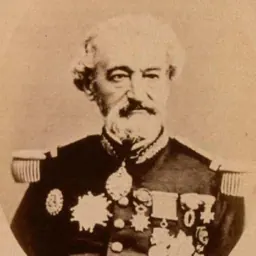

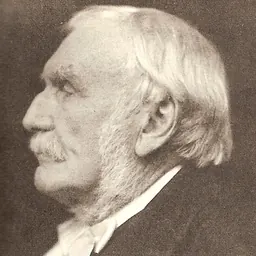
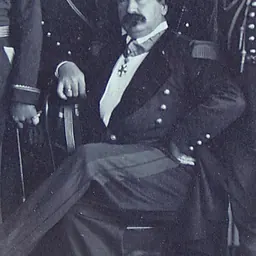
Contemporaries
People whose lives overlapped Henry Young's





Frequently asked questions
Who was Henry Young?
Governor of South Australia (1848–1854) and Tasmania (1855–1861)
When was Henry Young born?
Henry Young was born on 23 April 1803 in Kent.
When did Henry Young die?
Henry Young died on 18 September 1870 in London.
What was Henry Young's occupation?
Henry Young was a colonial administrator and politician.
What nationality was Henry Young?
Henry Young was British.
Sources & further reading
Cite this page
APA: Biography.guide. (2026). Henry Young. https://biography.guide/henry-young-colonial-administrator/
MLA: "Henry Young." Biography.guide, https://biography.guide/henry-young-colonial-administrator/.
Chicago: "Henry Young." Biography.guide. https://biography.guide/henry-young-colonial-administrator/.
Data last updated: 2026-09-21 · Spot an error? Report a correction.
Portrait: Wikimedia Commons · author & licence
Page generated 2026-09-27 05:00 UTC