
About Henry William Weber
Lived 1783 – 1818 (aged 34–35). Henry William Weber was an editor.
Henry William Weber (1783–1818) was an English literary editor known for his work on plays and romances. He served as a literary assistant to Sir Walter Scott.
Life John Weber, born in 1783, is believed to have originated from St. Petersburg. He was reportedly the son of a Westphalian father and an English mother. At a young age, Weber was sent to Edinburgh, allegedly by some London booksellers, in a state of destitution.
In August 1804, Sir Walter Scott employed Weber as his amanuensis. Scott not only provided him with this position but also helped him secure other profitable literary work. Although Weber was described as affectionate, Scott noted that he held Jacobin principles (Scott, *The Journal of Sir Walter Scott, 1890, vol. i, p. 149).
In December 1813, Weber experienced a severe mental breakdown while working alongside Scott. During this episode, he produced a pair of pistols and challenged Scott to a duel. Following a tense exchange, Weber joined the Scott family for dinner, but was placed under restraint the following day. He was later committed to an asylum in York, where he was financially supported by his friends, with some assistance from Scott. Weber remained in the asylum as "a hopeless lunatic" until his death in June 1818.
Works Some of his most significant contributions include:
- The Battle of Flodden Field: A Poem of the Sixteenth Century, with Various Readings, Notes, etc. (1808; reprinted in Newcastle, 1819): This work included sixteen copies of the "Notes and Illustrations" printed separately. Sir Walter Scott advised Weber on this publication and provided materials to assist in its creation.
- Metrical Romances of the Thirteenth, Fourteenth, and Sixteenth Centuries, with Introduction, Notes, and Glossary (1810, 3 vols.): This edition received praise from Robert Southey, who described it as "admirably edited" (Letters, ed. Warter, ii. 308).
- Dramatic Works of John Ford, with Introduction and Explanatory Notes (1811, 2 vols.): Despite Weber's efforts, his lack of expertise in old English literature and his failure to collate early editions of the plays led to significant criticism from contemporaries. This work sparked considerable controversy, as detailed in subsequent editions and letters by literary figures such as William Gifford, Octavius Gilchrist, and John Mitford.
- Works of Beaumont and Fletcher, with Introduction and Explanatory Notes (1812, 14 vols.): Weber's edition included numerous notes drawn from Scott's annotated edition.
- Tales of the East; Comprising the Most Popular Romances of Oriental Origin and the Best Imitations by European Authors (1812, 3 vols.): The preface for this work was borrowed from the "Tartarian Tales" by Thomas Flloyd of Dublin (Athenæum, 14 April 1894, p. 474).
- Popular Romances, Consisting of Imaginary Voyages and Travels (1812): This work was included in Lowndes' Bibliographer's Manual (ed. Bohn, iv. 2862).
- Genealogical History of the Earldom of Sutherland, by Sir Robert Gordon (1813): Weber served as the editor for this historical account.
- Illustrations of Northern Antiquities from the Earlier Teutonic and Scandinavian Romances (1814): Weber collaborated with Dr. Jamieson and Sir Walter Scott on this work, which explored early Northern European literature and mythology.
Don’t just read it —
keep it.
Full-length biographies made to live with: read them, listen on the way to work, watch them tonight.
- E-book
- Audio
- Video
Instant download · yours to keep · every purchase keeps this site free
Important facts
People in Henry William Weber's life
Named in this biography and alive at the same time
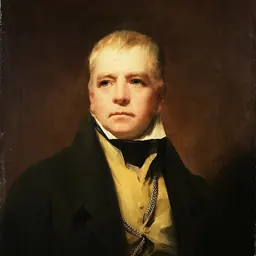
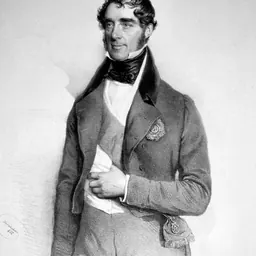
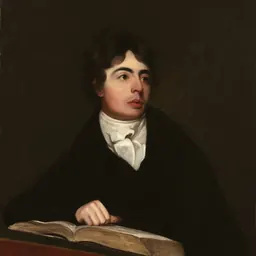


Related people
Same field, nearest in time
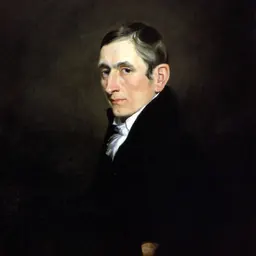


Contemporaries
People whose lives overlapped Henry William Weber's



Frequently asked questions
Who was Henry William Weber?
English editor of plays and romances
When was Henry William Weber born?
Henry William Weber was born in 1783.
When did Henry William Weber die?
Henry William Weber died in 1818.
What was Henry William Weber's occupation?
Henry William Weber was an editor.
Sources & further reading
· Wikipedia: Henry William Weber
· DBpedia: Henry William Weber
Cite this page
APA: Biography.guide. (2026). Henry William Weber. https://biography.guide/henry-william-weber/
MLA: "Henry William Weber." Biography.guide, https://biography.guide/henry-william-weber/.
Chicago: "Henry William Weber." Biography.guide. https://biography.guide/henry-william-weber/.
Data last updated: 2026-09-20 · Spot an error? Report a correction.
Page generated 2026-09-27 05:05 UTC