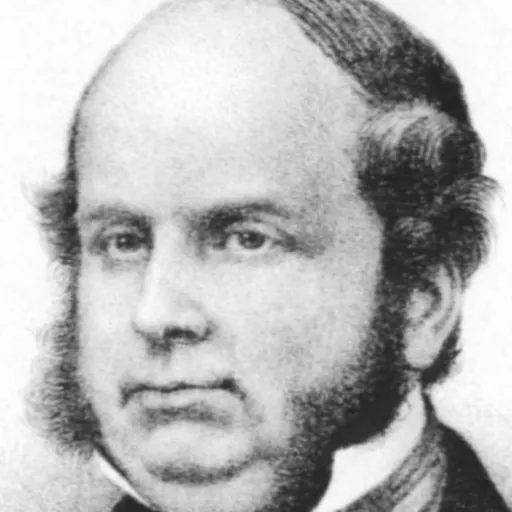
About Henry Thomas Buckle
Lived 1821 – 1862 (aged 40). Henry Thomas Buckle was a British historian, chess player, sociologist, philosopher, writer and author.
Henry Thomas Buckle (24 November 1821 – 29 May 1862) was an English historian, the author of an unfinished History of Civilization and a strong amateur chess player. He is sometimes called "the Father of Scientific History".
Early life Buckle, the son of Thomas Henry Buckle (1779–1840), a wealthy London merchant and shipowner, and his wife, Jane Middleton (d. 1859) of Yorkshire, was born at Lee, London (Kent County) on 24 November 1821. He had two sisters. His father died in January 1840.
As a boy, Buckle's "delicate health" rendered him unsuited for the usual formal education or games of middle-class youth. However, he loved reading.
At 19, Buckle first gained distinction as a chess player. He was known as one of the best in the world. In matchplay, he defeated Lionel Kieseritzky and Johann Löwenthal.
Buckle's father died in 1840. Buckle inherited £20,000. This inheritance allowed Buckle to live the rest of his life in reading, writing, and travel.
The monographic publisher John Camden Hotten claimed that his series of flagellation reprints The Library Illustrative of Social Progress had been taken from Buckle's collection, but that was untrue, as reported by Henry Spencer Ashbee. Later life and death On 1 April 1859, Buckle's mother died. Shortly afterward, under the influence of this "crushing and desolating affliction", he added an argument for immortality to a review he was writing of John Stuart Mill's essay On Liberty.
The death of his mother in 1859 combined with the exhausting work on the second volume of the History of Civilization in England, and its publication in 1861 invoked a decision by Buckle to go to Egypt to recover from exhaustion. , inviting "one Elizabeth Faunch, the widow of a carpenter", to join him. Mrs. Faunch refused his invitation, but there is some evidence that the two had been engaged in a liaison for some time".
There was a review of Buckle's History of Civilization in England. Vol II in The New York Times. The review concluded, "notwithstanding these imperfections, we still regard the History of Civilization as perhaps the most important contribution to modern historical science.... It is easy for one to make a great many very superficial objections to Mr. Buckle's mode of treating history..., but the more one comes up with the grandeur of his method, the less disposition there will be to make such objections.... His influence on the thought of the present age cannot but be enormous; and if he gives us no more than we already have in the two volumes of the magnum opus, he will still be classed among the fathers and founders of the Science of History".
A review of Buckle's newly published Essays appeared in the direct predecessor of the Portland Press Herald on Saturday, 27 December 1862. The editors wrote of Buckle: "a solitary unremitting student, with no encouragement save from the home circle, and no opportunity of measuring himself with rivals, he naturally, with all his wealth of learning, command of language, and vigor of thinking, fell into those pitfalls of rashness and inaccuracy which lie in wait for the recluse".
Posthumous The paranoid narrator of Fyodor Dostoevsky's Notes From Underground discusses Buckle's theories: "Why, to maintain this theory of the regeneration of mankind by means of the pursuit of his own is to my mind almost the same thing... as to affirm, for instance, following Buckle, that through civilisation mankind becomes softer, and consequently less bloodthirsty and less fitted for warfare. Logically it does seem to follow from his arguments. But man has such a predilection for systems and abstract deductions that he is ready to distort the truth intentionally, he is ready to deny the evidence of his senses only to justify his logic. I take this example because it is the most glaring instance of it. Only look about you: blood is being spilt in streams, and in the merriest way, as though it were champagne. Take the whole of the nineteenth century in which Buckle lived. Take Napoleon—the Great and also the present one. Take North America—the eternal union [an ironic reference to the ongoing American Civil War . Take the farce of Schleswig-Holstein.... And what is it that civilisation softens in us? The only gain of civilisation for mankind is the greater capacity for variety of sensations—and absolutely nothing more".
In 1910, the eleventh edition of the Encyclopædia Britannica Buckle did not define the general conceptions with which he worked: "civilization", "history", "science", "law". Therefore, "his arguments are often fallacies". Furthermore, "he sometimes altered and contorted the facts" and "he very often unduly simplified his problems". Nevertheless, "many of his ideas... have been more precisely elaborated by later writers on sociology and history" and his work was immensely valuable in provoking further research and speculation".
In 1981, American sociologist Robert Bierstedt claimed that, in his History of Civilization in England, "Buckle criticized historians on the ground that they were too much interested in biography and in military and political history and failed to seek universal principle or laws". In contrast, "Buckle was confident that it was possible to construct a science of society on the basic of inductions from history". His difficulty was the "sheer quantity of materials that would have to be mastered." Herbert Spencer said that Buckle "'took in' more than he was able to organize".
Works "The Influence of Women on the Progress of Knowledge" Buckle's only lecture "The Influence of Women on the Progress of Knowledge" Lecture delivered at the Royal Institution and published in Fraser's Magazine 1858 .
"Mill on Liberty" (a review) on Liberty" (a review) Fraser's Magazine, Vol. 50, May 1859, ending with Buckle's argument for immortality, 509–542.
A Letter to a Gentleman respecting Pooley's Case A Letter to a Gentleman respecting Pooley's Case (J. W. Parker & Son, 1859).
History of Civilization in England Three-volume edition History of Civilization in England, Volume 1 (London: Longmans Green, 4th edition 1864) History of Civilization in England, Volume 2 (London: Longmans Green, 4th edition 1864) History of Civilization in England, Volume 3 (Longmans, Green, 1868)
Fragment on the Reign of Elizabeth Unpublished fragments on the Reign of Elizabeth: Bishops, from the posthumous papers of Mr. Buckle in Fraser's Magazine, Vol. 75, February, 1867, 163–186. on the Reign of Elizabeth: Bishops, from the posthumous papers of Mr. Buckle in Fraser's Magazine, Vol. 76, September 1867, 284–300.
The Miscellaneous and Posthumous Works of Henry Thomas Buckle Three volumes edition, edited by Helen Taylor The Miscellaneous and Posthumous Works of Henry Thomas Buckle, Volume 1 (Longmans, Green and Company, 1872) The Miscellaneous and Posthumous Works of Henry Thomas Buckle, Volume 2 (Longmans, Green and Company, 1872) The Miscellaneous and Posthumous Works of Henry Thomas Buckle, Volume 3 (Longmans, Green and Company, 1872)
The Miscellaneous and Posthumous Works of Henry Thomas Buckle Two volumes new and abridged edition, edited by Grant Allen The Miscellaneous and Posthumous Works of Henry Thomas Buckle: A New and Abridged Edition, Volume 1 (Longmans, Green and Company, 1885) The Miscellaneous and Posthumous Works of Henry Thomas Buckle: A New and Abridged Edition, Volume 2 (Longmans, Green and Company, 1885)
Collected essays One volume, editor not named Essays by Henry Thomas Buckle, Author of "A History of Civilization in England": With a Biographical Sketch of the Author (F. A. Brockhaus, 1867)
On Scotland and the Scotch Intellect, University of Chicago Press (1970). ("Consists of the introductory matter from v. 1 of the 1st ed. of the author's History of civilization in England (London, 1857) and the Scottish sections of the first and only ed. of v. 2 (London, 1861) plus his "Analytical table of contents ... All omissions are indicated by ellipses.") xxxviii, 414 p. 23 cm.
Don’t just read it —
keep it.
Full-length biographies made to live with: read them, listen on the way to work, watch them tonight.
- E-book
- Audio
- Video
Instant download · yours to keep · every purchase keeps this site free
Important facts
People in Henry Thomas Buckle's life
Named in this biography and alive at the same time

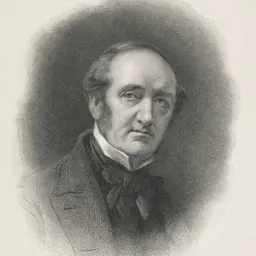

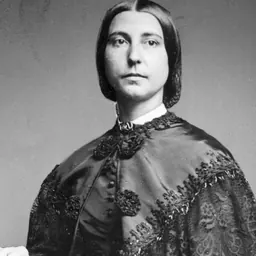
Related people
Same field, nearest in time


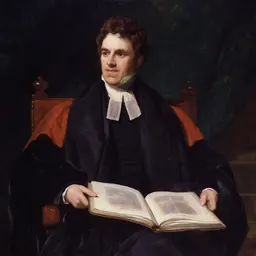


Contemporaries
People whose lives overlapped Henry Thomas Buckle's



Frequently asked questions
Who was Henry Thomas Buckle?
English historian (1821–1862)
When was Henry Thomas Buckle born?
Henry Thomas Buckle was born on 24 November 1821 in Lewisham.
When did Henry Thomas Buckle die?
Henry Thomas Buckle died on 29 May 1862 in Damascus.
What was Henry Thomas Buckle's occupation?
Henry Thomas Buckle was a historian, chess player, sociologist, philosopher, writer and author.
What nationality was Henry Thomas Buckle?
Henry Thomas Buckle was British.
Sources & further reading
· Wikipedia: Henry Thomas Buckle
· DBpedia: Henry Thomas Buckle
Cite this page
APA: Biography.guide. (2026). Henry Thomas Buckle. https://biography.guide/henry-thomas-buckle/
MLA: "Henry Thomas Buckle." Biography.guide, https://biography.guide/henry-thomas-buckle/.
Chicago: "Henry Thomas Buckle." Biography.guide. https://biography.guide/henry-thomas-buckle/.
Data last updated: 2026-09-22 · Spot an error? Report a correction.
Portrait: Wikimedia Commons · author & licence
Page generated 2026-09-27 05:03 UTC