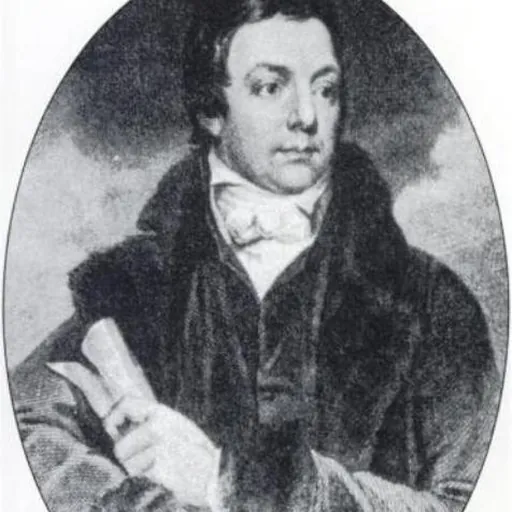
Henry Salt
English artist, traveller, diplomat, and egyptologist
About Henry Salt
Lived 1780 – 1827 (aged 47). Henry Salt was a British diplomat, egyptologist, archaeologist, painter, botanist and draftsperson.
Henry Salt (14 June 178030 October 1827) was an English artist, traveller, collector of antiquities, diplomat, and Egyptologist.
Biography Early life Salt, the son of Thomas Salt who was a physician and Alice née Butt, was born in Lichfield on 14 June 1780. He was the youngest of eight children and went to school in Lichfield, Market Bosworth, and then in Birmingham under where his brother John Butt Salt taught. He took an early interest in portrait painting. While in Lichfield, he studied under a watercolour artist, John Glover, and in 1789, he went to London where he first studied under Joseph Farington and later under John Hoppner. After a time, he gave up portrait painting, having failed to build up a reputation. They started on an eastern tour in June 1802, sailing on the British East India Company's chartered ship Minerva to India via the Cape Colony. Salt explored the Cape of Good Hope, India, and the Red Sea area. Valentia came to describe Salt as a "secretary-draftsman": he was not only a companion, but also sketched the sites and scenes they encountered on their voyage. In 1805, Valentia sent Salt on a journey into Ethiopia (then often referred to by Europeans by the exonym Abyssinia) to meet with Wolde Selassie, Ras of Tigray to open up trade relations on behalf of the English.
Later, in 1849, he published literature about Saltia, a genus of flowering plants from Yemen and Saudi Arabia, belonging to the family Amaranthaceae. It was named in Henry Salt's honour.
Work and contributions to Egyptology
Collections His first collection contained artifacts and pieces that Salt acquired from 1816 to 1818. When shipped to England and evaluated by specialists, the total value of the collection was estimated to be approximately £8000, although it would be sold for much less. Records show that the collection ended up being sold in February 1823. The sarcophagus of Seti I, a major piece of the collection was bought by the British architect Sir John Soane for £2000 and the rest was bought by the British Museum for the same price.
Following the assembly of his first collection, Salt began acquiring what would be known as his second collection, containing items he collected from 1819 to 1824. While Salt's primary intention was to sell to the British Museum again, this time for a yearly pension of £600 for his service as the Consul, it would ultimately be rejected due to the price. Despite the British concerns over price, the French royalty wanted to buy the collection and display it at the Louvre, which they did in 1826 for a total of £10,000.
Salt would spend the rest of his life putting together a third collection which featured his antiquities acquired from 1825 to his death in 1827. This collection was sold years after his death when an agent of his sold it to the British Museum for over £7000.
Notable artifacts
Head of Ramses II (Young Memnon) Sarcophagus of Seti I Head and arm of Thothmes III Mummy of Hornedjitef Sarcophagus of Ramesses III Head and supporting Left Arm of Amenhotep III Head and upper torso of monumental limestone statue of Amenhotep III wearing nemes. Granodiorite seated statue of Amenhotep III. Granodiorite statue of Amenhotep III. The statue has been restored.
In popular culture Salt was portrayed by Robert Portal in the 2005 BBC docudrama Egypt.
Gallery
Don’t just read it —
keep it.
Full-length biographies made to live with: read them, listen on the way to work, watch them tonight.
- E-book
- Audio
- Video
Instant download · yours to keep · every purchase keeps this site free
Important facts
People in Henry Salt's life
Named in this biography and alive at the same time
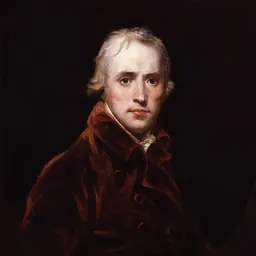
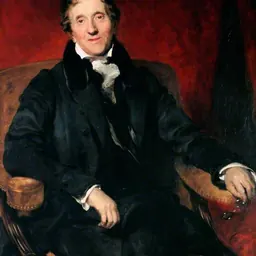

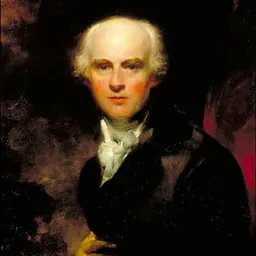

Related people
Same field, nearest in time



Contemporaries
People whose lives overlapped Henry Salt's


Frequently asked questions
Who was Henry Salt?
English artist, traveller, diplomat, and egyptologist (1780-1827)
When was Henry Salt born?
Henry Salt was born on 14 June 1780 in Lichfield.
When did Henry Salt die?
Henry Salt died on 30 October 1827 in Desouk, Albugnano.
What was Henry Salt's occupation?
Henry Salt was a diplomat, egyptologist, archaeologist, painter, botanist and draftsperson.
What nationality was Henry Salt?
Henry Salt was British.
Sources & further reading
· DBpedia: Henry Salt (Egyptologist)
Cite this page
APA: Biography.guide. (2026). Henry Salt. https://biography.guide/henry-salt/
MLA: "Henry Salt." Biography.guide, https://biography.guide/henry-salt/.
Chicago: "Henry Salt." Biography.guide. https://biography.guide/henry-salt/.
Data last updated: 2026-09-20 · Spot an error? Report a correction.
Portrait: Wikimedia Commons · author & licence
Page generated 2026-09-27 04:57 UTC