
About Henry Rotton
Lived 1814 – 1881 (aged 66–67). Henry Rotton was a politician.
Henry Rotton (16 August 1814 – 11 October 1881) was an English-born Australian businessman and politician.
Rotton settled in the Bathurst district from 1839, establishing himself as a publican and mail-coach operator. He settled at the 'Blackdown' property near Kelso and was a successful breeder of horses, cattle and sheep. He also invested in other pastoral properties in the colony. Rotton was elected to the New South Wales Legislative Assembly, initially in the electorate of Western Boroughs from January 1858 to April 1859, and for two terms as the member for Hartley from June 1859 to November 1864. Rotton made several unsuccessful attempts at contesting parliamentary seats from the mid-1860s to the mid-1870s.
Henry Rotton had an involvement in a well-known incident of the bushranging era when a gang besieged the homestead of Rotton's daughter and son-in-law, Catherine and Henry Keightley.
Biography
Early life
Henry Rotton was born on 16 August 1814 at Frome Selwood, county Somerset in England, the only son of Gilbert Rotton and Mary Caroline (née Humphries). His father was a solicitor.
Young Henry received his early education at a school in Frome and afterwards at the nearby city of Wells (west of Frome).
Henry Rotton developed a strong desire to enter the Royal Navy. His father consulted his nephew, naval captain Fairfax Moresby (later an admiral), in the hope of entering his son in the naval service, but he was advised it was not possible. Henry's father then allowed his son "to take a trial trip in a merchant vessel". However, the ship was wrecked in the West Indies. Rotton then joined a vessel bound for the African coast, but he was abandoned by the captain in the British colony of Gold Coast "without friends or resources" and suffering from yellow fever. Rotton recovered from the disease after being cared for by "some negroes" and afterwards became a guest of the Governor of Gold Coast, George Maclean.
Solitary Creek
Early in 1839 Rotton went to live at Solitary Creek (later named Rydal) in the Central West region of New South Wales, its location described as a "purling stream, in a grassy vale". From about February 1839 he leased the Queen Victoria Inn on the Bathurst Road near Solitary Creek, and was granted a license for the public-house. The inn provided accommodation for travellers, with four sitting rooms and five bedrooms, and included stables, paddocks and stockyards. The premises had been opened in July 1838 and was initially leased by Dennis Kenny, who by November 1838 had abandoned the property with rent in arrears.
Henry Rotton and Lorn Jane Macpherson were married in 1839. The couple had two children, born in 1840 and 1841. Lorn Rotton died on 11 September 1842 at Solitary Creek, aged 25.
By the early 1850s he was operating coaches on seven routes from Bathurst to the district townships of Orange, Wellington, Hartley, Rockley, Ophir, Sofala and Carcoar. In 1854 the Rockley, Ophir, Sofala and Carcoar routes were taken over by other contractors, but Rotton continued to operate the other coachlines until 1857.
In 1853 Rotton purchased the 'Blackdown' pastoral property, north of Kelso, where he resided with his family. He also became part owner of several stations on the Lachlan and Macquarie rivers, including 'Gungalman' in the Lachlan District. Rotton was a successful breeder of horses, cattle and sheep at 'Blackdown', often winning prizes for his livestock at agricultural shows in the local district and in Sydney.
Political career
At the general election held in January and February 1858 Rotton was elected to represent the electoral district of Western Boroughs in the New South Wales Legislative Assembly, an electorate that included Blayney, Carcoar and Rockley. Rotton ran against the sitting candidate, Arthur Holroyd, and was elected with a margin of six votes, polling 230 votes (or 50.7 percent) against Holroyd's 224 votes. At the declaration of the poll on 30 January Rotton declared that "he was no party man", describing the present state of politics in the colony as "one ill defined heterogeneous mass". He described the predominant political faction under Charles Cowper as a liberal one and he himself "would be liberal likewise, if they would consent to enact laws conferring social and religious freedom on all classes of men... such as would promote progress and rational reform, not continuing to tinker up laws which did not require it, but eradicating bad laws wherever they existed".
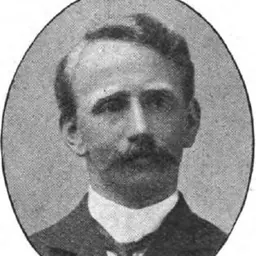
Portrait of Henry Rotton published in Australian Men of Mark, Vol. I (1889).
During his first term in parliament Rotton openly supported aspects of the liberal agenda of John Robertson and Charles Cowper, including the abolition of state aid to religion. He maintained that all the Christian denominations should be treated alike and opposed grants to the Anglican and Catholic churches. Rotton then decided to nominate for the electorate of Hartley, a district where he owned property and was known to electors. Nominations for the seat were held on 20 June 1859. The only other candidate was the solicitor John Ryan Brenan, who had previously held the rural seat of Cumberland (South Riding) on Sydney's urban fringe. At the election held five days later Rotton was successfully elected for the seat of Hartley, receiving 281 votes (57.8 percent).
Rotton opposed free selection before survey as proposed in the Land Acts introduced into parliament in 1860 by the Robertson ministry. Four days later Rotton nominated for the seat of Hartley, of which he was the sitting member. He was elected at the poll on 14 December against one other candidate, attracting 190 votes (54.1 percent). After his defeat in the Bathurst electorate and subsequent nomination and success in the election for the Hartley seat, it was claimed in Freeman's Journal that Rotton had been affiliated with the secretive Constitutional Association, an organisation formed to support candidates who opposed land reform in the New South Wales parliament. The newspaper explained that one of the tactics of the Association was to "send their retained advocates, though beaten in one constituency, to as many others as possible" in order to spread falsehoods about the principles of the Land Bill and "delude and humbug the electors".
During this term of parliament Rotton took a conspicuous part in the railway estimates debate and was successful in his advocacy of having the allocated sum equally divided between the three main railway lines of the colony, rather than being weighed heavily towards extending the Southern line to Albury to connect Sydney with Melbourne.
Bushrangers
Henry Rotton's eldest daughter Caroline (born in December 1840 at Solitary Creek) had married Henry Keightley in December 1860 at Kelso. Keightley was an assistant Gold Commissioner and the couple lived at 'Dunn's Plains' near Rockley, 29 miles (36 km) south of Bathurst. On the evening of Saturday, 24 October 1863, the bushrangers John Gilbert, John O’Meally, Ben Hall, John Vane and Mick Burke approached the 'Dunn's Plains' homestead. Henry Keightley was about thirty yards from the house when the gang rode up and ordered him to "bail up". Rather than obey the order Keightley ran towards the house with the bushrangers firing at him. When he was inside the house, he and a guest, Dr. W. C. Pechey, guarded the door with a double-barrelled gun and a revolver. Keightley and Dr. Pechey were defending the besieged household when Keightley shot Burke in the abdomen as he tried to rush the house. The siege finally ended when Ben Hall threatened to burn the house if the defenders would not lay down their arms, giving Keightley no choice as his wife and child and two servants were sheltering inside. After he had been wounded Burke made a clumsy attempt to shoot himself in the head with his revolver, leaving himself barely alive and unconscious. With Keightley and Pechey in captivity, several of the angry bushrangers wanted to kill Keightley to avenge the shooting of Burke but eventually Hall and Gilbert decided that the Gold Commissioner's life should be spared for a ransom payment of five hundred pounds (the identical amount of reward offered by the government for the apprehension of each of the bushrangers). In an attempt to treat the mortally wounded Burke, Dr. Pechey was allowed to travel to Rockley to retrieve his instruments, promising he would not raise the alarm, but the bushranger died during his absence.
Caroline Keightley and Dr. Pechey were then allowed to travel to Bathurst by buggy to collect the ransom money, with the bushrangers vowing to shoot Caroline's husband if the police were notified. Their captive was taken to a nearby hill overlooking the Bathurst road, to await their return. Pechey and Mrs. Keightley arrived at 'Blackdown' in the early hours of Sunday morning and roused Caroline's father to advise him of the situation. Henry Rotton and Dr. Pechey then rode to Bathurst and woke the manager of the Commercial Bank so they could procure the required money. The two men arrived at the 'Dunn's Plains' homestead at about mid-morning. Inside the house Rotton hastily recorded the serial numbers on the notes before Dr. Pechey mounted his horse and rode to the bushrangers' camp with the ransom money. After Keightley's liberty was exchanged for the ransom, he and Dr. Pechey returned to the house and the bushrangers hastily left the locality. After his son-in-law had been released Rotton rode into Rockley and gave a report of the events to the police. He returned to 'Dunn's Plains' and then started for Bathurst to alert the police there. However news had already reached Bathurst; near the outskirts of town he was met with a party of mounted troopers on their way to 'Dunn's Plains'.
Rotton was elected as a director of the Bathurst Sheep Board in 1866 and served as its chairman from 1869 until 1881. He was a member of the local public school board from 1868 and served as chairman from 1874.
Rotton attempted to re-enter politics at the 1872 general election, once again nominating for the Bathurst electorate, but was defeated by Edward Combes. He made another attempt in 1873, contesting the seat of East Macquarie at a by-election held on 1 December 1873, but he finished second in a field of four candidates. He made one further attempt at the general election held from early December 1874 to early January 1875, contesting the seat of seat of West Macquarie against one other candidate, but polled second in the vote held on 4 January.
Last years
Henry Rotton died on 11 October 1881, aged 67, at 'Mynora', a property he owned near Moruya where his daughter Caroline and son-in-law, Henry Keightley, were living. At that time Keightley was the local Police Magistrate. Rotton was buried in the Baptist cemetery at Bathurst. His possessions were valued for probate at £29,000. The company's chartered brig Emma arrived at Kingscote, Kangaroo Island, on 11 September 1836.
B.
C.
D.
Don’t just read it —
keep it.
Full-length biographies made to live with: read them, listen on the way to work, watch them tonight.
- E-book
- Audio
- Video
Instant download · yours to keep · every purchase keeps this site free
Important facts
People in Henry Rotton's life
Named in this biography and alive at the same time



Related people
Same field, nearest in time






Contemporaries
People whose lives overlapped Henry Rotton's




Frequently asked questions
Who was Henry Rotton?
English-born Australian politician
When was Henry Rotton born?
Henry Rotton was born in 1814.
When did Henry Rotton die?
Henry Rotton died on 11 October 1881.
What was Henry Rotton's occupation?
Henry Rotton was a politician.
Sources & further reading
Cite this page
APA: Biography.guide. (2026). Henry Rotton. https://biography.guide/henry-rotton/
MLA: "Henry Rotton." Biography.guide, https://biography.guide/henry-rotton/.
Chicago: "Henry Rotton." Biography.guide. https://biography.guide/henry-rotton/.
Data last updated: 2026-09-20 · Spot an error? Report a correction.
Page generated 2026-09-27 05:15 UTC