
Henry Rosewell
High Sheriff of devon
About Henry Rosewell
Lived 1590 – 1656 (aged 65–66).
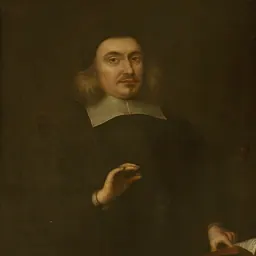
Sir Henry Rosewell (1590–1656) of Forde Abbey, Devon, was a puritan and supporter of the New World colonies.
Early years and education Henry Rosewell was born on 1 November 1590 at Forde Abbey in Devon (Forde Abbey is in the parish of Thorncombe which was transferred from Devon to Dorset in 1842). Henry was the only son of William Rosewell (1561–1593) and Ann Walkeden who were married at St Martins, London on 20 June 1588.
Henry Rosewell matriculated from Broadgates Hall, Oxford in 1606/07 and later that year was a student of the Middle Temple. He was knighted by James I on 19 February 1618/19 at Theobalds in Hertfordshire. Henry remarried Dorothy Brown (a widow). He had no known children by either wife.
Activities There is no evidence that Henry Rosewell practiced as a lawyer, however he was named in many litigations over money and property from c. 1614 to 1650 both as Plaintiff and Defendant. One of the most interesting was the dispute with William Every over the manor of Stapleton, Somerset. He refused to accept a decree and was ordered to be imprisoned. The case (Ruswell's Case) is described as an example of the use of habeas corpus.
He was patron of the living of Limington, Somerset; and on 30 December 1619, John Conant, of East Budleigh was admitted as rector. John Conant was the brother of Roger Conant, the first governor of the colony in Massachusetts Bay, and it is possible that Henry Rosewell had a personal acquaintance with him, as Roger signed the bond concerning the first fruits of this living.
He commanded a regiment of the Devon Trained Bands for Parliament in the First English Civil War.
It has been suggested that Henry Rosewell was the model for the main character of Hudibras, a mock heroic narrative poem from the 17th century written by Samuel Butler. However, Isaac D'Israeli refutes this in his 'Curiosities of Literature'.
In 1636, his brother-in-law, Sir John Drake (c. 1590–1636), died leaving Sir Henry as one of the executors in the will. Sir John left various areas of land to 'Sir Henry and others' to raise 'portions' (money) for his six daughters. Sir Henry became the scapegoat for the failure of the executors to supply the portions and was subject to a series of suits in Chancery from 1641 to his death in 1656. Henry Rosewell died at Greenway, Churston Ferrers, Devon and was buried in the churchyard of Brixham, Devon on 3 April 1656. Probate was granted to Dame Dorothy Rosewell 15 May 1656.
Epilogue
The Chancery suits 'continued to appear from time to time, but Dame Ellen Briscoe, who seems to have been the most contentious member of the [Drake] family, was never satisfied; she bided her time until after the Restoration, when, Sir Henry Rosewell having departed this life, she revived the case against his widow, by applying to the House of Lords for an Act to enable her to have sold a part of the manor of Limington, of which Sir Henry Rosewell had been seized at the time of his death.' but was finally ordered by act of Parliament on 3 March 1663 to sell the manor of Limington to Francis Summers and James Tazewell. James Tazewell was the grandfather of William Tazewell, who emigrated to Virginia in 1715, and ancestor of Henry Tazewell.
Dame Dorothy made her will at Holborn, London on 24 February 1676. She appears to have suffered greatly over the cost of the suits 'whereas in late years I have been involved in several troublesome lawsuits in order to the recovering of my just right, whereby I have contracted several debts and I had undoubtedly sunk under them had I not been supported beyond my expectations by some friends and principally by William Rosewell of Southampton Street in the parish of St Giles in the Fields Esquire'. William Rosewell was probably Major William Rosewell (c. 1606–1680), a London Apothecary and a Commander of the London Trained Bands. He was from North Curry, Somerset, and held houses in Southampton Street in 1678. She made this William Rosewell her sole Executor and left him £100. She died in late 1676 and probate was granted 14 February 1677.
Don’t just read it —
keep it.
Full-length biographies made to live with: read them, listen on the way to work, watch them tonight.
- E-book
- Audio
- Video
Instant download · yours to keep · every purchase keeps this site free
Important facts
People in Henry Rosewell's life
Named in this biography and alive at the same time

Contemporaries
People whose lives overlapped Henry Rosewell's




Frequently asked questions
Who was Henry Rosewell?
High Sheriff of devon
When was Henry Rosewell born?
Henry Rosewell was born on 1 November 1590 in Forde Abbey.
When did Henry Rosewell die?
Henry Rosewell died in 1656.
Sources & further reading
Cite this page
APA: Biography.guide. (2026). Henry Rosewell. https://biography.guide/henry-rosewell/
MLA: "Henry Rosewell." Biography.guide, https://biography.guide/henry-rosewell/.
Chicago: "Henry Rosewell." Biography.guide. https://biography.guide/henry-rosewell/.
Data last updated: 2026-09-20 · Spot an error? Report a correction.
Page generated 2026-09-27 05:08 UTC