
About Henry Rose Carter
Lived 1852 – 1925 (aged 73). Henry Rose Carter was an American entomologist.
Henry Rose Carter (August 25, 1852 – September 14, 1925) was an American physician, epidemiologist, and public health official who served as assistant surgeon general of the Public Health Service Commissioned Corps. His research and protocols were critical in understanding and preventing the transmission of both malaria and yellow fever.
Carter was born in Virginia in 1852. After attending the University of Virginia and the University of Maryland medical school, he joined the Marine Hospital Service (MHS). He was stationed at various MHS hospitals across the South, where he became interested in yellow fever. In 1888, he was dispatched to Mississippi's Ship Island, where he spent a decade developing novel quarantine methods.
In a 1898 study conducted in Mississippi, Carter discovered the extrinsic incubation period of yellow fever. This work implied the role of a secondary host, soon identified as the mosquito by U.S. Army physician Walter Reed. Carter served as director of hospitals in the Panama Canal Zone from 1904 to 1909. In 1915, he was appointed to assistant surgeon general by Congress. Carter retired in 1920 and died five years later.
With Reed and Carlos Finlay, Carter is regarded as one of the three researchers who helped identify yellow fever as mosquito-borne. Alongside Finlay, Carter was nominated for the 1904 Nobel Prize in Medicine for their work identifying the mosquito vector of yellow fever. Carter is also considered the father of modern quarantine.
Biography Early life and quarantine work
Henry Rose Carter was born on August 25, 1852, at Clinton Plantation in Caroline County, Virginia. He studied civil engineering at the University of Virginia before attending medical school at the University of Maryland, graduating in 1879. Carter joined the Marine Hospital Service (MHS), now the United States Public Health Service. Amid a severe outbreak of yellow fever in the lower Mississippi Valley, Carter was immediately dispatched to Memphis, Tennessee. Over the following 9 years, he was stationed in MHS hospitals across the South and became fascinated by yellow fever. Carter observed 12 households, carefully recording the dates of incident cases, secondary cases, and visits by neighbors. Curiously, Carter found that visitors to a recent infection never fell ill, but those who visited after two weeks usually acquired yellow fever. Carter concluded that the period between the initial and secondary infections comprised:
In 1899, Carter was assigned to Havana, Cuba by the MHS as Chief Quarantine Officer. In his 1900 paper identifying the Aedes aegypti mosquito as the yellow fever vector, Reed cited Carter's work. Reed later told Carter that "your own work in Mississippi did more to impress me with the importance of an intermediate host in yellow fever than everything else put together."
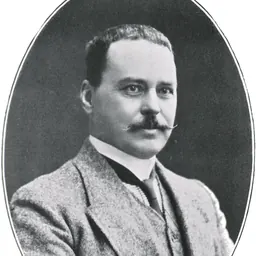
In 1904, Sir Ronald Ross—a Nobel laureate due to his discovery that malaria was also spread via mosquitos—nominated Carter and Carlos Finlay for the 1904 Nobel Prize in Medicine for their work identifying the mosquito as the vector of yellow fever. The American Public Health Association deemed Carter's work "a brilliant piece of epidemiological study". Carter wrote a series of seminal papers on the control and eradication of mosquito-borne diseases. Carter believed that, in public health efforts, it was essential to address the environmental conditions that allowed tropical diseases to thrive, rather than solely treating patients. At the time, he was regarded as the leading expert on malaria. From 1917 to 1918, he oversaw the federal government's efforts to control malaria, particularly on US military bases. Carter retired from service in 1920. However, he briefly served as an advisor on sanitation for the Peruvian government from 1920 to 1921. In an obituary, the American Public Health Association declared him "one of our brightest stars".
Don’t just read it —
keep it.
Full-length biographies made to live with: read them, listen on the way to work, watch them tonight.
- E-book
- Audio
- Video
Instant download · yours to keep · every purchase keeps this site free
Important facts
People in Henry Rose Carter's life
Named in this biography and alive at the same time


Related people
Same field, nearest in time



Contemporaries
People whose lives overlapped Henry Rose Carter's


Frequently asked questions
Who was Henry Rose Carter?
American sanitarian and epidemiologist
When was Henry Rose Carter born?
Henry Rose Carter was born on 25 August 1852.
When did Henry Rose Carter die?
Henry Rose Carter died on 14 September 1925.
What was Henry Rose Carter's occupation?
Henry Rose Carter was an entomologist.
What nationality was Henry Rose Carter?
Henry Rose Carter was American.
Sources & further reading
· Wikipedia: Henry Rose Carter
Cite this page
APA: Biography.guide. (2026). Henry Rose Carter. https://biography.guide/henry-rose-carter/
MLA: "Henry Rose Carter." Biography.guide, https://biography.guide/henry-rose-carter/.
Chicago: "Henry Rose Carter." Biography.guide. https://biography.guide/henry-rose-carter/.
Data last updated: 2026-09-25 · Spot an error? Report a correction.
Page generated 2026-09-27 05:11 UTC