
About Henry Rolle
Lived 1589 – 1656 (aged 66–67). Henry Rolle was a judge and politician.
Sir Henry Rolle (c. 1589–1656), of Shapwick in Somerset, was Chief Justice of the King's Bench and served as MP for Callington, Cornwall, (1614–1623–4) and for Truro, Cornwall (1625–1629).
Origins Henry Rolle was born circa 1589, the second son of Robert Rolle (d. 1633) of Heanton Satchville in the parish of Petrockstowe, Devon, by his wife Joan Hele, daughter of Thomas Hele of Fleet, Devon. Henry was a great-grandson, in a junior line, of George Rolle (c.1486-1552) of Stevenstone, Devon, founder of the influential and wealthy Rolle family of Devon, Keeper of the Records of the Court of Common Pleas and MP for Barnstaple in 1542 and 1545. His brothers included: Sir Samuel I Rolle (c.1588-1647) (eldest brother) of Heanton Satchville, Member of Parliament for Callington, Cornwall in 1640 and for Devon 1641-1647 and a supporter of the parliamentary side in the Civil War. John Rolle (1598–1648) (younger brother) a Turkey Merchant and MP for Callington, Cornwall, in 1626 and 1628 and for Truro, Cornwall, in 1640 for the Short Parliament and in November 1640 for the Long Parliament. A supporter of the Parliamentarian side in the English Civil War
Early legal career He matriculated at Exeter College, Oxford on 20 March 1607, and was admitted on 1 February 1609 to the Inner Temple, where he was called to the bar in 1618. He was elected bencher in 1633 and reader in 1637 and 1638, but owing to the prevalence of the plague, did not give his reading until the Lent of 1639.
Among his contemporaries at the Inner Temple and his intimate friends were Sir Edward Littleton (1589–1645), afterwards lord keeper and created Baron Littleton; Sir Edward Herbert, afterwards attorney-general; Sir Thomas Gardiner, afterwards recorder of London; and John Selden, by whose conversation and friendly rivalry he profited in the study of the law and humane learning. Rolle practised with eminent success in the Court of King's Bench. He was appointed recorder of Dorchester in 1636, and was called to the degree of serjeant-at-law on 10 May 1640.
Political career He served as MP for Callington, in Cornwall, between 1620 and 1624, during the last two parliaments of King James I (1603-1625), and for Truro between 1625 and 1629 in the first three parliaments of his successor King Charles I (1625-1649). He early identified himself with the popular party and was unsurpassed by any other member in his vigour to effect the impeachment of George Villiers, 1st Duke of Buckingham. He was likewise insistent that supply should be postponed to the redress of grievances. On the outbreak of the Civil War he took the side of Parliament, contributed £100 to the defence fund, and took the Covenant.
Judicial career His advancement to a judgeship in the Court of King's Bench was one of the stipulations included in the propositions for peace of January 1642–43. On 28 October 1645, he was sworn in as such, and on 15 November 1648, further to votes of both houses of parliament, he was advanced to Lord Chief Justice of England and Wales, otherwise known as Lord Chief Justice of the King's Bench. About a week after the execution of King Charles I in 1649, he accepted on 8 February 1649, a new commission as Lord Chief Justice of the upper bench on the understanding that no change should be made to the fundamental laws of the kingdom.
On 13 February 1649, he was voted a member of the Council of State, which appointment strengthened the government, and his presence on the western circuit contributed much to the settlement of the public mind. In 1650 he tried the case of William Franklin and Mary Gadbury. The two them had been asserting that William was Jesus Christ come to earth in a new body. They had been tried in Winchester and they had recanted their claims. The same happened again and as before Gadbury was given correction to persuade her to make her mark. They were both released within weeks and never heard from again although one disgraced minister mentioned him in 1666.
On 4 August 1654 Rolle was appointed Commissioner of the Exchequer. Rolle was exceeded in his abilities as advocate or judge by none of his contemporaries save by the great Sir Matthew Hale.
His decisions, reported by William Style, rarely relate to matters of historic interest. Nevertheless, he established, in the case of Captain Streater, committed to prison by order of the Council of State and the Speaker of the House of Commons for the publication of seditious writings, the principle that a court of justice cannot review parliamentary commitments if regular in form.
Case of Don Pantaleone Sá Rolle's name is associated with a cause célèbre of international law. Don Pantaleone Sá, a brother of the Portuguese ambassador, was arrested for a murder committed in an affray in the New Exchange in the Strand, London. The fact was undeniable, but the Don claimed the privilege of exterritoriality, due to his being a member of the Ambassador's household. The point was discussed by Rolle in consultation with two of his puisne judges, two admiralty judges and two civilians, and on 16 January 1654 Wookey, Somerset, purchased for £3,500 in 1626. Shapwick in Somerset, purchased in 1630, where he re-built the manor house. East Tytherley in Hampshire, purchased in 1654
Marriage and children Rolle married Margaret Bennett. They had only one son: Sir Francis Rolle, who was knighted at Portsmouth on 1 March 1665 and was lord of the manor of East Tytherley in Hampshire, which county he represented in the parliament of 1681.
Don’t just read it —
keep it.
Full-length biographies made to live with: read them, listen on the way to work, watch them tonight.
- E-book
- Audio
- Video
Instant download · yours to keep · every purchase keeps this site free
Important facts
People in Henry Rolle's life
Named in this biography and alive at the same time
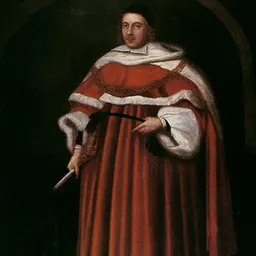


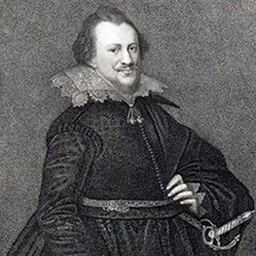


Related people
Same field, nearest in time
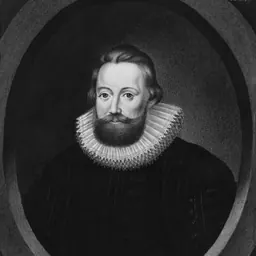
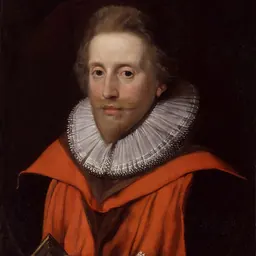
Contemporaries
People whose lives overlapped Henry Rolle's




Frequently asked questions
Who was Henry Rolle?
English politician
When was Henry Rolle born?
Henry Rolle was born in 1589.
When did Henry Rolle die?
Henry Rolle died on 30 July 1656.
What was Henry Rolle's occupation?
Henry Rolle was a judge and politician.
Sources & further reading
Cite this page
APA: Biography.guide. (2026). Henry Rolle. https://biography.guide/henry-rolle/
MLA: "Henry Rolle." Biography.guide, https://biography.guide/henry-rolle/.
Chicago: "Henry Rolle." Biography.guide. https://biography.guide/henry-rolle/.
Data last updated: 2026-09-26 · Spot an error? Report a correction.
Page generated 2026-09-27 05:15 UTC