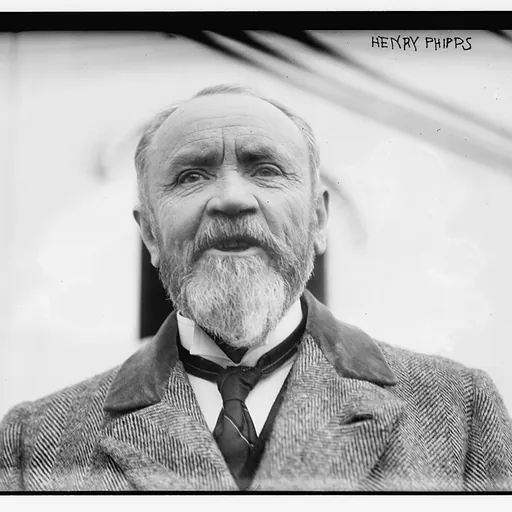
About Henry Phipps, Jr.
Lived 1839 – 1930 (aged 90). Henry Phipps, Jr. was an American entrepreneur, known for Carnegie Steel Company.
Henry Phipps Jr. (September 27, 1839 – September 22, 1930) was an American entrepreneur known for his business relationship with Andrew Carnegie and involvement with the Carnegie Steel Company. He was also a successful real estate investor. After selling his stock in Carnegie Steel, he devoted a great deal of his time and money to philanthropic works.
Early life Henry Phipps Jr. was born on September 27, 1839, in Philadelphia, Pennsylvania. His English parents, Henry Phipps, a shoemaker, and Hannah (née Franks), and had at least one son born while they were still in England. William Henry Phipps was born on March 27, 1825 and baptized at Wellington, Shropshire, England, on August 18, 1830.
The family emigrated to Philadelphia by 1839. They later moved to Pittsburgh in 1845.
Phipps was educated at public schools in Allegheny City, Pennsylvania.
Career Phipps began working as a young man as an office boy and later a bookkeeper with Dillworth & Bidwell. In 1861, he became a partner in Bidwell & Phipps, which was an agent for the Du Pont Powder Company. He was also a partner in Kloman & Phipps, a small iron mill.
This was created by a merger between Phipps' Kloman & Phipps and Cyclops Iron Company, an iron company in which the Carnegies had acquired an interest. Kloman and Phipps at first refused, but Thomas Carnegie made an offer of all the shares in Cyclops plus an additional payment of $50,000 . Therefore, on May 1, 1865, the new Union Iron Mills Company was formed.
For the next year, Phipps and Carnegie went to Europe on tour, and when they returned in 1866, went to work. Phipps toiled for the next 20 years and proved a capable financier, becoming Carnegie's business partner in Carnegie Steel Company, founded in 1892. He became a very wealthy man as the company's second-largest shareholder.
In 1901, Carnegie Steel Company was sold to the United States Steel Corporation, a newly formed organization, set up by Pierpont Morgan. It sold for $400 million (approx. $13.3 billion today), of which $226 million went to Carnegie himself, and $48 million went to Phipps. The Cape Cod estate was next to Aberdeen Hall (which burnt down in September 1924 ) and was near the estates of Andrew Carnegie, Henry M. Flagler, and Henry Clay Frick, all friends and associates from Pittsburgh.
In 1912, Phipps divided $3,000,000 worth of real estate in Chicago, Illinois realty among his three sons. Later in the same year, he gave his sons $10,000,000 worth of property in Pittsburgh.
In 1916, he purchased property in Great Neck, Long Island in the Village of Lake Success. In 1917 he had construction begun there on a thirty-nine-room Georgian mansion summer home; it was completed in 1919. He named the home "Bonnie Blink", which is Scottish for "pretty view." After his death, the mansion and property were donated to the school district. The mansion became the administrative building for the district, and the William A. Shine Great Neck South High School and middle school were built on the estate.
In 1926, Phipps bought Island Beach, New Jersey. His heirs sold it in 1953 to the State of New Jersey. Now known as Island Beach State Park, it is the last remaining stretch of undeveloped barrier island on the central New Jersey coast.
Phipps was one of the pioneer investors in Florida real estate. He was involved with a number of philanthropic causes, the best known of which is the Phipps Conservatory and Botanical Gardens in Schenley Park, an 1893 gift to the city of Pittsburgh.
Among his many benevolent works, he also funded the Phipps Institute for the Study, Treatment and Prevention of Tuberculosis at the University of Pennsylvania.
Another major project was funding The Henry Phipps Psychiatric Clinic at Johns Hopkins Hospital. In 1913 this supported the first inpatient facility in the United States for care of the mentally ill that was constructed as part of an acute care hospital.
Phipps was an advocate for decent housing for the poor. In 1905 he funded the non-profit Phipps Houses to build affordable housing in New York City. He gave $1,000,000 to build tenement houses for "working people." Phipps Houses still operates to this day. Henry Phipps's great-grandson, Stuart S. Janney III, sits on its board of trustees.
He was instrumental in establishment of Indian Agricultural Research Institute in 1905 at Pusa, Bihar. Phipps was a family friend of Lady Curzon, who was a daughter of an American millionaire, and the wife of Lord Curzon, the Viceroy of India. Phipps stayed as a guest of the Curzons during his visit to India and left behind a donation of £30,000, which was used to establish the institute. He laid the foundation stone of the Agricultural Research Institute and college on April 1, 1905.
Personal life Mrs Henry Phipps and Her Grandson Winston, oil on canvas, John Singer Sargent, 1907In 1872, Henry Phipps married Anne Childs Shaffer (1850–1934), the daughter of Margaret and John Shaffer, a Pittsburgh wagon builder. After their Bonnie Blink estate was completed in 1919, they spent their summers in Great Neck, Long Island. Helen Margaret Phipps (1876–1934), who in 1904 married Bradley Martin Jr. (1873–1963) the son of Bradley Martin in Scotland, brother-in-law of William Craven, 4th Earl of Craven (1868–1921). Henry Carnegie Phipps (1879–1953), who in 1907 married Gladys Livingston Mills (1883–1970). Howard Phipps (1881–1981), who in 1931 married Harriet Dyer Price, daughter of Theodore Hazeltine Price and granddaughter of Alexander B. Dyer (1815–1874).
Phipps died in Great Neck, New York, on September 22, 1930, and his wife, Anne died in October 1934. of which $2,212,002 was in stocks and bonds, $926,679 was in properties, notes, cash and insurance bonds, and $375 in jointly owned property. His wife was the sole beneficiary of his estate according to his June 1, 1915, will.
Don’t just read it —
keep it.
Full-length biographies made to live with: read them, listen on the way to work, watch them tonight.
- E-book
- Audio
- Video
Instant download · yours to keep · every purchase keeps this site free
Important facts
People in Henry Phipps, Jr.'s life
Named in this biography and alive at the same time
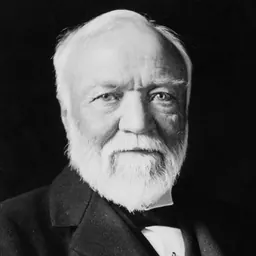



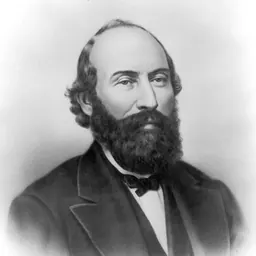
Related people
Same field, nearest in time

Contemporaries
People whose lives overlapped Henry Phipps, Jr.'s


Frequently asked questions
Who was Henry Phipps, Jr.?
American businessman (1839-1930)
When was Henry Phipps, Jr. born?
Henry Phipps, Jr. was born on 27 September 1839 in Philadelphia.
When did Henry Phipps, Jr. die?
Henry Phipps, Jr. died on 22 September 1930 in Great Neck Peninsula.
What was Henry Phipps, Jr.'s occupation?
Henry Phipps, Jr. was an entrepreneur.
What was Henry Phipps, Jr. known for?
Henry Phipps, Jr. was known for Carnegie Steel Company.
What nationality was Henry Phipps, Jr.?
Henry Phipps, Jr. was American.
Sources & further reading
· Wikipedia: Henry Phipps, Jr.
Cite this page
APA: Biography.guide. (2026). Henry Phipps, Jr.. https://biography.guide/henry-phipps-jr/
MLA: "Henry Phipps, Jr.." Biography.guide, https://biography.guide/henry-phipps-jr/.
Chicago: "Henry Phipps, Jr.." Biography.guide. https://biography.guide/henry-phipps-jr/.
Data last updated: 2026-09-20 · Spot an error? Report a correction.
Portrait: Wikimedia Commons · author & licence
Page generated 2026-09-27 04:58 UTC