
About Henry O. Wagoner
Lived 1816 – 1901 (aged 84). Henry O. Wagoner was a journalist, grocer, miller, saloon keeper and sheriff.
Henry O. Wagoner (February 27, 1816 – January 27, 1901) was an abolitionist and civil rights activist in Chicago and Denver. In the 1830s, as a free black man in Maryland, he worked on a farm and worked to free slaves with a loose group of individuals that is known as the Underground Railroad. He left Maryland in 1838 under suspicion for his activities and settled in Illinois and eventually Chicago after spending a few years in Chatham, Ontario. Continuing to work with the Underground Railroad, he was also a typesetter and journalist for radical anti-slavery newspapers before the abolition of slavery in Chicago. Around this time he befriended Frederick Douglass, with whom he would remain close throughout his life. During the American Civil War (1861–1865), he helped recruit black soldiers for Illinois and Massachusetts regiments. After the war, he moved to Denver, where he had spent some time previously. He continued to be a leader in Denver, working to secure blacks the right to vote and equality in education and under the law.
Early life
Henry O. Wagoner was born in Hagerstown, Maryland on February 27, 1816. As a child, Wagoner was taught to read by his paternal grandmother, but was rarely able to attend school, achieving less than a year's schooling while working on a farm. Starting about 1835, Wagoner became active trying to free slaves, and he remained a part of the Underground Railroad and various anti-slavery movements until the abolition of slavery in 1865. In 1838 he moved to Baltimore, where he assisted the local Underground Railroad until he was suspected for his actions and had to leave town. On September 8, 1838, Wagoner left for the west. In mid-September he arrived in Wheeling, West Virginia, where he stayed six weeks before moving on to Cincinnati and Dayton, Ohio, where as a literate black man, he taught school until the spring. Moving on, he arrived in New Orleans on April 11, 1839, and then traveled through St. Louis, Missouri, finally settling in Galena, Illinois. There, he learned to set type and took work at the Northwestern Gazette and Galena Advertiser. In Galena, he befriended Elihu B. Washburne, with whom he did some business and maintained a friendship long after. In May 1846 he moved to a house on Dearborn Street in Chicago, taking typesetting work in the printing office at the Western Citizen and the Chicago Advertiser. When Frederick Douglass started publishing the North Star in 1846, Wagoner became an occasional correspondent. In late 1847, he quit working in printing and began to acquire property.
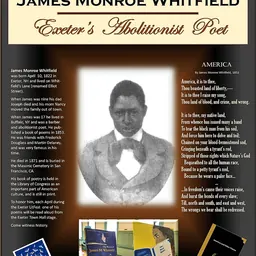
Abolition and civil rights activities in Chicago Wagoner became a leader in Chicago civil rights activism. He was active in local, state, and national Colored Conventions Movement and civil rights activities. In the late 1840s, Frederick Douglass was touring the continent speaking out against slavery, and sometime during or shortly after 1848, Wagoner and Douglass finally met in person and became friends. Wagoner founded a Literary and Debating Society at the Quinn African Methodist Episcopal Church in Chicago in 1852, and together with leading Chicago abolitionist John Jones represented Chicago at the 1853 Rochester, New York National African American Convention. His was one of 5 names attached to the address of the convention to the people of the United States published under the title, The Claims of Our Common Cause, along with Douglass, James Monroe Whitfield, Amos Noë Freeman, and George Boyer Vashon.
Wagoner, Jones, and fellow Chicago abolitionists H. Ford Douglas, James D. Bonner, and Charles V. Dyer were leaders in anti-slavery movement in Chicago, overtly through public writings and covertly through Underground Railroad activities. The group was especially outspoken in opposition to the 1854 Kansas-Nebraska Act which nullified the Missouri Compromise of 1820 and expanded slavery. In 1856 he attended the National Convention of Radical Abolitionists, He was in correspondence with Benjamin Coates and wrote to him in opposition to his work with the American Colonization Society in 1859, although Wagoner soon after wrote in favor of emigration in the Douglass' Monthly.
Other Chicagoans with whom Wagoner was associated in his civil rights activities included James D. Bonner, Byrd Parker, Reuben H. Rollins, and William Johnson.
Civil War He left Chicago in 1860 and arrived in Denver, Colorado, August 1, 1860, seeking to make a fortune in the gold mines near Pikes Peak. He moved with his brother-in-law Barney L. Ford, and the area they settled was named "Ford Hill" in 1964 (before that time it was referred to by a racial slur). In the fall of 1861 the American Civil War (1861–1865) was underway and he returned to Chicago and took work as an assistant to a sutler for the Union Army. He secured a commission to recruit for the 29th Regiment, United States Colored Infantry. He then secured another to recruit for the 5th Regiment Massachusetts Colored Volunteer Cavalry. He then was commissioned to recruit refugees in contraband camps in Mississippi to serve for additional black regiments for the state of Illinois.
Denver
After the war he returned to Denver, living in the Five Points neighborhood. Wagoner became active in Republican politics and campaigned for black voting rights. He was a commissioner at the 1884 World Cotton Centennial in New Orleans.
Don’t just read it —
keep it.
Full-length biographies made to live with: read them, listen on the way to work, watch them tonight.
- E-book
- Audio
- Video
Instant download · yours to keep · every purchase keeps this site free
Important facts
People in Henry O. Wagoner's life
Named in this biography and alive at the same time



Related people
Same field, nearest in time

Contemporaries
People whose lives overlapped Henry O. Wagoner's



Frequently asked questions
Who was Henry O. Wagoner?
American abolitionist (1816–1901)
When was Henry O. Wagoner born?
Henry O. Wagoner was born on 27 February 1816 in Hagerstown.
When did Henry O. Wagoner die?
Henry O. Wagoner died on 27 January 1901 in Denver.
What was Henry O. Wagoner's occupation?
Henry O. Wagoner was a journalist, grocer, miller, saloon keeper and sheriff.
Sources & further reading
Cite this page
APA: Biography.guide. (2026). Henry O. Wagoner. https://biography.guide/henry-o-wagoner/
MLA: "Henry O. Wagoner." Biography.guide, https://biography.guide/henry-o-wagoner/.
Chicago: "Henry O. Wagoner." Biography.guide. https://biography.guide/henry-o-wagoner/.
Data last updated: 2026-09-22 · Spot an error? Report a correction.
Page generated 2026-09-27 05:32 UTC