
About Henry Noris
Lived 1631 – 1704 (aged 72). Henry Noris was an Italian librarian, historian, latin Catholic priest and church historian.
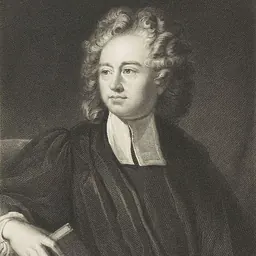
Henry Noris (; 29 August 1631 – 23 February 1704) was an Italian Church historian, theologian and cardinal.
Biography Noris was born at Verona, and was baptized with the name Hieronymus (Girolamo). His ancestors were Irish. His father, Alessandro, had written a work on the German wars. At the age of fifteen, he was sent to study under the Jesuits at Rimini, and there entered the novitiate of the Hermits of Saint Augustine, where he took the name "Enrico". He caught the attention of his order's Father Assistant of Italy, Celestino Bruni, who recommended him to the attention of the Father General, Fulgenzio Petrelli (1645–1648).
After his probation, Noris was sent to Rome to study theology. He lived in his Order's house at Sant'Agostino, in the company of a number of scholars in secular and ecclesiastical history, including Christian Lupus. He taught theology at his order's houses in Pesaro, Perugia, and Padua.
There he completed The History of Pelagianism and Dissertations on the Fifth General Council, the two works which, before and after his death, occasioned much controversy. Together with the , they were printed at Padua in 1673, having been approved by a special commission at Rome. Noris himself went to Rome to give an account of his orthodoxy before this commission, where he came to the (favorable) attention of the Assessor at the Holy Office, Girolamo Casanate.
Pope Clement X named him one of the qualificators of the Holy Office, in recognition of his learning and sound doctrine. In 1674, Noris was appointed court theologian to Grand Duke Cosimo III of Tuscany, on the recommendation of Antonio Magliabecci, the Ducal Librarian. It was Cosimo III who appointed him lecturer in church history at the University of Pisa.
But, after the publication of these works, further charges were made against Noris of teaching the heresies of Jansenius and Baius. In a brief to the prefect of the Spanish Inquisition, 31 July 1748, ordering the name of Noris to be taken off the list of forbidden books, Pope Benedict XIV says that these charges were never proved; that they were rejected repeatedly by the Holy Office, and repudiated by the popes who had honoured him.
In 1675, he was admitted to Queen Christina of Sweden's salon in Rome. A fellow member was Cardinal Vincenzo Maria Orsini, the future Pope Benedict XIII. After her death in 1689, a formal Academy was founded in Rome, the Arcadian Academy, and Noris was a member.
It is said that Noris was offered the bishopric of Pistoia, which he refused. This would have been in 1678, when the incumbent died.
In 1692, Noris was made assistant librarian in the Vatican by Pope Innocent XII. The librarian at the time was Cardinal Girolamo Casanata, the same person who had supported Noris when he was brought before the Inquisition. On 12 December 1695, Noris was named Cardinal-Priest of the Title of Sant'Agostino. In 1700, on the death of Cardinal Casanate, he was given full charge of the Vatican Library.
Noris participated in the 1700 Conclave after the death of Pope Innocent XII (Pignatelli), which elected Pope Clement XI (Albani)on 23 November.
He died in Rome on 23 February 1704, at the age of 72, and was buried in his titular church of Sant'Agostino.
Works
Noris's works, apart from some minor controversial treatises, are highly valued for accuracy and thoroughness of research. In addition to those already named, the most important are:
"Fasti Consulares Anonimi e Manuscripto Bibliothecae Caesareae Deprompti" "Historia Controversiae de Uno ex Trinitate Passo" "Apologia Monachorum Scythiae" "Historia Donatistarum e Schedis Norisianis Excerptae" "Storia delle Investiture delle Dignita Ecclesiastiche". Select portions of his works have been frequently reprinted: at Padua, 1673–1678, 1708; at Louvain, 1702; at Bassano, edited by Giovanni Lorenzo Berti, 1769. The best is the edition of all the works, in five folio volumes, by the Ballerini brothers, Verona, 1729–1741.
Don’t just read it —
keep it.
Full-length biographies made to live with: read them, listen on the way to work, watch them tonight.
- E-book
- Audio
- Video
Instant download · yours to keep · every purchase keeps this site free
Important facts
People in Henry Noris's life
Named in this biography and alive at the same time
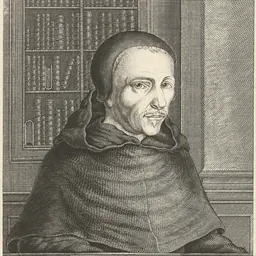


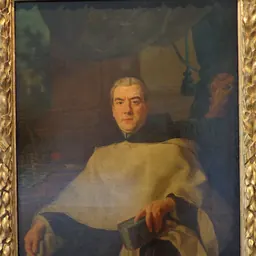
Related people
Same field, nearest in time

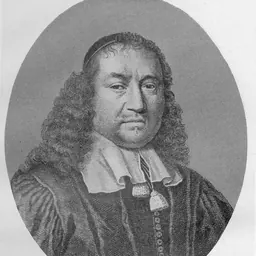

Contemporaries
People whose lives overlapped Henry Noris's




Frequently asked questions
Who was Henry Noris?
historian and cardinal from Italy
When was Henry Noris born?
Henry Noris was born on 29 August 1631 in Verona.
When did Henry Noris die?
Henry Noris died on 23 February 1704 in Rome.
What was Henry Noris's occupation?
Henry Noris was a librarian, historian, latin Catholic priest and church historian.
What nationality was Henry Noris?
Henry Noris was Italian.
Sources & further reading
Cite this page
APA: Biography.guide. (2026). Henry Noris. https://biography.guide/henry-noris/
MLA: "Henry Noris." Biography.guide, https://biography.guide/henry-noris/.
Chicago: "Henry Noris." Biography.guide. https://biography.guide/henry-noris/.
Data last updated: 2026-09-20 · Spot an error? Report a correction.
Page generated 2026-09-27 05:20 UTC