
About Henry Maudslay
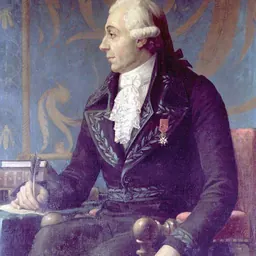
Lived 1771 – 1831 (aged 59). Henry Maudslay was a British inventor, engineer, businessperson and mechanical technician.
Henry Maudslay (pronunciation and spelling) (22 August 1771 – 14 February 1831) was an English machine tool innovator, tool and die maker, and inventor. He is considered a founding father of machine tool technology. His inventions were an important foundation for the Industrial Revolution.
Maudslay's invention of a metal lathe to cut metal, circa 1800, enabled the manufacture of standard screw thread sizes. Standard screw thread sizes allowed interchangeable parts and the development of mass production.
Early life Maudslay was the fifth of seven children of Henry Maudslay, a wheelwright in the Royal Engineers, and Margaret (nee Whitaker), the young widow of Joseph Laundy. His father was wounded in action and so in 1756 became an 'artificer' at the Royal Arsenal, Woolwich (then in Kent), where he remained until 1776 and died in 1780. The family lived in an alley that no longer exists, off Beresford Square, between Powis Street and Beresford Street.
Career Maudslay began work at the age of 12 as a "powder monkey", one of the boys employed in filling cartridges at the Arsenal. After two years, he was transferred to a carpenter's shop followed by a blacksmith's forge, where at the age of fifteen he began training as a blacksmith. He seems to have specialised in the latter, more complex kind of forge work. During his time at the Arsenal, Maudslay also worked at the Royal Foundry, where Jan Verbruggen had installed an innovative horizontal boring machine in 1772.
Joseph Bramah Maudslay acquired such a good reputation that Joseph Bramah called for his services on the recommendation of one of his employees. Bramah was surprised that he was only eighteen, but Maudslay demonstrated his ability and started work at Bramah's workshop in Denmark Street, St Giles.
Bramah lock Bramah designed and patented an improved type of lock based on the tumbler principle, but had difficulty manufacturing at an economic price. Maudslay built the lock that was displayed in Bramah's shop window with a notice offering a reward of 200 guineas to anyone who could pick it. It resisted all efforts for 47 years. Maudslay designed and made a set of special tools and machines that allowed the lock to be made at an economic price. This allowed the concept of interchangeable parts (an idea that was already taking hold) to be practically applied to nuts and bolts. and may not have been the first to combine a lead screw, slide-rest, and set of change gears all on one lathe (Jesse Ramsden may have done that in 1775; evidence is scant), but he did introduce the three-part combination of lead screw, slide rest, and change gears, sparking a great advance in machine tools and in the engineering use of screw threads.
Maudslay's original screw-cutting lathe is at the Science Museum in London.
Promotion and ambition Maudslay had shown himself to be so talented that after one year the nineteen-year-old was made manager of Bramah's workshop.
Henry Maudslay and Company In 1797, after having worked for Bramah for eight years, Maudslay was refused a wage increase to 30 shillings a week so he decided to set up his own business. Following earlier work by Samuel Bentham, his first major commission was to build a series of 42 woodworking machines to produce wooden rigging blocks (each ship required thousands) for the Navy under Sir Marc Isambard Brunel. The machines were installed in the purpose-built Portsmouth Block Mills, which still survive, including some of the original machinery. The machines were capable of making 130,000 ships' blocks a year, needing only ten unskilled men to operate them compared with the 110 skilled workers needed before their installation. This was the first well-known example of specialized machinery used for machining in an assembly-line type factory.
Micrometer Maudslay invented the first bench micrometer capable of measuring to one ten-thousandth of an inch (0.0001 in ≈ 3 μm). He called it the "Lord Chancellor", as it was used to settle any questions regarding accuracy of workmanship.
Personal life
In 1791 he married Bramah's housemaid, Sarah Tindel, together they had a daughter Isabel Maudslay and four sons: Thomas Henry, the eldest, and Joseph, the youngest, subsequently joined their father in business. William, the second, became a civil engineer and was one of the founders of the Institution of Civil Engineers.
Later life Near the end of his life Maudslay developed an interest in astronomy and began to construct a telescope. He intended to buy a house in Norwood and build a private observatory there, but died before he was able to accomplish his plan. In January 1831 he caught a chill while crossing the English Channel after visiting a friend in France. He was ill for four weeks and died on 14 February 1831. He was buried in the churchyard of St Mary Magdalen Woolwich; he designed the memorial located in its Lady Chapel. Maudslay laid an important foundation for the Industrial Revolution with his machine tool technology. His most influential invention was the screw-cutting lathe. The machine, which created uniformity in screws and allowed for the application of interchangeable parts (a prerequisite for mass production), was a revolutionary development necessary for the Industrial Revolution.
Many outstanding engineers trained in his workshop, including Richard Roberts, David Napier, Joseph Clement, Sir Joseph Whitworth, James Nasmyth (inventor of the steam hammer), Joshua Field. Maudslay played his part in the development of mechanical engineering when it was in its infancy, but he was especially pioneering in the development of machine tools to be used in engineering workshops across the world.
Maudslay's company was one of the most important British engineering manufactories of the nineteenth century, finally closing in 1904.
Many of the tools made by Maudslay are in the collection of the Science Museum, London. but this seems to be an error propagated via citation of earlier books containing the same error.
Don’t just read it —
keep it.
Full-length biographies made to live with: read them, listen on the way to work, watch them tonight.
- E-book
- Audio
- Video
Instant download · yours to keep · every purchase keeps this site free
Important facts
People in Henry Maudslay's life
Named in this biography and alive at the same time


Related people
Same field, nearest in time


Contemporaries
People whose lives overlapped Henry Maudslay's




Frequently asked questions
Who was Henry Maudslay?
British engineer
When was Henry Maudslay born?
Henry Maudslay was born on 22 August 1771 in Woolwich.
When did Henry Maudslay die?
Henry Maudslay died on 14 February 1831 in London Borough of Lambeth.
What was Henry Maudslay's occupation?
Henry Maudslay was an inventor, engineer, businessperson and mechanical technician.
What nationality was Henry Maudslay?
Henry Maudslay was British.
Sources & further reading
Cite this page
APA: Biography.guide. (2026). Henry Maudslay. https://biography.guide/henry-maudslay/
MLA: "Henry Maudslay." Biography.guide, https://biography.guide/henry-maudslay/.
Chicago: "Henry Maudslay." Biography.guide. https://biography.guide/henry-maudslay/.
Data last updated: 2026-09-20 · Spot an error? Report a correction.
Page generated 2026-09-27 05:21 UTC