
About Henry Langley
Lived 1836 – 1907 (aged 70–71). Henry Langley was a Canadian architect.
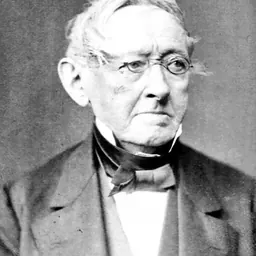
Henry Langley (26 November 1836 – 1907) was a Canadian architect based in Toronto. He was active from 1854 to 1907. Among the first architects born and trained in Canada, he was a founding members of the Royal Canadian Academy of Arts in 1880 and was instrumental in establishing the Ontario Association of Architects in 1889. A conservative in architectural design, he is primarily known for designing numerous churches in the Toronto area, although he designed many secular buildings as well including residential, commercial and public buildings. Langley designed 70 churches throughout Ontario. He was the first chair of the Department of Architecture at the University of Toronto, where he taught during the 1880s and 1890s.
Life and career Langley's parents, William Langley and Esther Anderson, emigrated to Canada from Ireland in 1832. Born in Toronto, Langley received his general education from the Toronto Academy where part of his training included studying the principles of drawing. In early 1854 he became apprenticed to Scottish architect William Hay, During his seven-year apprenticeship, he worked with Hay on some of the oldest buildings and structures in Toronto, including St. Basil's Church, Toronto (1855–1856), two of the original buildings at the University of St. Michael's College (1856), Yorkville Town Hall (1859-1860) and the Oaklands at De La Salle College (1860) among other structures.
After Hay's departure from Toronto in 1861, Langley was invited in 1862 by Hay's partner, Thomas Gundry, to become his new partner. He accepted and quickly became the firm's primary designer with Gundry shouldering most of the business side of the company. His most important project during these years was the Government House (1857–1859). In 1869 Gundry died, after which Langley spent the next four years working alone. However, he was assisted during those years by two talented apprentices who later became well known architects in Toronto: Frank Darling and his nephew Edmund Burke.
With the success of the firm, Langley brought in Burke and his brother, the builder Edward Langley, as partners in 1873. The company was in high demand and greatly increased its staff over the next several years. His brother left a decade later and Burke departed in 1894. His son, architect Charles Edward Langley, worked with him during the last 14 years of his life. Charles was the first person to graduate from the Department of Architecture at the University of Toronto on 3 May 1892.
Langley died in Toronto in 1907 and is interred at the Toronto Necropolis. He notably designed that cemetery's chapel.
Selected works BuildingYear CompletedBuilderStyleSourceLocationImage St. Peter's Anglican Church, Toronto 1864–1866 Gundry and (Henry) Langley Gothic Revival 15 188 Carlton Street at Sherborne Street, Toronto, Ontario 100px St. Michael's Cathedral (Toronto) spire 1865-66 Gundry and (Henry) Langley Gothic Revival Toronto, Ontario 100px St. Basil's Church, Toronto 1865-66 Gundry and (Henry) Langley Gothic Revival Toronto, Ontario 100px Government House (Ontario) 1865-6s Gundry and (Henry) Langley Gothic Revival Toronto, Ontario 100px St. Stephen-in-the-Fields Anglican Church 1865-6 Henry Langley Gothic Revival 15 Bathurst Street and College Avenue, Toronto, Ontario 100px Metropolitan United Church 1872 Henry Langley French Gothic Revival W Church Street and Queen Street East, Toronto, Ontario100px Toronto Necropolis Chapel 1874 Henry Langley Gothic Revival 15 Winchester Street and Sumach Street, Toronto, Ontario 100px St. Luke's United Church 1874 Henry Langley and Edmund Burke Romanesque Revival 15 Sherborne Street and Carlton Street, Toronto, Ontario 100px St. Andrew's Evangelical Lutheran Church 1878 Henry Langley & Edmund Burke Gothic Revival 15 383 Jarvis Street, Toronto, Ontario 100px Jarvis Street Baptist Church 1878 Henry Langley & Edmund Burke Gothic Revival Jarvis Street, Toronto, Ontario 100px St. Mark's Anglican Church, Parkdale 1881 Henry Langley, Henry Langley and Edmund Burke (Design) Gothic Revival 201 Cowan Ave, Toronto, Ontario 100px McMaster Hall 1881 Henry Langley, Henry Langley and Edmund Burke (Design) Romanesque Revival 2 273 Bloor Street West, Toronto, Ontario 100px Beverley Street Baptist Church 1886 Henry Langley & Edmund Burke Gothic Revival 6 72 Beverley Street, Toronto, Ontario 100px Trinity-St. Paul's United Church 1887–1889 Henry Langley and Edmund Burke Gothic Revival 15 Bloor Street west of Spadina Avenue, Toronto, Ontario 100px
Gundry & Langley (1862-1869)
St. Peter's Anglican Church, 1864–65 Alexander Street Baptist Church, 1866, Demolished St. Patrick's Roman Catholic Church, 1869–70, now Our Lady of Mount Carmel Catholic Church
Langley (1869-1874)
McGill Square Church, 1870–72, now Metropolitan United Church Parliament Street Methodist Church, 1871, Demolished Toronto Necropolis Chapel, 1872 George Street Methodist Church, Peterborough, Ontario, 1874–75
Langley, Langley & Burke (1874-1884) Henry Langley, Edward Langley & Edmund Burke
Jarvis Street Baptist Church, 1874–75 The Cathedral Church of St. James, spire, 1874 Sherbourne Street Methodist Church, 1876, now St. Luke's United Church St. Andrew's Presbyterian Church, 1877–78, now Grace Toronto Church Elm Street Methodist Church, 1877, Demolished Little Trinity Anglican Church, addition, 1878 St. Mark's Anglican Church, 1881
Langley & Burke (1884-1894) Henry Langley & Edmund Burke
Beverley Street Baptist Church, 1886, now Chinese Baptist Church Trinity Methodist Church, 1887–89, now Trinity St. Paul's United Church College Street Baptist Church, 1888, now Portuguese Seventh-Day Adventist Church Dunn Avenue Methodist Church, 1889, Demolished Walmer Road Baptist Church, 1889–92 Jarvis Street Baptist Church, 1875
Langley & Langley (1894-1907) Henry Langley & Charles Edward Langley
Memorial Baptist Church, 1897
Don’t just read it —
keep it.
Full-length biographies made to live with: read them, listen on the way to work, watch them tonight.
- E-book
- Audio
- Video
Instant download · yours to keep · every purchase keeps this site free
Important facts
People in Henry Langley's life
Named in this biography and alive at the same time



Related people
Same field, nearest in time



Contemporaries
People whose lives overlapped Henry Langley's



Frequently asked questions
Who was Henry Langley?
architect (1836–1907)
When was Henry Langley born?
Henry Langley was born on 26 November 1836 in Toronto.
When did Henry Langley die?
Henry Langley died in 1907 in Toronto.
What was Henry Langley's occupation?
Henry Langley was an architect.
What nationality was Henry Langley?
Henry Langley was Canadian.
Sources & further reading
· DBpedia: Henry Langley (architect)
Cite this page
APA: Biography.guide. (2026). Henry Langley. https://biography.guide/henry-langley-architect/
MLA: "Henry Langley." Biography.guide, https://biography.guide/henry-langley-architect/.
Chicago: "Henry Langley." Biography.guide. https://biography.guide/henry-langley-architect/.
Data last updated: 2026-09-20 · Spot an error? Report a correction.
Page generated 2026-09-27 05:07 UTC